

Popcorn lung is an uncommon but serious condition that damages the smallest airways in the lungs. Its medical name is bronchiolitis obliterans, although it may also be called obliterative bronchiolitis.
The condition became widely known after workers at a microwave popcorn manufacturing facility developed severe lung disease following exposure to butter-flavoring chemicals.
However, popcorn lung is not limited to popcorn production. It can develop after inhaling toxic substances, following certain infections, as a complication of transplantation, or in association with autoimmune disease.

What Is Popcorn Lung?
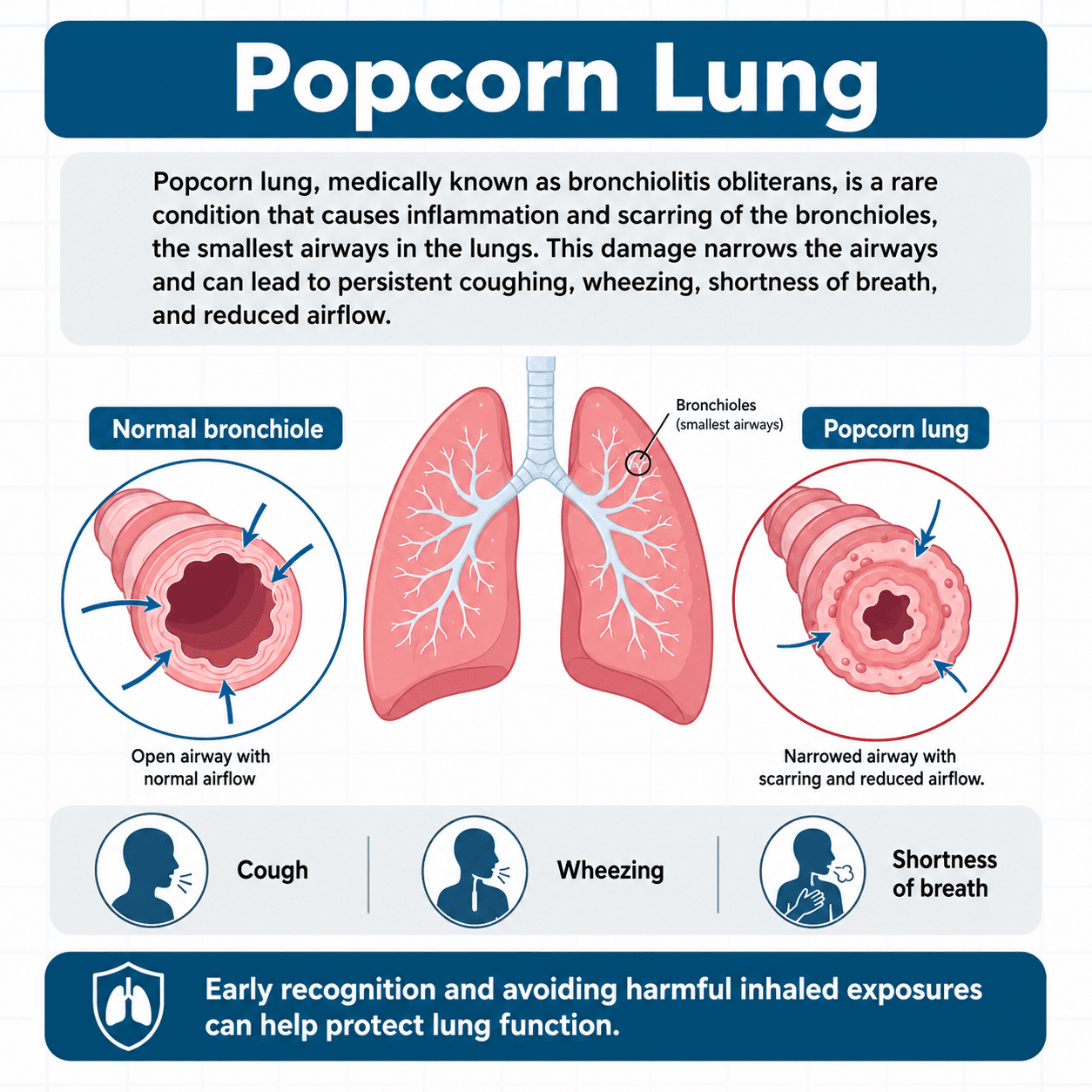
Popcorn lung is a chronic lung disease characterized by inflammation, narrowing, and scarring of the bronchioles. Bronchioles are the smallest branches of the airway system. They carry air from the larger bronchial tubes toward the alveoli, where oxygen and carbon dioxide are exchanged.
When the bronchioles become injured, the body initiates an inflammatory and healing response. In some people, that response produces excessive fibrous tissue. The tissue thickens the walls of the bronchioles and may progressively narrow or completely block their internal openings.
As airflow through the bronchioles becomes restricted, a person may develop shortness of breath, a persistent dry cough, wheezing, exercise intolerance, and fatigue. The obstruction is often fixed, meaning that it does not substantially reverse after using a bronchodilator.
The term bronchiolitis obliterans refers to the gradual obliteration, or closure, of the small airways. It should not be confused with organizing pneumonia, a different condition that was previously called bronchiolitis obliterans organizing pneumonia.
Popcorn lung is considered rare, but its exact prevalence is difficult to determine. Some cases may be mistaken for asthma, chronic obstructive pulmonary disease, chronic bronchitis, or other forms of small-airway disease.
Why Is It Called Popcorn Lung?
The nickname “popcorn lung” originated from an occupational disease investigation involving workers at a microwave popcorn production facility in Missouri.
In 2000, the National Institute for Occupational Safety and Health investigated a cluster of workers who had developed severe, fixed obstructive lung disease. Several of the affected employees had worked in areas where butter flavorings were mixed or added to popcorn.
The investigation linked the workers’ lung disease to airborne exposures associated with flavoring chemicals, particularly diacetyl. Diacetyl is a volatile chemical that produces a buttery flavor and aroma. It may occur naturally in certain foods and can also be manufactured for use as a flavoring ingredient.
The concern is not usually eating foods containing diacetyl. The occupational danger occurs when concentrated diacetyl vapors, aerosols, or heated flavoring mixtures are inhaled repeatedly or at high levels. Inhaled diacetyl can injure the respiratory epithelium lining the small airways.
Although the nickname draws attention to the original popcorn-factory cases, it can be misleading. Most people who eat microwave popcorn do not develop bronchiolitis obliterans. The condition is related to airway injury, not simply to eating popcorn.
Understanding the Bronchioles
To understand popcorn lung, it helps to review how air moves through the respiratory system.
Air enters through the nose or mouth and travels through the pharynx, larynx, and trachea. The trachea divides into the right and left mainstem bronchi. These bronchi continue dividing into smaller airways, eventually forming bronchioles.
Unlike the larger bronchi, bronchioles do not contain cartilage that holds them open. Their diameter is influenced by surrounding lung tissue, airway smooth muscle, inflammation, mucus, and pressure changes during breathing.
Terminal bronchioles represent the end of the conducting zone. Respiratory bronchioles lead toward the alveolar ducts and alveoli, where gas exchange occurs.
Because bronchioles are narrow, even a small amount of swelling or scar tissue can produce a substantial increase in airway resistance. According to principles of airflow, resistance rises dramatically as the radius of an airway decreases.
This means that moderate bronchiolar narrowing can significantly interfere with exhalation. Air may enter the lungs but have difficulty escaping through damaged airways, producing air trapping and hyperinflation.
How Popcorn Lung Develops
Bronchiolitis obliterans begins with injury to the epithelial cells lining the bronchioles. The exact mechanism depends on the underlying cause, but the general process often includes the following stages:
- A chemical, infection, immune reaction, or other event injures the bronchiolar lining.
- The damaged tissue triggers inflammation.
- Inflammatory cells and proteins accumulate around the airway.
- The healing response stimulates fibroblasts and collagen production.
- Fibrous tissue thickens and distorts the bronchiolar walls.
- The airway lumen becomes narrowed or completely obstructed.
- Air trapping and uneven ventilation develop behind the damaged airways.
Some cases involve primarily concentric fibrosis around the bronchioles. Others include granulation tissue or inflammatory material extending into the airway lumen. Once dense scarring has formed, the structural damage is generally considered irreversible.
The affected areas may not be distributed evenly throughout the lungs. Some groups of bronchioles may remain open while others become severely narrowed. This patchy pattern contributes to the mosaic appearance sometimes seen on high-resolution computed tomography.
Diacetyl and Flavoring-Related Lung Disease
Diacetyl, also known as 2,3-butanedione, is one of the chemicals most closely associated with popcorn lung.
It has been used to create buttery or creamy flavor profiles in products such as:
- Microwave popcorn
- Baked goods
- Candy
- Dairy-flavored products
- Snack foods
- Coffee and coffee flavorings
- Caramel-flavored products
- Certain electronic cigarette liquids
Diacetyl may be safe for ingestion at approved concentrations, but the respiratory system processes substances differently from the digestive tract. A chemical that can be swallowed without causing lung disease may still be hazardous when inhaled.
During manufacturing, workers may be exposed while opening containers, weighing powders, pouring liquids, mixing flavorings, heating products, cleaning equipment, or working near inadequately ventilated processes.
Diacetyl is not the only flavoring chemical of concern. Related alpha-diketones, including 2,3-pentanedione, may also damage the airway epithelium. Substituting one flavoring chemical for another does not automatically eliminate respiratory risk.
NIOSH recognizes flavoring-related lung disease as an occupational hazard and recommends controlling airborne exposure through engineering measures, ventilation, work practices, respiratory protection, and medical surveillance.
Other Occupational Exposures
Cases of bronchiolitis obliterans have been identified in workers outside the microwave popcorn industry.
Potential occupational settings include:
- Flavoring manufacturing facilities
- Food production plants
- Commercial bakeries
- Candy manufacturing
- Coffee roasting and processing
- Chemical manufacturing
- Fiberglass production
- Nylon flock manufacturing
- Textile production
- Industrial cleaning operations
- Metalworking environments
- Facilities using chlorine, ammonia, or other reactive gases
Coffee-processing workers may be exposed to naturally produced diacetyl and related compounds when coffee beans are roasted, ground, flavored, or packaged.
Workers can also develop bronchiolar injury after an accidental release of toxic gases. Chlorine, ammonia, sulfur dioxide, nitrogen oxides, and other irritants can cause acute airway inflammation. In severe cases, persistent inflammation may progress to bronchiolitis obliterans.
Modern occupational cases do not always follow a single, obvious chemical accident. Some develop gradually after repeated lower-level exposure to airborne irritants.
Popcorn Lung and Vaping
The relationship between vaping and popcorn lung is frequently discussed, but it requires careful explanation. Some flavored electronic cigarette liquids have been found to contain diacetyl or structurally related chemicals. Heating these liquids can create an aerosol that is inhaled deep into the respiratory tract.
Diacetyl is a recognized cause of bronchiolitis obliterans when inhaled under certain occupational conditions. Therefore, inhaling vaping aerosols containing diacetyl raises a biologically plausible concern.
Electronic cigarette aerosols may also contain:
- Nicotine
- Ultrafine particles
- Volatile organic compounds
- Carbonyl compounds
- Metals
- Flavoring chemicals
- Thermal degradation products
The concentration and composition of the aerosol can vary according to the device, liquid ingredients, coil temperature, power setting, user behavior, and product quality.
A severe case of bronchiolitis resembling popcorn lung has been reported in association with vaping, but the number of confirmed cases directly attributed to vaping remains limited. This does not mean vaping is safe. It means that bronchiolitis obliterans must be distinguished from other vaping-related lung injuries, and establishing a specific cause can be difficult.
Vaping-associated lung injury may include several pathological patterns, such as organizing pneumonia, diffuse alveolar damage, acute eosinophilic pneumonia, hypersensitivity pneumonitis, and chemical pneumonitis. These conditions are not identical to classic constrictive bronchiolitis.
A person who develops persistent cough, wheezing, chest discomfort, reduced exercise tolerance, or shortness of breath after vaping should seek medical evaluation. Stopping exposure is important regardless of whether the final diagnosis is bronchiolitis obliterans or another vaping-related condition.
Infections That Can Cause Bronchiolitis Obliterans
Bronchiolitis obliterans can develop after a severe respiratory infection. This form is commonly called post-infectious bronchiolitis obliterans.
It occurs more frequently in children than in adults, although adults may also be affected. The illness may follow severe pneumonia or lower respiratory tract infection caused by organisms such as:
- Adenovirus
- Influenza virus
- Measles virus
- Respiratory syncytial virus
- Parainfluenza virus
- Mycoplasma pneumoniae
- Bordetella pertussis
Adenovirus has been particularly associated with post-infectious bronchiolitis obliterans in children.
During the original infection, inflammation damages the bronchiolar epithelium. Most patients recover without permanent small-airway disease, but a small group develops persistent inflammation, granulation tissue, and fibrosis.
Symptoms may continue after the fever and other acute signs of infection have resolved. A child may have persistent wheezing, tachypnea, coughing, low oxygen levels, or difficulty tolerating activity.
Bronchiolitis Obliterans After Lung Transplantation
Bronchiolitis obliterans is an important complication of lung transplantation. In this setting, it usually develops as a manifestation of chronic rejection. The recipient’s immune system gradually attacks the transplanted airways, leading to inflammation and fibrosis.
Clinicians often use the term bronchiolitis obliterans syndrome when a lung transplant recipient develops a persistent decline in expiratory airflow that cannot be explained by another condition. The syndrome is identified primarily through changes in pulmonary function rather than by surgically obtained lung tissue.
A falling forced expiratory volume in one second is an important warning sign. Other possible causes of declining lung function, such as infection, acute rejection, airway narrowing, pleural disease, medication toxicity, or recurrent primary disease, must be evaluated.
Risk factors may include:
- Episodes of acute cellular rejection
- Antibody-mediated rejection
- Respiratory infections
- Aspiration and gastroesophageal reflux
- Airway inflammation
- Poor adherence to immunosuppressive therapy
- Certain forms of immune incompatibility
Note: Management may include adjustments to immunosuppression, treatment of infection or reflux, azithromycin in selected patients, and other therapies intended to slow chronic allograft dysfunction.
Bronchiolitis Obliterans After Stem Cell Transplantation
People who undergo hematopoietic stem cell transplantation can develop bronchiolitis obliterans as a pulmonary manifestation of chronic graft-versus-host disease. In graft-versus-host disease, immune cells from the donor attack the recipient’s tissues. The skin, liver, gastrointestinal system, eyes, mouth, and lungs may be affected.
Pulmonary involvement may cause progressive small-airway obstruction. Symptoms can include dry cough, dyspnea, wheezing, fatigue, and reduced exercise tolerance.
Diagnosis is often based on pulmonary function changes, imaging, clinical history, and exclusion of infection. Because transplant recipients are immunosuppressed, infections must be considered carefully before increasing immunosuppressive treatment.
Autoimmune and Inflammatory Diseases
Bronchiolitis obliterans may occur in association with autoimmune or connective tissue disease.
Conditions that have been associated with small-airway inflammation and fibrosis include:
- Rheumatoid arthritis
- Sjögren syndrome
- Systemic lupus erythematosus
- Systemic sclerosis
- Inflammatory bowel disease
- Stevens-Johnson syndrome
- Certain autoimmune blistering disorders
Rheumatoid arthritis is one of the more recognized autoimmune associations. Small-airway disease can occur before, after, or during the development of joint symptoms.
Some medications used to treat autoimmune disease may also affect the lungs, making the evaluation more complicated. Clinicians must determine whether respiratory impairment is related to the underlying disease, infection, medication toxicity, another interstitial lung disorder, or bronchiolar injury.
Other Potential Causes
Additional causes or associations may include:
- Severe aspiration injury
- Inhalation of smoke or fire-related gases
- Exposure to military burn pits or complex airborne contaminants
- Medication reactions
- Chronic inflammatory airway disorders
- Bone marrow transplantation
- Heart-lung transplantation
- Repeated toxic fume exposure
- Unknown or idiopathic causes
Note: In some patients, no definite cause is identified. These cases may be classified as idiopathic bronchiolitis obliterans after other possibilities have been investigated.
Symptoms of Popcorn Lung
Symptoms often develop gradually over several weeks or months. In occupational cases, they may appear while a person is still being exposed or after the exposure has ended.
The most common symptoms include:
- Persistent dry cough
- Progressive shortness of breath
- Wheezing
- Fatigue
- Reduced exercise tolerance
- Chest tightness
Shortness of breath may initially occur only during strenuous activity. A person may notice difficulty running, climbing stairs, carrying heavy objects, or keeping pace with coworkers. As the disease progresses, breathing difficulty may occur during ordinary tasks such as walking, showering, dressing, or performing light household activities.
The cough is commonly dry and persistent. It may not produce much mucus unless another condition, such as an infection or chronic bronchitis, is also present. Wheezing may occur, but its absence does not exclude bronchiolitis obliterans. Lung sounds can sometimes be normal, particularly early in the disease.
Symptoms are often persistent rather than episodic. This pattern can help distinguish bronchiolitis obliterans from asthma, in which symptoms may vary considerably and improve with bronchodilator treatment.
Advanced Signs and Complications
As airway obstruction worsens, additional findings may develop.
These can include:
- Rapid breathing
- Use of accessory muscles
- Prolonged exhalation
- Low oxygen saturation
- Unintentional weight loss
- Reduced ability to work or exercise
- Frequent respiratory infections
- Respiratory failure
- Pulmonary hypertension
- Strain on the right side of the heart
Chronic air trapping may produce hyperinflation. In severe disease, inadequate ventilation and impaired oxygen delivery can substantially limit physical activity.
Respiratory failure may develop when the lungs can no longer maintain adequate oxygenation, ventilation, or both. Some patients may eventually require supplemental oxygen, noninvasive ventilation, invasive mechanical ventilation during acute illness, or lung transplantation.
When to Seek Medical Attention
Persistent respiratory symptoms should be evaluated, especially when they follow a known occupational, chemical, vaping, transplant, or infectious exposure.
A medical appointment is appropriate for:
- A cough that does not resolve
- Unexplained shortness of breath
- New wheezing
- Declining exercise tolerance
- Symptoms that worsen at work
- Symptoms that improve away from the workplace
- Breathing problems after a chemical exposure
- Persistent respiratory problems after pneumonia
- A decline in lung function after transplantation
Note: Emergency care is needed for severe difficulty breathing, bluish discoloration, confusion, chest pain, fainting, rapidly falling oxygen saturation, or inability to speak in complete sentences.
How Popcorn Lung Is Diagnosed
There is no single simple test that confirms every case of bronchiolitis obliterans. Diagnosis typically requires a combination of clinical history, pulmonary function testing, imaging, laboratory studies, and exclusion of other diseases.
A careful exposure history is especially important. The clinician may ask about:
- Current and previous jobs
- Flavoring or chemical use
- Workplace ventilation
- Respiratory protection
- Accidental gas exposure
- Vaping or smoking history
- Recent severe infections
- Autoimmune symptoms
- Transplantation history
- Medications
- Symptom timing
- Whether symptoms change during weekends or vacations
Note: Patients should provide specific details whenever possible. The name of a chemical, product label, safety data sheet, job task, duration of exposure, and use of protective equipment may all help guide the evaluation.
Physical Examination
During the physical examination, the clinician evaluates the person’s breathing pattern, oxygen saturation, respiratory rate, heart rate, and lung sounds.
Possible findings include:
- Wheezing
- Decreased breath sounds
- Crackles
- Prolonged exhalation
- Rapid breathing
- Accessory muscle use
- Signs of hyperinflation
- Low oxygen saturation
Note: The physical examination may be relatively normal in early disease. Normal lung sounds do not eliminate the possibility of clinically important bronchiolar obstruction.
Pulmonary Function Testing
Pulmonary function tests are central to the evaluation.
Spirometry
Spirometry measures how much air a person can exhale and how quickly it can be expelled.
Important measurements include:
- Forced vital capacity
- Forced expiratory volume in one second
- FEV1/FVC ratio
- Forced expiratory flow measurements
Bronchiolitis obliterans commonly produces an obstructive pattern with a reduced FEV1 and a reduced FEV1/FVC ratio. The obstruction may show little improvement after an inhaled bronchodilator. This differs from classic asthma, in which airflow obstruction is often at least partially reversible.
However, not every patient has a textbook spirometry pattern. Early small-airway disease may exist even when the FEV1/FVC ratio remains near the lower end of normal.
Lung Volume Measurements
Lung volume testing may demonstrate:
- Increased residual volume
- Increased functional residual capacity
- Increased residual volume-to-total lung capacity ratio
- Hyperinflation
- Air trapping
Note: An elevated residual volume indicates that an abnormal amount of air remains in the lungs after maximal exhalation.
Diffusing Capacity
The diffusing capacity of the lungs for carbon monoxide may be normal or reduced.
Because bronchiolitis obliterans primarily affects the airways rather than the alveolar-capillary membrane, the diffusing capacity may be relatively preserved. A reduced value may suggest more advanced disease, vascular involvement, emphysema, interstitial disease, anemia, or another contributing condition.
Serial Testing
Repeated testing is often more informative than a single measurement. A progressive decline in FEV1 can reveal worsening disease even when the original value was within the predicted range. Serial spirometry is particularly important for transplant recipients and workers enrolled in medical surveillance programs.
Chest X-Ray
A standard chest X-ray may be normal, especially during early disease.
Possible abnormalities include:
- Hyperinflation
- Increased lung lucency
- Reduced vascular markings
- Areas of atelectasis
- Nonspecific changes related to the underlying cause
Note: A normal chest X-ray does not rule out bronchiolitis obliterans. The small airways are below the resolution of standard radiography, and indirect signs may not appear until the disease is more advanced.
High-Resolution CT Scan
High-resolution computed tomography is more sensitive for detecting small-airway disease.
Possible findings include:
- Mosaic attenuation
- Air trapping
- Bronchial wall thickening
- Bronchiectasis
- Reduced vascular markings in poorly ventilated regions
- Areas of atelectasis
- Hyperinflation
Mosaic attenuation describes a patchwork of regions with different densities. Areas supplied by narrowed bronchioles may receive less ventilation and appear darker because they contain trapped air.
Expiratory CT images are particularly useful. In healthy lungs, attenuation normally increases during exhalation as the amount of air decreases. In bronchiolitis obliterans, affected regions may remain unusually dark because air cannot escape.
The CT pattern can strongly support the diagnosis, but it is not entirely specific. Similar findings can occur with asthma, pulmonary vascular disease, hypersensitivity pneumonitis, and other small-airway disorders.
Bronchoscopy
Bronchoscopy allows a clinician to inspect the larger airways and collect samples. Bronchoalveolar lavage may be performed to look for infection, inflammation, bleeding, or other abnormalities. This is particularly important in transplant recipients, who may have infection or acute rejection.
Because bronchiolitis obliterans affects very small airways, the bronchoscope may not reveal visible abnormalities. Bronchoscopy is often more useful for excluding other conditions than for directly confirming popcorn lung.
Lung Biopsy
A surgical lung biopsy may provide the most definitive pathological evidence, but it is not required in every case.
Bronchiolitis obliterans can be patchy, so a small transbronchial biopsy may miss the affected tissue. Surgical biopsy obtains larger samples but carries risks such as bleeding, infection, pneumothorax, prolonged air leakage, and complications from anesthesia.
Clinicians weigh the potential diagnostic benefit against the risks. In some patients, the exposure history, fixed obstruction, expiratory air trapping, and exclusion of alternative diagnoses provide enough evidence to make a clinical diagnosis without surgery.
Conditions That Can Resemble Popcorn Lung
Several disorders can cause similar symptoms or test results.
The differential diagnosis may include:
- Asthma
- Chronic obstructive pulmonary disease
- Chronic bronchitis
- Emphysema
- Bronchiectasis
- Hypersensitivity pneumonitis
- Organizing pneumonia
- Interstitial lung disease
- Vocal cord dysfunction
- Chronic infection
- Cystic fibrosis
- Alpha-1 antitrypsin deficiency
- Pulmonary vascular disease
- Heart failure
- Gastroesophageal reflux with aspiration
- Other forms of bronchiolitis
Distinguishing bronchiolitis obliterans from severe asthma can be challenging. Both may produce cough, wheezing, air trapping, and obstruction. A poor bronchodilator response, progressive symptoms, characteristic exposure history, and expiratory CT abnormalities may favor bronchiolitis obliterans.
COPD is usually associated with a significant history of cigarette smoking or another chronic inhalational exposure. Bronchiolitis obliterans may develop in younger nonsmokers and can progress more rapidly following a defined injury.
Is Popcorn Lung Curable?
The scarring caused by established bronchiolitis obliterans is generally considered permanent. Treatment cannot reliably reopen bronchioles that have been completely replaced or compressed by fibrous tissue.
However, treatment may still provide important benefits. Depending on the cause and stage of disease, management may:
- Stop continued exposure
- Reduce active inflammation
- Slow additional damage
- Improve airway function
- Relieve symptoms
- Reduce complications
- Improve exercise tolerance
- Support oxygenation
- Treat associated conditions
Note: The earlier the disease is recognized, the more opportunity there may be to prevent continued injury.
Treatment of Popcorn Lung
Treatment is individualized according to the underlying cause, severity, rate of progression, oxygen level, lung function, and overall health.
Removing the Exposure
The most important intervention in exposure-related disease is to stop further contact with the harmful substance.
This may require:
- Changing job duties
- Improving ventilation
- Eliminating a hazardous process
- Using closed production systems
- Wearing appropriate respiratory protection
- Leaving a contaminated environment
- Stopping vaping
- Avoiding smoke and inhaled irritants
Simply treating symptoms while exposure continues may allow the airway injury to progress.
Workers should report symptoms promptly to occupational health personnel and healthcare providers. Employers may need to perform industrial hygiene assessments, exposure monitoring, process modification, and medical surveillance.
Corticosteroids
Systemic corticosteroids may be used when active inflammation is believed to be contributing to airway injury. Examples include prednisone or methylprednisolone. These medications suppress immune activity and inflammation but do not remove established scar tissue.
The response is variable. Some patients improve or stabilize, while others show little benefit. Long-term corticosteroid therapy can cause substantial adverse effects, including:
- Increased infection risk
- Elevated blood glucose
- Osteoporosis
- Weight gain
- Muscle weakness
- Mood changes
- Cataracts
- Adrenal suppression
- High blood pressure
Note: The dose and duration should be determined by a qualified clinician after considering the likely benefits and risks.
Other Immunosuppressive Therapy
Transplant-related and autoimmune bronchiolitis obliterans may require other immunosuppressive medications.
Depending on the clinical situation, treatment may include agents such as:
- Tacrolimus
- Cyclosporine
- Mycophenolate
- Azathioprine
- Sirolimus
- Rituximab
- Extracorporeal photopheresis
- Other targeted immune therapies
Note: These treatments are not interchangeable and are not appropriate for every patient. They are usually managed by transplant specialists, pulmonologists, rheumatologists, or hematologists.
Bronchodilators
Inhaled bronchodilators may be prescribed to reduce airway smooth-muscle constriction and improve airflow through bronchioles that remain open.
Possible medications include:
- Short-acting beta agonists
- Long-acting beta agonists
- Short-acting anticholinergics
- Long-acting anticholinergics
Note: Bronchodilators cannot reverse fibrotic obliteration. Some patients experience symptomatic improvement, while others have minimal response.
Inhaled Corticosteroids
Inhaled corticosteroids may help control airway inflammation in selected patients, particularly when asthma-like airway reactivity is also present.
They have a lower systemic exposure than oral corticosteroids but can still cause hoarseness, throat irritation, and oral candidiasis. Rinsing the mouth after use can reduce the risk of candidiasis.
Antibiotics and Macrolide Therapy
Antibiotics are used when bacterial infection is present.
Azithromycin may also be used in some transplant-related cases for its anti-inflammatory and immunomodulatory effects. Certain patients with bronchiolitis obliterans syndrome show improvement in lung function, especially when neutrophilic airway inflammation is present.
Azithromycin is not a universal treatment for all forms of popcorn lung. Long-term use should be medically supervised because it can cause gastrointestinal symptoms, hearing effects, cardiac rhythm abnormalities, and antimicrobial resistance.
Supplemental Oxygen
Supplemental oxygen may be prescribed when oxygen levels are low at rest, during activity, or while sleeping.
Oxygen therapy can:
- Correct hypoxemia
- Reduce strain on the heart
- Improve exercise tolerance
- Decrease breathlessness during activity
- Support organ function
Note: The prescribed flow rate may differ during rest, sleep, and exercise. Patients should follow the ordered settings rather than changing oxygen flow without guidance. Oxygen supports gas exchange but does not directly reverse bronchiolar scarring.
Pulmonary Rehabilitation
Pulmonary rehabilitation is a structured program for people with chronic respiratory disease.
It may include:
- Supervised exercise
- Strength training
- Breathing techniques
- Energy-conservation strategies
- Education
- Nutritional guidance
- Medication training
- Psychosocial support
Note: Exercise does not remove airway fibrosis, but it can improve muscle efficiency and reduce the amount of ventilation required for a given activity. This may allow a person to function more comfortably despite persistent lung impairment.
Vaccination and Infection Prevention
Respiratory infections can cause significant deterioration in people with limited pulmonary reserve.
Preventive measures may include:
- Recommended influenza vaccination
- Appropriate pneumococcal vaccination
- COVID-19 vaccination when indicated
- Regular hand hygiene
- Avoiding close contact with people who are acutely ill
- Prompt evaluation of new infectious symptoms
- Following transplant-specific infection precautions
Note: Vaccination recommendations depend on age, health status, immune function, and current public health guidance.
Treatment of Gastroesophageal Reflux and Aspiration
Gastroesophageal reflux and aspiration may contribute to airway inflammation, particularly after lung transplantation.
Treatment may involve:
- Dietary modification
- Avoiding meals near bedtime
- Elevating the head during sleep
- Acid-suppressing medication
- Swallowing evaluation
- Aspiration precautions
- Surgical management in selected cases
Note: Reducing aspiration may help prevent additional bronchiolar injury.
Lung Transplantation
Lung transplantation may be considered in severe, progressive disease when other therapies cannot maintain adequate function.
Candidates undergo extensive evaluation of:
- Lung disease severity
- Heart function
- Kidney and liver health
- Infection status
- Cancer risk
- Nutritional status
- Functional ability
- Psychosocial support
- Medication adherence
- Substance use
Note: Transplantation can replace severely damaged lungs, but it carries major risks, including infection, rejection, medication toxicity, and recurrent bronchiolitis obliterans syndrome in the transplanted lungs.
Prognosis
The outlook varies considerably.
Some patients stabilize after exposure is removed. Others experience continued decline despite treatment. Prognosis is influenced by:
- The underlying cause
- Duration and intensity of exposure
- Severity at diagnosis
- Baseline lung function
- Rate of FEV1 decline
- Response to therapy
- Presence of hypoxemia
- Transplant status
- Recurrent infections
- Other medical conditions
Mild disease may cause manageable long-term limitations. Severe disease can result in permanent disability, respiratory failure, or death.
Bronchiolitis obliterans is potentially serious because the scarred bronchioles do not regenerate normally. Early recognition and exposure control are therefore central to preserving remaining lung function.
Preventing Occupational Popcorn Lung
Occupational prevention should follow the hierarchy of controls. The goal is to remove or reduce exposure before relying solely on personal protective equipment.
Elimination and Substitution
Whenever possible, employers should eliminate hazardous chemicals or replace them with less hazardous materials. However, a replacement flavoring should not be assumed safe simply because it is labeled diacetyl-free. Alternative compounds may have similar structures or toxic effects.
Engineering Controls
Engineering controls physically reduce airborne contamination.
Examples include:
- Local exhaust ventilation
- Closed mixing systems
- Enclosed transfer processes
- Automated dispensing
- Effective general ventilation
- Isolation of high-exposure tasks
- Temperature control to reduce vapor generation
- Properly designed dust collection
- Leak detection and maintenance
Note: Local exhaust should capture vapors, aerosols, or powders near the point where they are generated.
Administrative Controls
Administrative measures reduce the duration or frequency of exposure.
Examples include:
- Limiting access to high-exposure areas
- Rotating duties when appropriate
- Written procedures
- Exposure-control plans
- Worker training
- Prompt spill response
- Safe cleaning practices
- Preventive equipment maintenance
- Medical surveillance
Note: Job rotation should not be used as a substitute for correcting a hazardous process. It may spread exposure to more workers without adequately controlling the source.
Respiratory Protection
Respirators may be required when engineering controls cannot fully reduce exposure.
A respiratory-protection program should include:
- Selection of the correct respirator
- Medical clearance
- Fit testing
- Training
- Seal checks
- Cartridge or filter replacement schedules
- Cleaning and maintenance
- Evaluation of program effectiveness
Note: A loose surgical mask does not provide the same protection as a properly selected and fitted occupational respirator.
Medical Surveillance
Medical surveillance can help identify declining lung function before severe disability develops.
A program may include:
- Baseline health questionnaires
- Baseline spirometry
- Periodic symptom assessment
- Repeat spirometry
- Review of exposure incidents
- Referral for abnormal results
- Tracking of group-level patterns
Note: A single spirometry result may appear normal even when a worker has experienced a meaningful decline from a higher baseline value. Comparing serial results is therefore important.
Preventing Vaping-Related Lung Injury
The most reliable way to prevent lung injury from vaping aerosols is not to use electronic cigarettes or vaping products. Product labels may not identify every chemical present in the aerosol. Even when a liquid does not list diacetyl, heating can create new compounds through chemical degradation.
People who currently vape should seek assistance with stopping, particularly when the product contains nicotine. Evidence-based cessation options may include behavioral counseling, nicotine-replacement therapy, and prescription medications under medical guidance.
A person should not attempt to diagnose popcorn lung based only on online symptom lists. Persistent respiratory symptoms require a clinical evaluation because many conditions can cause similar complaints.
Living With Popcorn Lung
Living with chronic small-airway disease may require adjustments in daily activities.
Helpful strategies may include:
- Following the prescribed treatment plan
- Attending pulmonary rehabilitation
- Using oxygen as directed
- Avoiding smoke, fumes, and strong aerosols
- Planning rest periods
- Breaking large tasks into smaller steps
- Maintaining appropriate physical activity
- Monitoring symptoms
- Keeping follow-up appointments
- Receiving recommended vaccinations
- Reporting sudden changes promptly
Patients may benefit from learning pursed-lip breathing. This technique involves inhaling slowly through the nose and exhaling through partially closed lips. The gentle back-pressure may help keep small airways open longer during exhalation.
Good nutrition is also important. Severe breathlessness can make eating difficult, while excess body weight can increase the work of breathing. A dietitian can help develop a plan based on the individual’s needs.
Monitoring Disease Progression
Follow-up care may involve:
- Symptom questionnaires
- Pulse oximetry
- Spirometry
- Lung volume testing
- Diffusing-capacity testing
- Six-minute walk testing
- Exercise oxygen assessment
- High-resolution CT imaging
- Laboratory testing
- Bronchoscopy in selected cases
Patients should report changes such as increasing breathlessness, new sputum production, fever, chest pain, falling oxygen saturation, unexplained weight loss, or reduced ability to perform normal activities.
A sudden decline may reflect infection, pulmonary embolism, pneumothorax, heart disease, medication effects, acute rejection, or another complication rather than gradual progression of bronchiolitis obliterans.
Popcorn Lung in Children
Post-infectious bronchiolitis obliterans is an important pediatric form of the disease. A child may initially experience severe viral or bacterial pneumonia. After the acute illness improves, respiratory symptoms persist.
Possible findings include:
- Chronic wheezing
- Rapid breathing
- Persistent cough
- Exercise intolerance
- Low oxygen levels
- Reduced weight gain
- Recurrent respiratory infections
- Unequal breath sounds
- Chest wall retractions during exacerbations
Because recurrent wheezing is common in childhood asthma, diagnosis may be delayed. Clues include a history of severe lower respiratory infection, fixed obstruction, poor response to asthma therapy, persistent hypoxemia, and significant air trapping on expiratory CT imaging.
Management may include bronchodilators, anti-inflammatory therapy, oxygen, nutritional support, vaccination, treatment of infection, and pulmonary rehabilitation adapted for the child’s age.
Growth and development should be monitored because chronic respiratory disease can affect nutrition, physical activity, school attendance, sleep, and emotional well-being.
Popcorn Lung Versus Bronchitis
Popcorn lung is sometimes confused with bronchitis because both can cause coughing and breathing difficulty.
Bronchitis involves inflammation of the larger bronchial tubes. Acute bronchitis is commonly caused by a viral infection and usually improves over time. Chronic bronchitis is defined clinically by long-term productive cough and is often associated with smoking or COPD.
Bronchiolitis obliterans affects much smaller airways and produces structural narrowing from fibrosis. The cough is often dry, and airflow obstruction may be permanent.
Note: Antibiotics do not cure bronchiolitis obliterans unless a bacterial infection is also present.
Popcorn Lung Versus Asthma
Asthma involves chronic airway inflammation, bronchial hyperresponsiveness, and variable airflow obstruction.
Asthma symptoms often change from day to day and may be triggered by allergens, exercise, cold air, smoke, or respiratory infections. Airflow usually improves after bronchodilator treatment, although severe asthma can develop persistent obstruction.
Popcorn lung more often produces steadily progressive symptoms and fixed obstruction. Bronchodilator response is usually limited. The two conditions can coexist. A patient with bronchiolitis obliterans may also have airway reactivity that responds to asthma medication.
Popcorn Lung Versus COPD
COPD is most commonly caused by long-term cigarette smoking, although occupational exposures, air pollution, and genetic factors can contribute. COPD includes emphysema and chronic bronchitis. It generally develops over many years and is more common in older adults with a substantial exposure history.
Popcorn lung can occur at any age and may follow a relatively specific event, such as toxic inhalation, severe infection, or transplantation.
Both conditions may produce fixed obstruction, air trapping, wheezing, and exercise intolerance. The clinical history, imaging pattern, age of onset, pathological findings, and exposure profile help distinguish them.
Popcorn Lung Versus EVALI
E-cigarette or vaping product use-associated lung injury, commonly called EVALI, is an acute or subacute lung injury linked to vaping.
EVALI often involves the alveoli and lung interstitium rather than isolated bronchiolar fibrosis. Symptoms may include:
- Shortness of breath
- Cough
- Chest pain
- Fever
- Chills
- Nausea
- Vomiting
- Diarrhea
- Abdominal pain
Imaging often shows bilateral pulmonary infiltrates or ground-glass opacities.
Bronchiolitis obliterans usually develops more gradually and is characterized by fixed airflow obstruction and expiratory air trapping. A patient with vaping exposure may develop several forms of lung injury, so accurate terminology requires clinical testing rather than relying on the nickname popcorn lung.
Common Misconceptions
- Eating Popcorn Causes Popcorn Lung: Ordinary popcorn consumption is not considered the typical route of exposure. The original cases involved workers inhaling airborne flavoring chemicals at manufacturing facilities.
- Every Person Who Vapes Will Develop Popcorn Lung: Not every person who vapes develops bronchiolitis obliterans. However, vaping can expose the lungs to harmful chemicals and has been associated with several forms of respiratory injury.
- Diacetyl Is Dangerous Only in Popcorn Factories: Diacetyl exposure can occur in other industries, including flavoring production, commercial food processing, baking, candy manufacturing, and coffee processing.
- A Normal Chest X-Ray Rules It Out: Chest X-rays may be normal during early bronchiolitis obliterans. Pulmonary function testing and expiratory high-resolution CT are more useful for detecting small-airway obstruction.
- An Inhaler Can Reverse the Damage: Bronchodilator inhalers may reduce reversible airway constriction, but they cannot remove established scar tissue that has narrowed or obliterated the bronchioles.
- Popcorn Lung Is Contagious: Bronchiolitis obliterans itself is not contagious. An infection that precedes post-infectious bronchiolitis obliterans may be contagious, but the later scarring process cannot be spread from person to person.
Questions to Ask a Healthcare Provider
A patient being evaluated for possible bronchiolitis obliterans may ask:
- Could my symptoms be related to my workplace or another exposure?
- Do I need spirometry or complete pulmonary function testing?
- Should testing be repeated to monitor changes?
- Would an expiratory high-resolution CT scan be useful?
- Could another condition explain my symptoms?
- Should I stop working around a particular chemical?
- Do I need an occupational medicine evaluation?
- Would bronchodilators or anti-inflammatory treatment help?
- Do I need oxygen during activity or sleep?
- Am I a candidate for pulmonary rehabilitation?
- Which warning signs require emergency care?
Note: Patients should bring available workplace records, chemical names, product labels, safety data sheets, and previous pulmonary function results to the appointment.
Final Thoughts
Popcorn lung is a serious form of small-airway disease in which inflammation and fibrosis narrow the bronchioles and create persistent airflow obstruction. Diacetyl exposure made the condition widely known, but toxic inhalation, severe infection, autoimmune disease, and transplantation can also cause it.
Symptoms commonly include progressive shortness of breath, dry cough, wheezing, fatigue, and reduced exercise tolerance. Because established scarring is usually irreversible, early diagnosis and removal of the cause are important.
Anyone with persistent breathing problems after a workplace exposure, vaping, severe infection, or transplantation should receive a thorough medical evaluation.

Written by:
John Landry is a registered respiratory therapist from Memphis, TN, and has a bachelor's degree in kinesiology. He enjoys using evidence-based research to help others breathe easier and live a healthier life.
References
- Krishna R, Anjum F, Oliver TI. Bronchiolitis Obliterans. 2023.
- Kanwal R, Kullman G, Fedan KB, Kreiss K. Occupational lung disease risk and exposure to butter-flavoring chemicals after implementation of controls at a microwave popcorn plant. Public Health Rep. 2011.