Learn how computed tomography works and why it’s essential in respiratory care for diagnosing lung, pleural, and vascular diseases.


Learn how computed tomography works and why it’s essential in respiratory care for diagnosing lung, pleural, and vascular diseases.

Learn what a complete blood count (CBC) measures and why it matters in respiratory care, oxygen delivery, and infection assessment.
Learn what Cheyne-Stokes respiration is, its causes, clinical significance, and why this breathing pattern matters in respiratory care.
Learn what a chest radiograph (x-ray) is and why it’s essential for respiratory therapists in diagnosing and managing lung conditions.
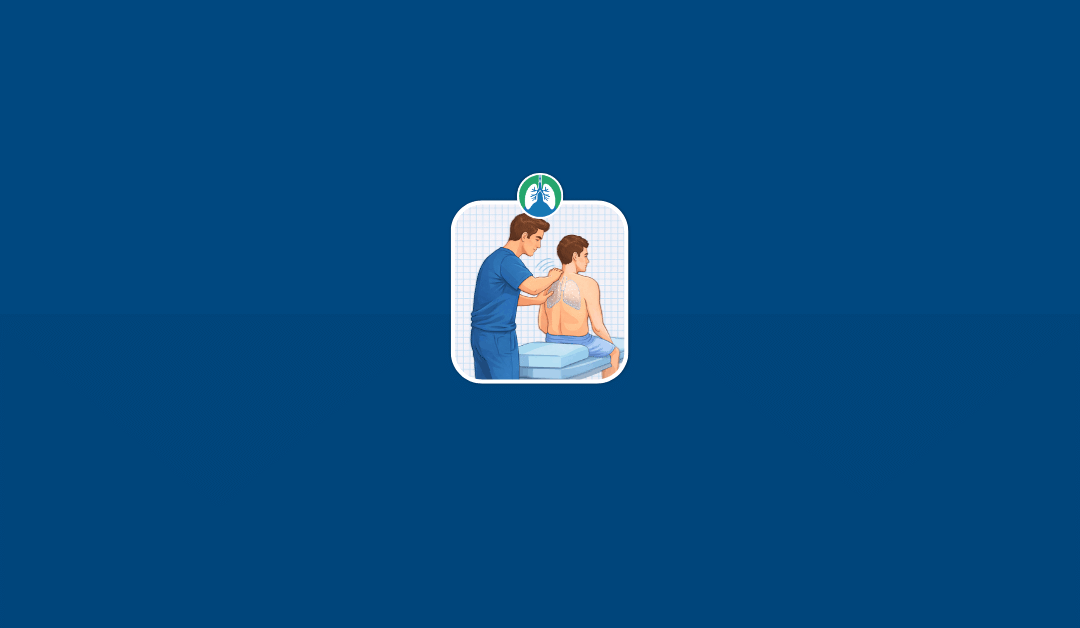
Learn what chest percussion is, how it’s performed, and how percussion sounds help identify lung and pleural abnormalities.

Learn what vital signs are, the different types, and why they are essential for patient assessment and respiratory care.

Learn what cyanosis is, its causes, and why it matters in respiratory care, including assessment, types, and clinical significance.

Learn how to perform a patient assessment in respiratory care with step-by-step guidance on evaluation and clinical care planning.

Learn the types of lung sounds, what causes them, and how auscultation helps identify respiratory conditions early and accurately.

Learn what vesicular breath sounds are, how they form, and why changes in these soft, low-pitched sounds can signal early lung problems.
Learn what bronchovesicular breath sounds are, where they’re normally heard, and why their presence elsewhere may signal early lung disease.

Learn what bronchial breath sounds are, how they form, and why hearing them in the lung periphery signals consolidation or atelectasis.

Learn what a pleural friction rub is, how it forms, and why this grating breath sound signals pleural inflammation needing evaluation.

Learn what diminished breath sounds mean, why they occur, and how they help identify airflow issues or pleural space problems in patients.
Learn what stridor is, why it occurs, and how to recognize dangerous upper airway obstruction for faster, more effective respiratory care.
Learn what rhonchi are, how they form, and what they reveal about mucus obstruction to improve respiratory assessment and patient care.
Learn what crackles are, why they occur, and how to assess them to better identify respiratory conditions during patient evaluation.

Learn what wheezing means, how it’s produced, and what conditions cause it to improve respiratory assessments and clinical decision-making.

Learn what dyspnea is, its causes, and why recognizing shortness of breath is vital in respiratory therapy and patient care.

Learn what diaphoresis is, its causes, and why recognizing this sign is vital for respiratory therapists in patient care.