
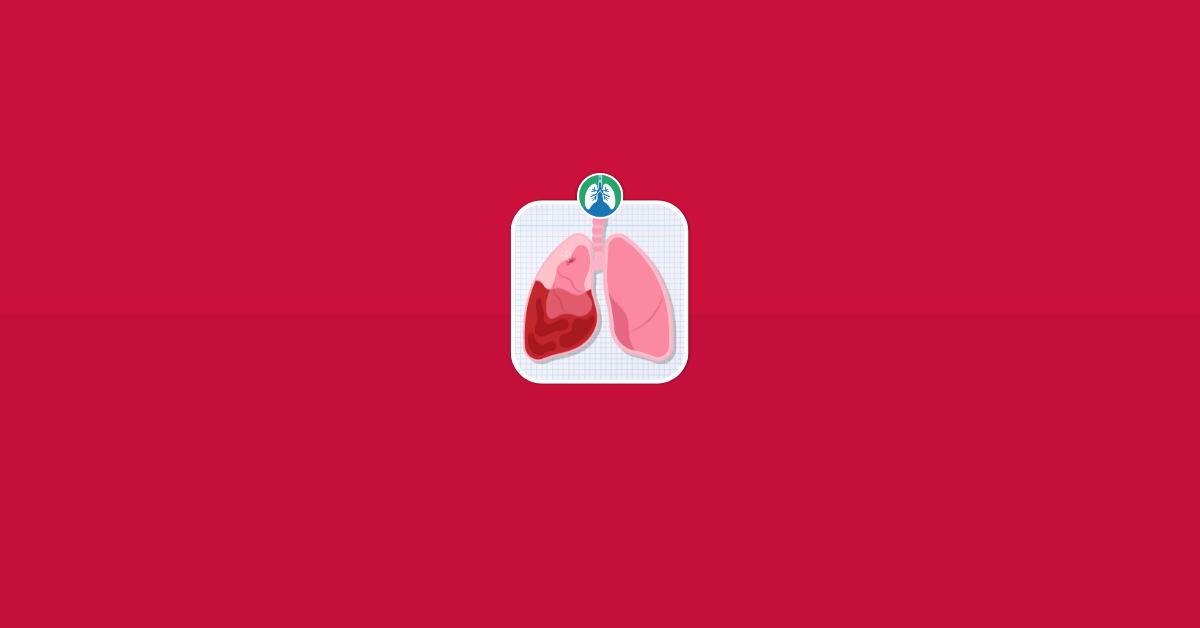
A hemothorax is a serious condition that occurs when blood accumulates in the pleural space, the area between the lungs and the chest wall. This buildup of blood interferes with normal lung expansion and can rapidly compromise breathing and circulation.
For respiratory therapists, recognizing and managing hemothorax is a critical skill. Prompt assessment, airway support, and collaboration with the healthcare team can make a significant difference in patient outcomes, especially in emergency and critical care settings.

What Is a Hemothorax?
A hemothorax is defined as the presence of blood within the pleural space. Clinically, it is often diagnosed when pleural fluid has a hematocrit greater than 50 percent of the patient’s peripheral blood hematocrit. Even smaller volumes of blood can still impair ventilation and oxygenation, particularly in patients with limited cardiopulmonary reserve.
Under normal conditions, the pleural space contains only a thin layer of lubricating fluid. This allows the lungs to expand smoothly during inspiration. When blood fills this space, it disrupts the negative pressure needed for lung expansion, leading to partial or complete lung collapse on the affected side. The result is reduced tidal volume, impaired gas exchange, and increased work of breathing.

Anatomy and Pathophysiology
Understanding the anatomy of the pleural space helps explain why hemothorax can be so dangerous. The pleura consists of two layers: the visceral pleura, which covers the lungs, and the parietal pleura, which lines the chest wall. Blood can enter this space from damaged lung tissue, intercostal vessels, the internal mammary artery, or major thoracic structures.
As blood accumulates, several physiologic changes occur:
- Lung compression reduces alveolar ventilation
- Ventilation-perfusion mismatch develops
- Hypoxemia worsens as gas exchange declines
- In severe cases, intravascular volume loss leads to hypotension and shock
Note: If the bleeding continues unchecked, a hemothorax can become massive, often defined as more than 1,500 mL of blood in the chest cavity or ongoing rapid blood loss via chest tube drainage.
Causes of a Hemothorax
Traumatic Causes
Trauma is the most common cause of hemothorax. Both blunt and penetrating injuries can lead to bleeding into the pleural space.
Common traumatic causes include:
- Motor vehicle collisions
- Falls from height
- Stab wounds or gunshot wounds
- Rib fractures that lacerate blood vessels or lung tissue
Note: In trauma patients, hemothorax often occurs alongside pneumothorax, creating a hemopneumothorax that further compromises ventilation.
Iatrogenic Causes
Hemothorax can also result from medical procedures, particularly those involving the chest or central vasculature.
Examples include:
- Central venous catheter placement
- Thoracentesis
- Lung biopsy
- Cardiac or thoracic surgery
Note: Respiratory therapists should be especially alert for hemothorax in patients who deteriorate shortly after invasive procedures.
Non-Traumatic Causes
Less commonly, hemothorax can occur spontaneously due to underlying conditions such as:
- Malignancy
- Pulmonary embolism with infarction
- Coagulation disorders
- Rupture of vascular abnormalities
Note: Although rare, spontaneous hemothorax can be life-threatening and requires rapid recognition.
Clinical Signs and Symptoms
The presentation of hemothorax varies depending on the volume of blood and the speed of accumulation. Small hemothoraces may produce minimal symptoms, while large or rapidly developing ones can cause acute respiratory failure.
Common signs and symptoms include:
- Shortness of breath
- Tachypnea
- Decreased or absent breath sounds on the affected side
- Dullness to percussion
- Chest pain
- Hypotension and tachycardia in cases of significant blood loss
Note: From a respiratory assessment standpoint, asymmetrical chest movement and increasing oxygen requirements are key warning signs.
Diagnosis and Imaging
Chest X-Ray
A chest radiograph is often the first imaging study performed. Blood in the pleural space appears as a homogeneous opacity, usually starting at the lung base and forming a meniscus. Upright films are most helpful, though supine films may obscure findings in critically ill patients.
Ultrasound
Point-of-care ultrasound has become an important tool, especially in trauma settings. It allows for rapid bedside detection of pleural fluid and can be used as part of the focused assessment with sonography for trauma (FAST) exam.
Computed Tomography
CT scanning provides the most detailed information, identifying the extent of bleeding and associated injuries. It is particularly useful in stable patients when the source of bleeding is unclear.
Management and Treatment
Initial Stabilization
Management begins with the basics: airway, breathing, and circulation. Respiratory therapists play a central role during this phase.
Key priorities include:
- Ensuring adequate oxygenation
- Supporting ventilation as needed
- Monitoring respiratory status and vital signs
Note: Supplemental oxygen is often required, and some patients may need noninvasive or invasive ventilatory support.
Chest Tube Thoracostomy
The primary treatment for most hemothoraces is chest tube placement. This allows blood to drain from the pleural space, re-expand the lung, and quantify ongoing bleeding.
From a respiratory care perspective, it is essential to:
- Monitor chest tube output
- Assess lung re-expansion
- Watch for air leaks or worsening respiratory status
Note: Rapid or continuous blood loss through the chest tube may signal the need for surgical intervention.
Surgical Management
Surgery is indicated in cases of massive hemothorax or ongoing hemorrhage. Procedures may include thoracotomy or video-assisted thoracoscopic surgery to control bleeding and evacuate clotted blood.
Complications of Hemothorax
If not managed properly, hemothorax can lead to several complications that significantly affect respiratory function.
Common complications include:
- Retained hemothorax
- Empyema
- Fibrothorax
- Persistent lung restriction
Retained blood can organize and become infected, leading to prolonged hospital stays and impaired lung mechanics. Respiratory therapists are often involved in managing these patients through airway clearance techniques, lung expansion therapy, and ventilator support when needed.
Why Hemothorax Is Important to Respiratory Therapists
Hemothorax is highly relevant to respiratory therapists because it directly affects ventilation, oxygenation, and lung mechanics. Therapists are often among the first clinicians to notice subtle changes in breath sounds, oxygen saturation, or work of breathing.
Key reasons this topic matters in respiratory care include:
- Frequent occurrence in trauma and ICU patients
- Need for rapid respiratory assessment
- Ongoing monitoring after chest tube placement
- Impact on ventilator management and lung compliance
Note: In mechanically ventilated patients, a hemothorax can increase peak pressures and reduce delivered tidal volumes. Recognizing these changes early can prevent further complications.
Ventilator Considerations
Patients with hemothorax who require mechanical ventilation present unique challenges. Lung compression and reduced compliance can make ventilation more difficult.
Important considerations include:
- Adjusting tidal volume and pressures to avoid further lung injury
- Monitoring for worsening hypoxemia
- Coordinating with the care team during chest tube insertion or surgical procedures
Note: Respiratory therapists must continuously evaluate ventilator graphics, blood gases, and patient-ventilator synchrony.
Recovery and Long-Term Outlook
The prognosis of a hemothorax depends on the cause, severity, and timeliness of treatment. Many patients recover fully with appropriate drainage and supportive care. Others may experience long-term restrictive lung disease, particularly if complications occur.
Pulmonary rehabilitation, breathing exercises, and gradual mobilization often play a role in recovery. Respiratory therapists contribute significantly during this phase by promoting lung expansion and preventing atelectasis.
Hemothorax Practice Questions
1. What is a hemothorax characterized by?
A hemothorax is characterized by the accumulation of blood in the pleural cavity, the space between the lungs and the chest wall. This accumulation can compromise respiratory function and necessitate prompt medical intervention.
2. How will patients with a hemothorax appear?
Cyanotic, tracheal deviation/mediastinal shift away from the affected side, and bruising over the affected area.
3. What will the respiratory pattern look like for patients with a hemothorax?
Tachypnea and a productive cough (i.e., hemoptysis).
4. What type of breath sounds will you hear in patients with a hemothorax?
Diminished or absent on the affected side.
5. What will chest percussion reveal in patients with a hemothorax?
Flat/dull percussion note on the affected side and decreased tactile and vocal fremitus.
6. What type of diagnostic testing should be done for a hemothorax?
Chest x-ray, ABG, and CBC.
7. What will the chest x-ray look like for a hemothorax?
Increased radiodensity, increased whiteness, and a tracheal shift away from the affected side.
8. What will the ABG look like for a patient with a hemothorax?
Acute alveolar hyperventilation with hypoxemia.
9. What will the CBC be like for a patient with a hemothorax?
Reduced RBC, Hbg, and Hct.
10. How can you treat a hemothorax?
Thoracentesis or chest tube to drain blood, oxygen therapy for hypoxemia, hyperinflation therapy, and mechanical ventilation with PEEP for acute ventilatory failure.
11. What is the etiology of a hemothorax?
Blood accumulation in the pleural cavity is often caused by trauma but is also a frequent complication following cardiac or thoracic surgery.
12. What is the chief complaint of a hemothorax?
Shortness of breath and chest pain
13. What would the physical exam reveal in a patient with a hemothorax?
Decreased breath sounds
14. How is a hemothorax diagnosed?
Chest x-ray
15. What does the past medical history of patients with hemothorax show?
Severe chest pain
16. What are the typical vital signs for a hemothorax?
Increased heart rate and blood pressure
17. What cough is manifested in patients with a hemothorax?
Productive cough
18. What is the appearance of the chest like for a hemothorax patient?
Tracheal and/or mediastinal shift away from the affected side with bruising over the affected area.
19. What is the hemothorax respiratory pattern?
Tachypnea and dyspnea, depending on severity.
20. What is the color of patients with a hemothorax?
Cyanotic
21. What are the typical breath sounds for a hemothorax?
Diminished or absent on the affected side, and a pleural friction rub is possible.
22. What assessment data would indicate that the chest tubes have been effective in treating a patient with a hemothorax who has a right-sided chest tube?
There is gentle bubbling in the suction compartment, no fluctuation in the water-seal compartment, 250 mL of blood in the drainage compartment, and the patient is able to breathe deeply without pain.
23. What is the quick definition of a hemothorax?
Blood in the pleural cavity that may result in lung collapse.
24. What is the pathophysiology of a hemothorax?
The pathophysiology of a hemothorax involves the accumulation of blood in the pleural space, typically due to trauma, surgical complications, or rupture of blood vessels. This accumulation leads to compression of the lung on the affected side, impairing oxygen exchange and ventilation. The pressure exerted by the blood can also impede venous return to the heart, potentially causing hemodynamic instability.
25. What is the primary cause of a hemothorax?
The primary cause of a hemothorax is usually trauma, particularly blunt or penetrating chest injuries.
26. What is the incidence of a hemothorax?
Hemothorax occurs in approximately 300,000 cases of trauma per year.
27. What are the complications of a hemothorax?
Mediastinal shift, ventilatory compromise, lung collapse, cardiopulmonary arrest, pneumothorax, and empyema.
28. What is the patient history of a hemothorax?
Recent trauma, recent thoracic surgery, metastatic disease, chest pain, and dyspnea.
29. What are the physical findings of a hemothorax?
Physical findings of a hemothorax typically include reduced or absent breath sounds on the affected side, dullness to percussion over the area with blood accumulation, rapid breathing, and signs of shock like rapid heartbeat and low blood pressure, particularly in large hemothoraces.
30. What diagnostic laboratory results would be found in patients with a hemothorax?
Pleural fluid analysis shows hematocrit greater than 50% of serum hematocrit; arterial blood gas (ABG) analysis may show increased PaCO2 and decreased PaO2; and serum hemoglobin levels may be decreased, depending on the amount of blood loss.
31. What diagnostic imaging results would be found in patients with a hemothorax?
Chest x-rays and CT scans of the thorax would show the presence and extent of hemothorax and help to evaluate treatment.
32. What would the results of a thoracentesis be for a patient with a hemothorax?
Thoracentesis may yield blood or serosanguineous fluid.
33. What are the common treatment methods for a hemothorax?
Stabilization of the patient’s clinical condition, stoppage of bleeding, thoracentesis, insertion of a chest tube, and auto-transfusion for blood loss.
34. What medications should be given for a hemothorax?
Oxygen, analgesics, and IV fluid therapy.
35. What are the expected outcomes of a hemothorax?
Expressed feelings of increased comfort and decreased pain, expressed feelings of reduced anxiety, fluid volume balance, adequate ventilation and oxygenation, effective breathing patterns, adequate cardiopulmonary perfusion, and no signs of infection.
36. How should the respiratory therapist help treat patients with a hemothorax?
Recommend analgesics as ordered, institute comfort measures and help the patient relax, auscultate lung sounds for changes, give prescribed oxygen based on saturation levels, if indicated, assist with chest tube insertion, ensure the tube is attached to a closed drainage system, arrange for chest X-rays to evaluate chest tube location, ensure follow-up chest X-ray after removal of the chest tube, change the chest tube dressing and provide chest tube care as needed, maintain underwater chest tube drainage as indicated, prepare the patient for surgery if needed, and obtain specimens for laboratory testing (i.e., ABG analysis).
37. What should be monitored in patients with a hemothorax?
Vital signs, intake/output, chest tube drainage, cardiopulmonary status, closed drainage system function, hemodynamic parameters, ABG results, chest X-ray results, CBC results, complications, and signs/symptoms of infection.
38. What causes blood in the pleural space?
Chest trauma
39. What is suspected in patients with severe chest pain after trauma?
Hemothorax
40. Is there tactile or vocal fremitus with a hemothorax?
Vibration while talking is decreased when a hemothorax is present.
41. Can a pleural friction rub occur in patients with a hemothorax?
Yes, it might be heard since the pleural space will be filled with blood.
42. What procedure is used to drain fluid from the lungs?
Thoracentesis
43. When assessing a patient with a hemothorax, you will most likely find what?
You will most likely find signs and symptoms of shock.
44. A moderate hemothorax diagnosis would be confirmed by the presence of what?
Blood filling approximately one-third of the pleural space.
45. What is the treatment of a hemothorax and pneumothorax?
Recommend a chest tube or thoracentesis in order to drain blood or air from the pleural space.
46. What assessment findings would you expect with a hemothorax?
Chest pain, dyspnea, and tachycardia.
47. Is there a tracheal shift when a hemothorax is present?
Yes, the trachea will shift away from the affected side.
48. What is the diagnostic percussion note for a hemothorax?
Chest percussion would show a dull percussion note.
49. What will the chest x-ray show for a hemothorax?
Partial or complete opacification of the affected side of the thorax.
50. Is mechanical ventilation recommended for a hemothorax?
If ventilatory failure is present, yes, mechanical ventilation would be indicated.
51. What differentiates a hemothorax from a pleural effusion on pleural fluid analysis?
A hemothorax is defined by pleural fluid hematocrit greater than 50% of the patient’s peripheral blood hematocrit.
52. What is a massive hemothorax?
A hemothorax involving more than 1,500 mL of blood in the pleural space or rapid ongoing blood loss via chest tube drainage.
53. Why does a hemothorax impair oxygenation?
Blood compresses lung tissue, reduces alveolar ventilation, and creates intrapulmonary shunting.
54. What breath sound change may occur as a hemothorax resolves?
Breath sounds may gradually return as blood is drained and lung expansion improves.
55. What percussion note helps distinguish hemothorax from pneumothorax?
Hemothorax produces dullness to percussion, whereas pneumothorax produces hyperresonance.
56. Why is early chest tube placement important in hemothorax?
Early drainage prevents lung entrapment, infection, and fibrothorax.
57. What is fibrothorax?
A complication in which organized blood and fibrosis restrict lung expansion after an untreated hemothorax.
58. What imaging modality best detects small or loculated hemothoraces?
CT scan of the chest.
59. What clinical finding suggests ongoing intrathoracic bleeding after chest tube placement?
Continued high-volume bloody drainage from the chest tube.
60. Why is pain control critical in patients with hemothorax?
Pain limits deep breathing and coughing, increasing the risk of atelectasis and hypoxemia.
61. What lung volumes are most affected by a hemothorax?
Functional residual capacity (FRC) and total lung capacity (TLC) are reduced.
62. How does hemothorax affect ventilation-perfusion (V/Q) matching?
Perfusion persists while ventilation is reduced, causing low V/Q regions and hypoxemia.
63. What additional complication should be suspected if hypotension persists despite drainage?
Ongoing hemorrhage or associated vascular injury.
64. Why may auto-transfusion be considered in large hemothoraces?
To recover and reinfuse the patient’s own blood from chest tube drainage.
65. What respiratory assessment finding indicates worsening hemothorax?
Increasing dyspnea with progressively diminished breath sounds on the affected side.
66. Why are serial chest x-rays important in hemothorax management?
They help monitor lung re-expansion and detect retained blood.
67. What is retained hemothorax?
Residual blood in the pleural space that remains after initial drainage.
68. How can retained hemothorax affect recovery?
It increases the risk of infection, empyema, and impaired lung expansion.
69. What pleural space change occurs immediately after bleeding into the chest?
Pleural pressure increases, leading to lung compression.
70. Why is hemothorax considered both a respiratory and circulatory problem?
It impairs ventilation while also causing intravascular blood loss.
71. What is a key difference between hemothorax and hemoptysis?
Hemothorax involves blood in the pleural space, while hemoptysis is blood expectorated from the airway.
72. Why should oxygen therapy be initiated early in hemothorax?
To correct hypoxemia caused by reduced lung expansion and gas exchange.
73. What patient position may help improve ventilation in unilateral hemothorax?
Placing the unaffected lung in the dependent position.
74. What laboratory trend may suggest ongoing bleeding in hemothorax?
Progressive decline in hemoglobin and hematocrit levels.
75. Why is hemothorax considered a medical emergency when severe?
Rapid blood accumulation can cause respiratory failure, shock, and cardiac compromise.
76. What clinical sign suggests lung re-expansion after hemothorax drainage?
Improved chest excursion and increased breath sounds on the affected side.
77. Why can a hemothorax lead to restrictive lung mechanics?
Blood in the pleural space limits lung expansion and chest wall movement.
78. What finding helps distinguish hemothorax from atelectasis on percussion?
Hemothorax produces dullness, whereas atelectasis may produce dullness with tracheal shift toward the affected side.
79. What complication can develop if blood remains in the pleural space for several days?
Empyema due to infection of retained blood.
80. Why is hemothorax more dangerous in patients with limited cardiopulmonary reserve?
They have reduced ability to compensate for blood loss and impaired ventilation.
81. What is the most common cause of iatrogenic hemothorax?
Complications from central line placement or thoracic procedures.
82. How does hemothorax affect lung compliance?
Compliance decreases due to lung compression and pleural space occupation.
83. What clinical sign indicates worsening mediastinal shift in hemothorax?
Increasing hypotension with deviation of the trachea away from the affected side.
84. Why should coagulation status be assessed in spontaneous hemothorax?
Underlying coagulopathy or anticoagulant use may contribute to bleeding.
85. What auscultatory finding may appear during recovery from hemothorax?
Crackles as the lung re-expands and alveoli reopen.
86. Why is early mobilization encouraged once a hemothorax stabilizes?
To promote lung expansion, secretion clearance, and prevent atelectasis.
87. What distinguishes a simple hemothorax from a hemopneumothorax?
A hemopneumothorax contains both blood and air in the pleural space.
88. Why may patients with hemothorax develop anemia?
Blood loss into the pleural cavity reduces circulating red blood cells.
89. What respiratory pattern suggests increasing work of breathing in hemothorax?
Rapid, shallow breathing with accessory muscle use.
90. What intervention helps prevent fibrothorax after hemothorax?
Complete and timely evacuation of pleural blood.
91. Why is lung ultrasound useful in evaluating hemothorax?
It can rapidly detect pleural fluid at the bedside.
92. What chest tube finding indicates possible obstruction?
Absence of expected drainage despite clinical signs of hemothorax.
93. Why can hemothorax worsen ventilation-perfusion mismatch?
Perfused lung regions are compressed and poorly ventilated.
94. What clinical clue suggests bilateral hemothorax?
Diminished breath sounds and dullness to percussion on both sides of the chest.
95. Why is careful monitoring required after chest tube removal in hemothorax?
Reaccumulation of blood or air may occur.
96. What factor determines the severity of symptoms in hemothorax?
The volume and rate of blood accumulation.
97. Why is hemothorax sometimes difficult to detect on supine chest x-rays?
Blood layers posteriorly and may appear as diffuse opacity.
98. What finding supports successful hemothorax management?
Improving oxygenation with decreasing supplemental oxygen requirements.
99. Why should patients with hemothorax avoid excessive coughing early on?
Forceful coughing can worsen pain and bleeding.
100. What long-term pulmonary effect can result from inadequately treated hemothorax?
Permanent restriction of lung expansion due to pleural fibrosis.
Final Thoughts
Hemothorax is a potentially life-threatening condition that demands prompt recognition and coordinated management. Blood accumulation in the pleural space compromises lung expansion, gas exchange, and overall cardiopulmonary stability.
For respiratory therapists, understanding the pathophysiology, clinical presentation, and treatment of hemothorax is essential. From initial assessment and oxygen therapy to ventilator management and post-treatment recovery, respiratory care professionals play a vital role at every stage.
A strong foundation in this topic supports better clinical judgment, faster intervention, and improved outcomes for patients facing this serious thoracic emergency.

Written by:
John Landry is a registered respiratory therapist from Memphis, TN, and has a bachelor's degree in kinesiology. He enjoys using evidence-based research to help others breathe easier and live a healthier life.
References
- Broderick SR. Hemothorax: Etiology, diagnosis, and management. Thorac Surg Clin. 2013.