

Mechanical ventilation is a critical therapy used to support or replace spontaneous breathing in patients with severe respiratory failure. Because these patients often depend entirely on the ventilator, continuous monitoring is essential to ensure safe and effective support.
One of the most important safety features built into modern ventilators is the alarm system. Ventilator alarms notify clinicians when parameters such as airway pressure, tidal volume, respiratory rate, or oxygen delivery fall outside safe limits. These alerts help identify issues like airway obstruction, circuit disconnection, equipment malfunction, or changes in patient condition.
This article provides a comprehensive overview of ventilator alarms, including their purpose, common types, typical causes, and the appropriate steps for troubleshooting and intervention.

Take our free course to master the basics of mechanical ventilation with clear explanations and helpful practice questions.
What Is a Ventilator Alarm?
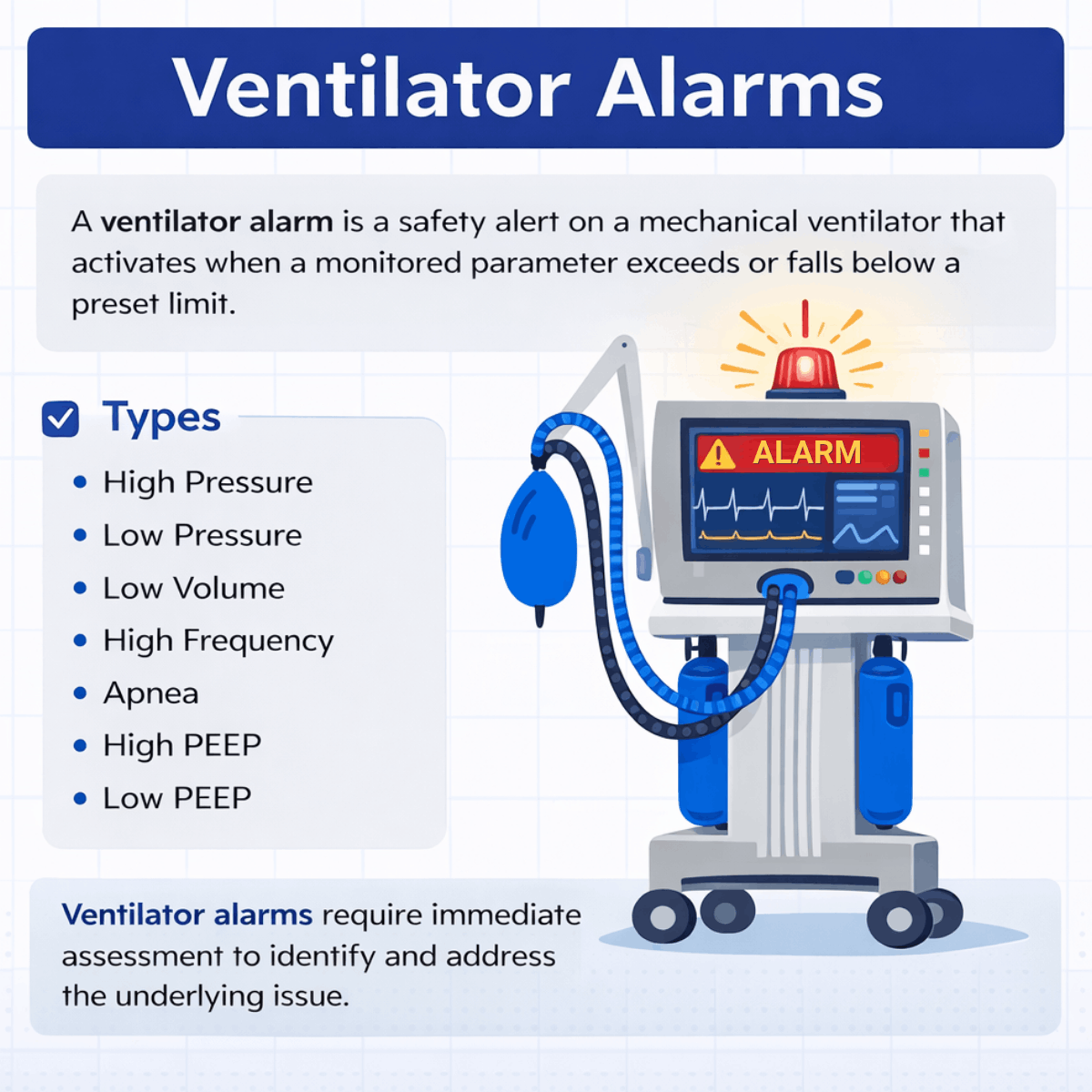
A ventilator alarm is a safety alert generated by a mechanical ventilator when a monitored parameter exceeds or falls below a preset limit. These alarms serve as early warning systems that notify clinicians of potential problems with the patient, ventilator circuit, or device itself.
Modern ventilators continuously monitor multiple parameters during mechanical ventilation. When a parameter moves outside the established safety range, the ventilator triggers an alarm through audible sounds, visual indicators, or both. These alerts prompt clinicians to assess the patient and identify the cause of the issue.
Ventilator alarms help ensure that patients receive consistent and effective respiratory support. Without these alarms, potentially dangerous situations such as circuit disconnections, airway obstructions, or excessive airway pressures could go unnoticed.
Ventilator Malfunction Alarms
These alarms indicate problems with the ventilator device itself rather than the patient. They are typically preset by the manufacturer and cannot be modified by clinicians.
Common ventilator malfunction alarms include:
- Power failure
- Loss of gas supply
- Pneumatic malfunction
- Electronic system failure
- Internal ventilator errors
Note: When these alarms occur, immediate attention is required to ensure that ventilation continues safely.
Patient Status Alarms
Patient status alarms monitor the interaction between the patient and the ventilator. These alarms are usually set or adjusted by the respiratory therapist based on the patient’s clinical condition.
Examples include:
- High pressure alarms
- Low pressure alarms
- High and low volume alarms
- High frequency alarms
- Apnea alarms
- High and low PEEP alarms
- Oxygen concentration alarms
- Temperature alarms
Note: These alarms provide continuous monitoring of ventilation effectiveness and patient stability.
Why Ventilator Alarms Are Important
Ventilator alarms are critical for maintaining patient safety during mechanical ventilation. Because critically ill patients may be sedated, paralyzed, or otherwise unable to communicate distress, alarms serve as the primary method for detecting changes that require intervention.
Several key functions highlight the importance of ventilator alarms:
Early Detection of Problems
Ventilator alarms alert clinicians to potentially dangerous situations before they become life-threatening. For example, a low-pressure alarm may indicate a circuit disconnection that could lead to rapid hypoxia if not addressed immediately.
Monitoring Patient-Ventilator Interaction
Alarms help identify issues related to patient-ventilator synchrony, airway resistance, lung compliance, and respiratory drive. Detecting these issues early allows clinicians to adjust ventilator settings or provide additional treatment.
Preventing Ventilator-Related Complications
High-pressure alarms help prevent excessive airway pressure that could lead to barotrauma or lung injury. Similarly, low-volume alarms ensure the patient receives adequate ventilation.
Improving Clinical Response Time
By providing audible and visual alerts, ventilator alarms allow healthcare providers to respond quickly and appropriately to emerging problems.
In critical care environments, where a single respiratory therapist may monitor multiple ventilated patients, these alarm systems are indispensable.
Initial Ventilator Alarm Settings
Proper alarm settings are essential for ensuring patient safety while minimizing nuisance alarms. If alarm limits are set incorrectly, they may either fail to detect important changes or generate excessive false alarms.
Alarm limits are typically adjusted after the patient is connected to the ventilator and baseline measurements such as peak inspiratory pressure and tidal volume are established.
Common initial alarm settings include:
- High pressure limit: 10–15 cm H₂O above PIP
- Low pressure limit: 5–10 cm H₂O below PIP
- Low PEEP limit: 3–5 cm H₂O below set PEEP
- Low exhaled tidal volume: 100 mL or 50% below set VT
- Low minute ventilation: 2–5 L/min or 50% below baseline
- High minute ventilation: 50% above baseline
- FiO₂ alarm: ±5% from set oxygen concentration
- Temperature alarm: ±2°C from set temperature
- Apnea delay: About 20 seconds
Note: These settings help ensure that alarms are sensitive enough to detect meaningful clinical changes while avoiding unnecessary alarms that may lead to alarm fatigue.
Types of Ventilator Alarms
Ventilator alarms can be grouped according to the parameter they monitor. The most common alarms encountered in clinical practice include:
- High pressure alarms
- Low pressure alarms
- Low volume alarms
- High frequency alarms
- Apnea alarms
- High PEEP alarms
- Low PEEP alarms
Note: Each alarm serves a unique role in identifying specific issues within the ventilator-patient system.
High Pressure Alarm
The high pressure alarm is one of the most common ventilator alarms encountered in clinical practice. It is triggered when the airway pressure in the ventilator circuit exceeds a preset limit during inspiration. This alarm protects the patient from excessive airway pressures that could cause lung injury.
Typically, the high pressure limit is set approximately 10 to 15 cm H2O above the patient’s peak inspiratory pressure (PIP). When the ventilator detects pressure exceeding this threshold, it immediately activates the alarm and may terminate the breath to prevent further pressure buildup.
Causes of a High Pressure Alarm
High pressure alarms generally occur due to one of two major problems:
- Increased airway resistance
- Decreased lung compliance
Increased Airway Resistance
Conditions that increase resistance within the airway can cause airway pressure to rise during inspiration.
Examples include:
- Secretions in the airway
- Bronchospasm
- Mucus plugs
- Kinking of the ventilator circuit
- Kinking of the endotracheal tube
- Water accumulation in the circuit
- Biting on the endotracheal tube
- Herniation of the endotracheal tube cuff
- Obstruction of the exhalation valve
Decreased Lung Compliance
Reduced lung compliance means the lungs are more difficult to inflate, which increases airway pressure during ventilation.
Common causes include:
- Pulmonary edema
- Pneumonia
- Acute respiratory distress syndrome (ARDS)
- Atelectasis
- Pneumothorax
- Hemothorax
- Abdominal distention
- Chest wall rigidity
Patient-Related Causes
Patient behaviors or conditions may also trigger a high pressure alarm.
Examples include:
- Coughing
- Patient-ventilator dyssynchrony
- Agitation or anxiety
- Fighting the ventilator
Troubleshooting a High Pressure Alarm
When a high pressure alarm occurs, clinicians should follow a systematic approach to identify and correct the underlying cause.
Step 1: Assess the Patient
Always evaluate the patient first. Look for signs of respiratory distress, cyanosis, agitation, or decreased oxygen saturation. If the patient appears unstable, manual ventilation may be required.
Step 2: Check the Airway
Inspect the endotracheal tube for obstruction, kinking, or displacement. If secretions are present, suction the airway.
Step 3: Inspect the Circuit
Check the ventilator tubing for kinks, water accumulation, or disconnections.
Step 4: Evaluate Lung Compliance
Consider whether lung compliance has changed due to conditions such as pneumothorax, pulmonary edema, or worsening lung disease.
Step 5: Adjust Ventilator Settings
If necessary, ventilator settings may need adjustment, including:
- Decreasing tidal volume
- Increasing inspiratory time
- Adjusting inspiratory flow waveform
- Providing bronchodilator therapy
Note: Correcting the underlying cause usually resolves the alarm quickly.
Low Pressure Alarm
The low pressure alarm is triggered when the airway pressure during inspiration falls below a preset minimum level. This alarm typically indicates that the ventilator circuit is not maintaining adequate pressure.
In most cases, the low pressure alarm signals a leak or disconnection within the ventilator system. The low pressure limit is usually set 5 to 10 cm H2O below the patient’s peak inspiratory pressure (PIP). When the ventilator detects pressure below this limit, the alarm is activated to alert clinicians of a possible ventilation failure.
Causes of a Low Pressure Alarm
Low pressure alarms often occur due to a loss of circuit pressure.
Common causes include:
Circuit Disconnection
- Ventilator tubing disconnected
- Loose humidifier connection
- Disconnected exhalation valve tubing
Airway Leaks
- Endotracheal tube cuff leak
- Deflated cuff
- Improperly positioned endotracheal tube
System Failures
- Loss of gas supply
- Power failure
- Air compressor malfunction
Incorrect Ventilator Settings
- Pressure limit set too high
- Tidal volume set too low
- Excessively sensitive trigger settings
Note: Low pressure alarms are frequently accompanied by low tidal volume alarms because pressure and volume are closely related in mechanical ventilation.
Troubleshooting a Low Pressure Alarm
When responding to a low pressure alarm, clinicians should act quickly because the patient may not be receiving adequate ventilation.
Steps to follow include:
- Check for circuit disconnection.
- Inspect all ventilator tubing and connections.
- Examine the endotracheal tube cuff for leaks.
- Confirm that the endotracheal tube is correctly positioned.
- Ensure the ventilator is receiving adequate gas supply and power.
Note: If the cause cannot be immediately identified, the respiratory therapist should manually ventilate the patient using a resuscitation bag until the issue is resolved.
Low Volume Alarm
A low volume alarm is triggered when the exhaled tidal volume falls below a preset minimum level. This alarm is designed to ensure that the patient is receiving and exhaling an adequate amount of air with each breath.
In many cases, the low volume alarm occurs alongside the low pressure alarm because both are commonly caused by leaks or disconnections in the ventilator system. When circuit pressure is lost, the delivered or returned volume often drops as well.
The low exhaled tidal volume alarm is typically set at a value such as 100 mL below the expected exhaled volume or 50% below the set tidal volume, depending on the patient and ventilator mode.
Causes of a Low Volume Alarm
A low volume alarm usually indicates that the ventilator is not delivering or receiving the expected tidal volume.
Common causes include:
Leaks in the System
Any leak within the ventilator circuit can reduce the amount of volume delivered to or returned from the patient.
Examples include:
- Loose circuit connections
- Cracked or damaged tubing
- Humidifier leaks
- Exhalation valve leaks
- Endotracheal tube cuff leak
Patient Disconnection
If the patient becomes disconnected from the ventilator circuit, the ventilator may continue to deliver breaths, but the exhaled volume will be markedly reduced or absent.
Airway Problems
Volume loss can also occur if the artificial airway is not functioning properly.
Examples include:
- Malpositioned endotracheal tube
- Partial extubation
- Deflated cuff
- Tracheostomy tube leak
Inadequate Ventilator Settings
Some low volume alarms may result from settings that do not match the patient’s needs.
Examples include:
- Tidal volume set too low
- Premature cycling
- Inappropriate inspiratory time
- Excessive respiratory demand
Troubleshooting a Low Volume Alarm
When a low volume alarm sounds, the clinician should determine whether the problem is related to a leak, disconnection, airway issue, or ventilator setting.
A systematic approach includes the following steps:
Step 1: Assess the Patient
Check the patient’s respiratory status, chest movement, oxygen saturation, and overall stability. If the patient is in distress or appears inadequately ventilated, provide manual ventilation immediately.
Step 2: Inspect for Disconnection
Examine the entire ventilator circuit from the ventilator to the patient. Make sure all tubing and humidifier connections are secure.
Step 3: Check for Leaks
Evaluate the cuff pressure and inspect for air leaks around the endotracheal tube or tracheostomy tube.
Step 4: Confirm Airway Position
Ensure the artificial airway remains in the proper position and has not migrated or become partially displaced.
Step 5: Evaluate Settings and Mode
Review the ventilator settings to make sure the tidal volume, inspiratory time, and sensitivity are appropriate for the patient’s condition.
Note: Because a low volume alarm may signal inadequate ventilation, it should always be taken seriously and corrected promptly.
High Frequency Alarm
A high frequency alarm is triggered when the patient’s total respiratory rate exceeds a preset upper limit. This alarm alerts the clinician to tachypnea, increased respiratory demand, or autotriggering.
The high frequency limit helps clinicians identify situations in which the patient may be in distress or the ventilator may be delivering unintended breaths. In many patients, persistent tachypnea is a sign that the current level of ventilatory support is not meeting their needs.
Causes of a High Frequency Alarm
High frequency alarms can occur for several reasons, ranging from true patient distress to inappropriate ventilator sensitivity settings.
Respiratory Distress
Patients who are uncomfortable, hypoxemic, acidotic, or anxious may breathe more rapidly than expected.
Common causes include:
- Hypoxemia
- Pain
- Anxiety
- Fever
- Metabolic acidosis
- Increased work of breathing
- Inadequate pressure support
- Inadequate inspiratory flow
Airway Problems
If the airway is obstructed or partially blocked, the patient may develop tachypnea as they attempt to compensate.
Examples include:
- Secretions
- Mucus plugging
- Bronchospasm
Auto-Triggering
A high frequency alarm may also result from the ventilator being triggered unintentionally rather than from true patient breathing efforts.
Common causes of auto-triggering include:
- Sensitivity set too high
- Circuit leaks
- Water in the tubing
- Cardiac oscillations
- External movement or vibration
Troubleshooting a High Frequency Alarm
When the high frequency alarm sounds, the clinician must determine whether the patient is truly tachypneic or whether the ventilator is autotriggering.
Step 1: Assess the Patient
Look for signs of respiratory distress such as accessory muscle use, agitation, low oxygen saturation, diaphoresis, or visible increased work of breathing.
Step 2: Evaluate Oxygenation and Ventilation
Check oxygen saturation, recent blood gas results if available, and the adequacy of current ventilator support.
Step 3: Check the Airway
Suction the patient if secretions are suspected. Assess for bronchospasm, mucus plugging, or partial airway obstruction.
Step 4: Review Ventilator Sensitivity
If autotriggering is suspected, adjust the trigger sensitivity so the ventilator is not activated by trivial pressure or flow changes.
Step 5: Optimize Support
Depending on the cause, appropriate interventions may include:
- Increasing FiO2
- Increasing inspiratory flow
- Increasing pressure support
- Treating pain or anxiety
- Correcting metabolic or respiratory abnormalities
Note: The high frequency limit should not be raised without a clear reason. The focus should be on identifying and correcting the underlying cause of the tachypnea.
Apnea Alarm
The apnea alarm, sometimes called the low frequency alarm, is triggered when the patient’s breathing frequency falls below a preset minimum or when no spontaneous breath is detected for a specified period.
This alarm is especially important in patients who are partially or fully dependent on spontaneous triggering of the ventilator. If apnea occurs and is not corrected, the patient may rapidly develop hypoventilation, hypoxemia, or complete respiratory failure.
Many ventilators use a preset apnea delay of approximately 20 seconds, although this may vary depending on the ventilator model and patient population.
Causes of an Apnea Alarm
The apnea alarm may be triggered by true apnea, failure to trigger the ventilator, or disconnection from the circuit.
Common causes include:
- Circuit Disconnection: One of the most frequent causes of an apnea alarm is disconnection between the ventilator circuit and the patient’s airway. If no airflow or patient effort is detected, the ventilator interprets this as apnea.
- Depressed Respiratory Drive: Patients receiving sedatives, opioids, or neuromuscular blocking agents may have reduced or absent spontaneous respiratory effort.
- Fatigue or Neuromuscular Weakness: Respiratory muscle fatigue or neuromuscular disease can impair the patient’s ability to trigger breaths.
- Sensitivity Problems: If the trigger sensitivity is not set appropriately, the patient may attempt to breathe without successfully triggering the ventilator.
- Central Respiratory Dysfunction: Neurologic injury or respiratory center dysfunction can also lead to apnea.
Troubleshooting an Apnea Alarm
The apnea alarm requires immediate attention because the patient may not be receiving adequate ventilation.
Step 1: Assess the Patient Immediately
Check for chest rise, respiratory effort, oxygen saturation, and signs of instability.
Step 2: Confirm Circuit Integrity
Inspect the ventilator circuit for disconnection from the patient, loose tubing, or major leaks.
Step 3: Provide Ventilation if Needed
If the patient is apneic or unstable, provide manual ventilation immediately while identifying the source of the problem.
Step 4: Evaluate Sedation and Respiratory Drive
Consider whether medications, fatigue, or neurologic impairment are suppressing respiratory effort.
Step 5: Review Trigger Settings and Backup Ventilation
Ensure the trigger sensitivity is set appropriately and confirm that the ventilator’s backup apnea ventilation is functioning as intended.
Note: Because apnea alarms may indicate complete absence of ventilation, they should always be treated as urgent.
High PEEP Alarm
A high PEEP alarm is triggered when the actual end-expiratory pressure exceeds a preset upper limit. This alarm is intended to protect the patient from excessive end-expiratory pressure, which can increase intrathoracic pressure, impair venous return, and worsen patient-ventilator interaction.
The most common cause of a high PEEP alarm is auto-PEEP, also known as intrinsic PEEP or air trapping.
Causes of a High PEEP Alarm
High PEEP alarms most often occur when exhalation is incomplete and pressure remains trapped in the lungs at the end of expiration.
Common causes include:
- Auto-PEEP
- Air trapping
- High respiratory rate
- Short expiratory time
- Insufficient inspiratory flow leading to prolonged inspiratory time
- Obstructive lung disease
- Bronchospasm
- Excessive tidal volume
- Inappropriate I:E ratio
Note: In some cases, an inappropriately high external PEEP setting may also contribute.
Troubleshooting a High PEEP Alarm
Correcting a high PEEP alarm involves identifying the cause of air trapping or excessive end-expiratory pressure.
Interventions may include:
- Prolonging expiratory time
- Reducing respiratory rate
- Reducing tidal volume
- Increasing inspiratory flow to shorten inspiratory time
- Treating bronchospasm with bronchodilators
- Suctioning retained secretions if indicated
- Reassessing the set PEEP level
Note: When auto-PEEP is severe, the patient may have difficulty triggering the ventilator and may show signs of distress, dyssynchrony, or hemodynamic compromise.
Low PEEP Alarm
A low PEEP alarm is triggered when the measured end-expiratory pressure drops below a preset lower limit. This alarm indicates that the ventilator is not maintaining the desired level of PEEP.
Because PEEP is important for keeping alveoli open and improving oxygenation, a low PEEP alarm may signal a clinically important loss of pressure within the system.
Causes of a Low PEEP Alarm
The most common cause of a low PEEP alarm is a leak somewhere in the circuit or airway.
Examples include:
- Leak in the ventilator circuit
- Loose tubing connection
- Endotracheal tube cuff leak
- Leak around a tracheostomy tube
- Faulty valve or humidifier connection
Note: Another possible cause is strong patient inspiratory effort, which may pull airway pressure below the set threshold if inspiratory flow does not meet demand.
Troubleshooting a Low PEEP Alarm
A low PEEP alarm should prompt the clinician to assess whether the patient is losing airway pressure because of a system leak or ventilator mismatch.
Steps include:
- Inspect the circuit for leaks or loose connections
- Evaluate cuff inflation and airway integrity
- Confirm that the ventilator valves are functioning properly
- Assess inspiratory flow settings
- Adjust settings to better match patient demand if needed
Note: Correcting the leak or improving patient-ventilator synchrony will often resolve the alarm.
Auto-PEEP and Its Role in Ventilator Alarms
Auto-PEEP is an unintentional buildup of positive pressure in the lungs at the end of exhalation. It occurs when the patient does not have enough time to fully exhale before the next breath begins. This phenomenon is especially common in patients with obstructive lung disease, high respiratory rates, inadequate expiratory time, or excessive ventilatory support.
Auto-PEEP is clinically important because it can:
- Increase the work of breathing
- Make it more difficult for the patient to trigger the ventilator
- Cause patient-ventilator dyssynchrony
- Increase the risk of air trapping and hyperinflation
- Contribute to high PEEP alarms and high pressure alarms
In a patient with auto-PEEP, the ventilator may display a lower proximal pressure than the true pressure trapped in the distal airways and alveoli.
As a result, the patient may need to generate extra negative pressure just to overcome the intrinsic PEEP before triggering a ventilator breath. This added workload can be substantial and may cause respiratory fatigue.
Strategies to reduce auto-PEEP include:
- Decreasing the respiratory rate
- Reducing tidal volume
- Increasing inspiratory flow
- Lengthening expiratory time
- Treating bronchospasm
- Reducing air trapping
- Carefully applying external PEEP in selected patients
Note: In some cases, external PEEP may help reduce the effort required to trigger the ventilator, but this must be used cautiously and based on the underlying cause of the obstruction.
General Principles for Troubleshooting Ventilator Alarms
Although each ventilator alarm has its own causes and corrective actions, the general approach to troubleshooting should always remain systematic and patient-centered. Alarms are not meant to be ignored or silenced without investigation. Instead, they should prompt an immediate assessment of both the patient and the ventilator system.
One of the most important principles in ventilator alarm management is to assess the patient before the machine. While the ventilator provides valuable information, the patient’s clinical condition should always guide the urgency and direction of the response. If the patient is unstable, cyanotic, agitated, unresponsive, or showing signs of severe respiratory distress, immediate manual ventilation may be necessary while the underlying issue is identified.
A calm and organized response helps prevent delays in care. Rather than reacting to the sound of the alarm alone, the clinician should identify the specific alarm, interpret what it means, and work through the likely causes in a logical order. This helps reduce errors and ensures that important causes such as airway obstruction, pneumothorax, or circuit disconnection are not overlooked.
Another key principle is that ventilator alarms must be individualized. Alarm settings should not be left at generic defaults if they do not reflect the patient’s actual condition. Proper alarm adjustment is essential for balancing safety and alarm fatigue. If settings are too narrow, nuisance alarms may occur constantly. If settings are too wide, clinically important changes may go unnoticed.
A Practical Bedside Approach to Ventilator Alarms
When a ventilator alarm sounds, clinicians should use a consistent bedside sequence to evaluate the problem efficiently. This approach supports rapid intervention while minimizing panic and confusion.
Step 1: Assess the Patient First
The first step is always to look at the patient. Check for chest rise, skin color, oxygen saturation, heart rate, respiratory effort, and overall comfort. Observe whether the patient appears anxious, agitated, tachypneic, or in obvious distress.
Questions to consider include:
- Is the patient being ventilated adequately?
- Is there visible chest movement?
- Is oxygen saturation dropping?
- Is the patient fighting the ventilator?
- Does the patient need to be manually ventilated immediately?
Note: If the patient appears unstable or if ventilation cannot be confirmed, disconnecting from the ventilator and ventilating with a manual resuscitation bag may be the safest immediate action.
Step 2: Identify the Alarm Type
Once the patient has been assessed, determine exactly which alarm has been triggered. Modern ventilators display the alarm message on the screen, making it easier to distinguish between pressure alarms, volume alarms, apnea alarms, and equipment-related alarms.
Identifying the specific alarm narrows the list of possible causes and guides the next steps.
Step 3: Check the Airway
After identifying the alarm, evaluate the artificial airway. Inspect the endotracheal tube or tracheostomy tube for kinking, displacement, cuff leak, biting, or obstruction. If secretions are suspected, suctioning may be indicated.
Airway problems are especially common causes of high pressure alarms, low volume alarms, and low pressure alarms.
Step 4: Inspect the Ventilator Circuit
Trace the circuit from the ventilator all the way to the patient. Check for disconnected tubing, loose humidifier chambers, water accumulation, cracks, leaks, and malfunctioning valves.
A quick visual and hands-on inspection of the circuit often reveals the source of a low pressure, low volume, or low PEEP alarm.
Step 5: Review Ventilator Settings and Waveforms
Once immediate threats are excluded, review the ventilator settings and graphics. Check parameters such as:
- Tidal volume
- Respiratory rate
- Inspiratory flow
- Inspiratory time
- PEEP
- Trigger sensitivity
- Pressure limits
- FiO2
Note: Waveforms and loops can provide additional clues. For example, failure of expiratory flow to return to baseline may suggest auto-PEEP, while irregular triggering may suggest patient-ventilator dyssynchrony or autotriggering.
Step 6: Treat the Underlying Cause
After the problem is identified, the next step is to correct it. This may involve suctioning the airway, adjusting the ventilator, treating bronchospasm, replacing circuit tubing, repositioning the airway, or addressing the patient’s pain, anxiety, or oxygenation status.
Note: The goal is not merely to silence the alarm, but to resolve the condition that caused it.
When to Manually Ventilate the Patient
Manual ventilation should be considered whenever there is uncertainty about the ventilator’s ability to safely support the patient or when the patient is rapidly deteriorating.
Situations in which manual ventilation may be necessary include:
- Major ventilator malfunction
- Sudden circuit disconnection
- Persistent apnea
- Severe high pressure alarm with patient instability
- Unexplained drop in oxygen saturation
- Suspected airway obstruction
- Power or gas supply failure
Bag-mask or bag-tube ventilation allows the clinician to ensure that the patient is receiving breaths while troubleshooting continues. It also provides useful feedback about lung compliance and airway resistance.
For example, if the lungs are difficult to ventilate manually, the problem may be related to bronchospasm, mucus plugging, pneumothorax, or decreased compliance rather than a simple machine issue.
Note: Whenever manual ventilation is initiated, close observation is required to ensure adequate chest rise, ventilation, and oxygenation.
Common Interventions Used During Alarm Troubleshooting
Many ventilator alarms can be corrected through a relatively small set of common interventions. The appropriate intervention depends on the nature of the alarm and the patient’s condition, but several bedside actions are frequently used.
- Airway Suctioning: Suctioning is indicated when secretions are suspected to be obstructing the airway or contributing to increased resistance. This is especially relevant for high pressure alarms and high frequency alarms.
- Repositioning the Airway: If the endotracheal tube is malpositioned, touching the carina, partially extubated, or kinked, repositioning may resolve the alarm and improve ventilation.
- Correcting Leaks and Disconnections: Loose circuit connections, cuff leaks, or damaged tubing should be corrected immediately. These issues commonly trigger low pressure, low volume, and low PEEP alarms.
- Adjusting Trigger Sensitivity: Improper trigger settings can lead to missed breaths or autotriggering. Adjusting the sensitivity may improve synchrony and reduce false high frequency or apnea alarms.
- Modifying Inspiratory Flow or Time: If inspiratory demand is not being met, the patient may become tachypneic or dyssynchronous. Increasing inspiratory flow or adjusting inspiratory time may improve comfort and reduce the work of breathing.
- Treating Bronchospasm: Bronchodilator therapy may be required when bronchospasm contributes to high airway resistance, air trapping, or auto-PEEP.
- Adjusting Tidal Volume or Rate: Reducing tidal volume or respiratory rate may help decrease air trapping and intrinsic PEEP in patients experiencing high PEEP or high pressure alarms.
- Managing Anxiety, Pain, or Agitation: Some alarms are caused or worsened by patient discomfort. Treating anxiety or pain appropriately may reduce tachypnea, dyssynchrony, and excessive respiratory effort.
Avoiding Alarm Fatigue
Alarm fatigue occurs when clinicians become desensitized to frequent alarms, especially when many of them are false, non-urgent, or repetitive. This can be dangerous because it increases the risk that a significant alarm will be delayed, missed, or ignored.
Preventing alarm fatigue begins with proper alarm management. Alarms should be set thoughtfully based on the patient’s actual ventilatory needs rather than left at default settings. Repeated nuisance alarms should prompt reassessment of the settings, mode, and patient condition.
For example:
- A high pressure limit set too close to the patient’s normal peak inspiratory pressure may alarm constantly
- A high frequency limit set too low may repeatedly alarm in a patient who is mildly tachypneic but otherwise stable
- A trigger set too sensitive may cause autotriggering and repeated unnecessary alarms
Note: Alarm fatigue is reduced when clinicians understand what each alarm means, tailor the settings appropriately, and respond to recurring alarms by fixing the source rather than simply silencing the ventilator.
Waveform Analysis in Alarm Assessment
Ventilator waveforms can provide important clues during alarm troubleshooting. Although the audible alarm identifies that a problem exists, the pressure-time, flow-time, and volume-time graphics may help explain why.
Examples include:
- A pressure waveform with an abnormally high peak may support a high pressure alarm caused by increased resistance or decreased compliance
- A flow waveform that does not return to baseline before the next breath may suggest incomplete exhalation and auto-PEEP
- Irregular triggering patterns may indicate patient-ventilator dyssynchrony or sensitivity issues
- Reduced exhaled volume on the volume-time scalar may support the presence of a leak or disconnection
Note: For respiratory therapists, waveform interpretation adds another layer of bedside assessment that can improve troubleshooting speed and accuracy.
Considerations for Patient-Ventilator Dyssynchrony
Patient-ventilator dyssynchrony is a common contributor to ventilator alarms, particularly high pressure alarms, high frequency alarms, and apnea-related events. Dyssynchrony occurs when the patient’s breathing efforts are not aligned with the ventilator’s timing, flow delivery, or cycling pattern.
This mismatch can increase the patient’s work of breathing, worsen discomfort, and trigger repeated alarms. Common causes include:
- Inadequate inspiratory flow
- Improper trigger sensitivity
- Excessive or insufficient pressure support
- Poorly matched inspiratory time
- Auto-PEEP
- Anxiety or agitation
Note: When dyssynchrony is suspected, treatment should focus on improving synchrony rather than only reacting to the alarm itself. This may involve optimizing ventilator settings, reducing air trapping, treating pain or anxiety, and reassessing sedation when appropriate.
Key Safety Tips for Managing Ventilator Alarms
Several practical safety principles can improve alarm management and reduce the risk of patient harm.
- Never Silence an Alarm Without Investigating: Silencing an alarm without identifying its cause can delay recognition of a life-threatening problem.
- Keep Emergency Equipment Available: A manual resuscitation bag, suction equipment, oxygen source, and airway supplies should always be readily available near a ventilated patient.
- Reassess Alarm Limits Regularly: Alarm settings should be reviewed after changes in ventilator mode, patient condition, sedation level, or lung mechanics.
- Watch for Trends, Not Just Single Events: Repeated alarms often indicate an evolving clinical issue. A pattern of rising peak pressures, repeated tachypnea, or frequent low volume alarms should prompt deeper evaluation.
- Communicate With the Care Team: Persistent or unexplained alarms should be communicated clearly with nurses, physicians, and other members of the care team, especially when they may indicate worsening lung mechanics, pneumothorax, fatigue, or deterioration in gas exchange.
Ventilator Alarm Practice Questions
1. What is a ventilator alarm?
A ventilator alarm is a safety alert that activates when a monitored parameter exceeds or falls below a preset limit during mechanical ventilation.
2. Why are ventilator alarms important?
Ventilator alarms notify clinicians of potential problems with the patient, ventilator, or circuit that may compromise ventilation, oxygenation, or patient safety.
3. What are the two main categories of ventilator alarms?
The two main categories are patient-related alarms and ventilator or equipment-related alarms.
4. What does a high-pressure alarm indicate?
A high-pressure alarm indicates that the airway pressure has exceeded the preset pressure limit during inspiration.
5. What is the most common cause of a high-pressure alarm?
Increased airway resistance, often caused by secretions, bronchospasm, or a kinked endotracheal tube.
6. How is the high-pressure alarm typically set?
It is usually set about 10–15 cm H2O above the patient’s peak inspiratory pressure (PIP).
7. What conditions can decrease lung compliance and trigger a high-pressure alarm?
Examples include ARDS, pulmonary edema, pneumonia, atelectasis, and pneumothorax.
8. What does a low-pressure alarm indicate?
A low-pressure alarm indicates that airway pressure has fallen below the preset limit during inspiration.
9. What is the most common cause of a low-pressure alarm?
A disconnection or leak in the ventilator circuit.
10. What should a clinician do first when a ventilator alarm sounds?
Always assess the patient first before troubleshooting the ventilator.
11. What is the purpose of the low tidal volume alarm?
The low tidal volume alarm alerts clinicians when the delivered or exhaled tidal volume falls below a preset minimum.
12. What condition commonly triggers both low-pressure and low-volume alarms?
A circuit disconnection or an endotracheal tube cuff leak.
13. What does a high respiratory rate alarm indicate?
It indicates that the patient’s respiratory rate has exceeded the preset upper limit.
14. What is a common cause of high respiratory rate alarms besides respiratory distress?
Auto-triggering caused by an overly sensitive trigger setting or circuit disturbances.
15. What is auto-triggering?
Auto-triggering occurs when the ventilator delivers breaths without true patient effort due to excessive trigger sensitivity, leaks, or circuit movement.
16. What is the purpose of the apnea alarm?
The apnea alarm detects when the patient fails to initiate breaths for a preset period.
17. What is the typical apnea delay setting on many ventilators?
It is commonly set around 20 seconds.
18. What condition may trigger an apnea alarm besides apnea itself?
A ventilator circuit disconnection or failure of the patient to trigger breaths.
19. What does a high PEEP alarm indicate?
It indicates that the measured PEEP is higher than the preset upper limit.
20. What is the most common cause of a high PEEP alarm?
Auto-PEEP caused by incomplete exhalation and air trapping.
21. What ventilator adjustments can help reduce auto-PEEP?
Decreasing respiratory rate, reducing tidal volume, and increasing expiratory time.
22. What does a low PEEP alarm indicate?
It indicates that the measured PEEP has dropped below the preset minimum limit.
23. What is the most common cause of a low PEEP alarm?
A leak in the ventilator circuit or around the endotracheal tube cuff.
24. When should a clinician manually ventilate a patient?
When the ventilator malfunctions, the patient is unstable, or adequate ventilation cannot be confirmed.
25. What is alarm fatigue?
Alarm fatigue occurs when clinicians become desensitized to frequent alarms, increasing the risk that important alarms may be ignored or delayed.
26. What ventilator alarms are most likely to sound when there is a circuit disconnection or major leak?
Low pressure alarms and low exhaled volume alarms.
27. What ventilator alarm commonly indicates an airway obstruction?
A high-pressure alarm.
28. What ventilator alarm may occur if a patient begins assisting the ventilator more effectively or if lung compliance improves?
A high tidal volume alarm.
29. What ventilator alarm may sound if there is a leak, circuit disconnection, or significant decrease in lung compliance?
A low tidal volume alarm.
30. What ventilator alarm may indicate the presence of auto-PEEP or air trapping?
A high PEEP alarm.
31. What ventilator alarm may occur if inspiratory time becomes excessively long relative to expiratory time?
An I:E ratio or inspiratory time alarm.
32. What is the normal inspiratory-to-expiratory (I:E) ratio during mechanical ventilation?
Approximately 1:2.
33. Where should the low-pressure alarm typically be set relative to peak inspiratory pressure (PIP)?
About 5–10 cm H2O below the patient’s PIP.
34. Where should the high-pressure alarm typically be set relative to peak inspiratory pressure (PIP)?
About 10–20 cm H2O above the patient’s PIP.
35. What is the common apnea delay setting on most mechanical ventilators?
Approximately 20 seconds.
36. How is the low exhaled tidal volume alarm commonly set?
Approximately 100 mL or about 10–15% below the set tidal volume.
37. How is the high minute ventilation alarm typically set?
About 10–15% above the patient’s baseline minute ventilation.
38. How is the low minute ventilation alarm typically set?
Approximately 10–15% below the patient’s baseline minute ventilation or expected backup minute ventilation.
39. How is the FiO2 alarm commonly set on mechanical ventilators?
Usually ±5% from the set oxygen concentration.
40. How is the low PEEP alarm typically set?
About 3–5 cm H2O below the set PEEP level.
41. What temperature limit is typically maintained for heated humidification in ventilated patients?
The temperature should not exceed 37°C at the airway.
42. What alarm indicates an internal ventilator malfunction or system failure?
A ventilator inoperative or system failure alarm.
43. What is the immediate response if a ventilator becomes inoperable?
Disconnect the patient from the ventilator, manually ventilate using a resuscitation bag, and replace or repair the ventilator.
44. What steps should be taken when a high-pressure alarm sounds?
Assess the patient, check the airway for obstruction, suction if needed, verify endotracheal tube position, check for kinks or water in the tubing, and evaluate for decreased lung compliance such as pneumothorax.
45. What should be assessed when a low-pressure alarm sounds?
Check for circuit disconnections, leaks, loose connections, or an endotracheal tube cuff leak.
46. What should be evaluated if low exhaled tidal volume alarms occur?
Inspect for leaks, reconnect any disconnected tubing, check the cuff pressure, and assess the expiratory flow sensor for condensation or malfunction.
47. What adjustments may help correct an inverse I:E ratio alarm?
Increase inspiratory flow, reduce inspiratory time, decrease tidal volume, or reduce the respiratory rate.
48. What does an I:E ratio alarm greater than 1:1 usually indicate?
Excessively long inspiratory time or inadequate expiratory time.
49. What steps should be taken when high tidal volume, high minute ventilation, or high respiratory rate alarms occur?
Assess the patient for increased ventilatory demand, check for auto-triggering, evaluate trigger sensitivity settings, inspect flow sensors, and adjust alarm limits if appropriate.
50. What steps should be taken when an apnea alarm sounds?
Check the patient immediately, assess for circuit leaks or disconnections, verify trigger sensitivity, and confirm the apnea delay setting.
51. Where should the high-pressure alarm typically be set on a mechanical ventilator?
The high-pressure alarm is usually set about 10 cm H2O above the patient’s peak inspiratory pressure (PIP).
52. How is the minimum exhaled tidal volume alarm commonly set?
It is typically set about 100 mL below the expected or measured exhaled tidal volume.
53. What is the most common cause when the minimum exhaled tidal volume alarm is triggered?
A leak in the ventilator circuit or around the artificial airway.
54. Where should the low-pressure alarm typically be set?
The low-pressure alarm is generally set about 5–10 cm H2O below the patient’s peak inspiratory pressure (PIP).
55. How is the oxygen concentration alarm typically set on a ventilator?
It is commonly set ±5% above and below the prescribed FiO2.
56. How should PEEP or CPAP alarms be configured on a ventilator?
Both high and low limits should be set around the prescribed PEEP or CPAP level to detect abnormal changes.
57. What should be checked if the ventilator displays a power failure or system failure alarm?
The electrical power source and backup battery supply should be checked immediately.
58. What action should be taken if an oxygen failure alarm sounds?
The clinician should verify the oxygen supply source and confirm adequate gas pressure.
59. What does a temperature alarm typically indicate on a ventilator humidification system?
The airway gas temperature is outside the preset safe range.
60. What is the first action when troubleshooting a ventilator alarm if the patient is unstable?
Disconnect the ventilator and provide manual ventilation with a resuscitation bag.
61. What conditions should be considered when a low-pressure alarm sounds?
Possible causes include circuit disconnection, a ventilator circuit leak, insufficient inspiratory flow, or an endotracheal or tracheostomy tube cuff leak.
62. What two major categories of problems should be considered when a high-pressure alarm occurs?
Patient-related airway obstruction and equipment-related obstruction.
63. What conditions should be considered when a low exhaled tidal volume alarm sounds?
Possible causes include patient disconnection, circuit leaks, or reduced patient tidal volume.
64. How should ventilator volume measurements be periodically verified?
Using a calibrated spirometer or volume-measuring device.
65. How should ventilator pressure readings be periodically verified?
Using a calibrated pressure manometer.
66. What is the most common physiologic cause of a high-pressure alarm on a ventilator?
Increased airway resistance or decreased lung compliance.
67. What airway or equipment problems commonly cause high-pressure alarms?
Examples include kinked tubing, water accumulation in the circuit, mucus plugging, patient coughing, or patient-ventilator dyssynchrony.
68. How should a high-pressure alarm caused by a kinked ventilator tube be corrected?
Straighten or reposition the tubing to remove the obstruction.
69. How should water accumulation in the ventilator circuit be corrected when it causes a high-pressure alarm?
Drain the condensation from the ventilator tubing.
70. How should mucus obstruction in the airway causing a high-pressure alarm be managed?
Suction the airway and perform appropriate airway clearance techniques.
71. What should be done if a patient is fighting the ventilator and causing a high-pressure alarm?
Assess the patient, address discomfort or anxiety, and evaluate the need for sedation or ventilator adjustment.
72. What clinical findings may suggest that a pneumothorax is causing a high-pressure alarm?
Asymmetric chest expansion and diminished or absent breath sounds on one side.
73. How should a suspected pneumothorax causing a high-pressure alarm be managed?
Immediately notify the healthcare provider and initiate appropriate emergency treatment.
74. What can cause a patient to bite the endotracheal tube and trigger a high-pressure alarm?
Patient agitation or inadequate sedation.
75. How can biting of the endotracheal tube be prevented in ventilated patients?
By inserting a bite block or oral airway.
76. What commonly causes low-pressure alarms on a ventilator?
Circuit disconnections, ventilator circuit leaks, or endotracheal tube cuff leaks.
77. How should a cuff leak causing a low-pressure alarm be evaluated?
Check the cuff pressure and inspect the cuff or pilot balloon for leaks.
78. How should a ventilator circuit leak causing a low-pressure alarm be corrected?
Inspect all tubing connections and secure any loose or disconnected components.
79. What should be done if a patient becomes disconnected from the ventilator circuit?
Reconnect the circuit immediately and assess the patient’s ventilation status.
80. What physiologic effect can occur if ventilator settings deliver excessive ventilation?
Overventilation may cause respiratory alkalosis.
81. What physiologic effect can occur if ventilator settings deliver inadequate ventilation?
Underventilation may cause respiratory acidosis.
82. What patient position is generally recommended for mechanically ventilated patients to reduce aspiration risk?
The semi-Fowler’s position.
83. What does weaning from mechanical ventilation mean?
Gradually reducing ventilatory support until the patient can maintain adequate spontaneous breathing without assistance.
84. What ventilator alarm indicates that airway pressure has exceeded the preset pressure limit, causing inspiration to terminate before the full tidal volume is delivered?
The high-pressure limit alarm.
85. What patient conditions can trigger a high-pressure limit alarm?
Common causes include coughing, hiccups, airway secretions requiring suctioning, bronchospasm, or decreased lung compliance.
86. What equipment problems can trigger a high-pressure limit alarm?
Examples include a kinked endotracheal tube, an obstructed airway, water in the ventilator tubing, or a patient biting the tube.
87. What serious clinical condition should be considered if a sudden high-pressure alarm occurs with decreased breath sounds?
A pneumothorax.
88. What airway malposition can cause a high-pressure alarm due to increased resistance?
Endotracheal tube displacement into the right mainstem bronchus.
89. What lung condition may cause progressively increasing airway pressures and repeated high-pressure alarms?
Acute respiratory distress syndrome (ARDS)
90. What interventions may help resolve a high-pressure limit alarm caused by airway obstruction?
Suction the airway, check tube position, clear circuit condensation, and correct any tubing kinks.
91. What intervention may be needed if a patient is biting the endotracheal tube and triggering a high-pressure alarm?
Insert a bite block or oral airway.
92. What intervention may be required if agitation or patient–ventilator dyssynchrony triggers high-pressure alarms?
Provide sedation or adjust ventilator settings.
93. What ventilator alarm indicates that inspiratory pressure has dropped below the preset minimum limit?
The low inspiratory pressure alarm.
94. What common problems can cause a low inspiratory pressure alarm?
Circuit disconnection, ventilator circuit leaks, cuff leaks, or insufficient inspiratory flow.
95. What actions should be taken to correct a low inspiratory pressure alarm?
Reconnect the ventilator circuit, check cuff pressure, and inspect tubing connections.
96. What ventilator alarm sounds when the measured PEEP or CPAP level falls below the preset limit?
The low PEEP/CPAP pressure alarm.
97. What conditions commonly cause a low PEEP/CPAP alarm?
Circuit disconnection, cuff leaks, or increased patient inspiratory demand.
98. How can a low PEEP/CPAP alarm be corrected?
Reconnect the circuit, verify cuff pressure, and correct any leaks.
99. What ventilator alarm sounds when the ventilator does not detect a patient-triggered breath within the preset apnea interval?
The apnea alarm.
100. What conditions commonly cause an apnea alarm?
True apnea during CPAP or pressure support ventilation, excessive sedation, or circuit disconnection.
Final Thoughts
Ventilator alarms are essential safety features that help clinicians recognize problems with the patient, ventilator circuit, or mechanical ventilator itself. They are not simply sounds to be silenced, but warnings that demand clinical attention and careful interpretation.
The key to effective alarm management is a structured approach. Clinicians should assess the patient first, identify the alarm, inspect the airway and circuit, review ventilator settings, and correct the underlying problem. When necessary, manual ventilation should be initiated without delay.
Ultimately, ventilator alarms are most valuable when clinicians understand their purpose and respond with skill, urgency, and sound clinical judgment. By combining careful assessment with appropriate interventions, healthcare providers can improve patient safety, maintain effective ventilation, and reduce the risk of preventable complications.

Written by:
John Landry is a registered respiratory therapist from Memphis, TN, and has a bachelor's degree in kinesiology. He enjoys using evidence-based research to help others breathe easier and live a healthier life.
References
- Williams LM, Sharma S. Ventilator Safety. [Updated 2023 Aug 8]. In: StatPearls [Internet]. Treasure Island (FL): StatPearls Publishing; 2026.