
Acute respiratory distress syndrome (ARDS) is a severe form of acute respiratory failure characterized by widespread inflammation in the lungs and the development of noncardiogenic pulmonary edema. The condition leads to impaired gas exchange, decreased lung compliance, and significant hypoxemia that often does not respond well to conventional oxygen therapy.
ARDS commonly develops after direct lung injury or systemic illness such as pneumonia or sepsis. Because patients frequently require advanced respiratory support and careful ventilator management, ARDS is highly relevant to respiratory therapists and the broader field of respiratory care.

What Is Acute Respiratory Distress Syndrome?
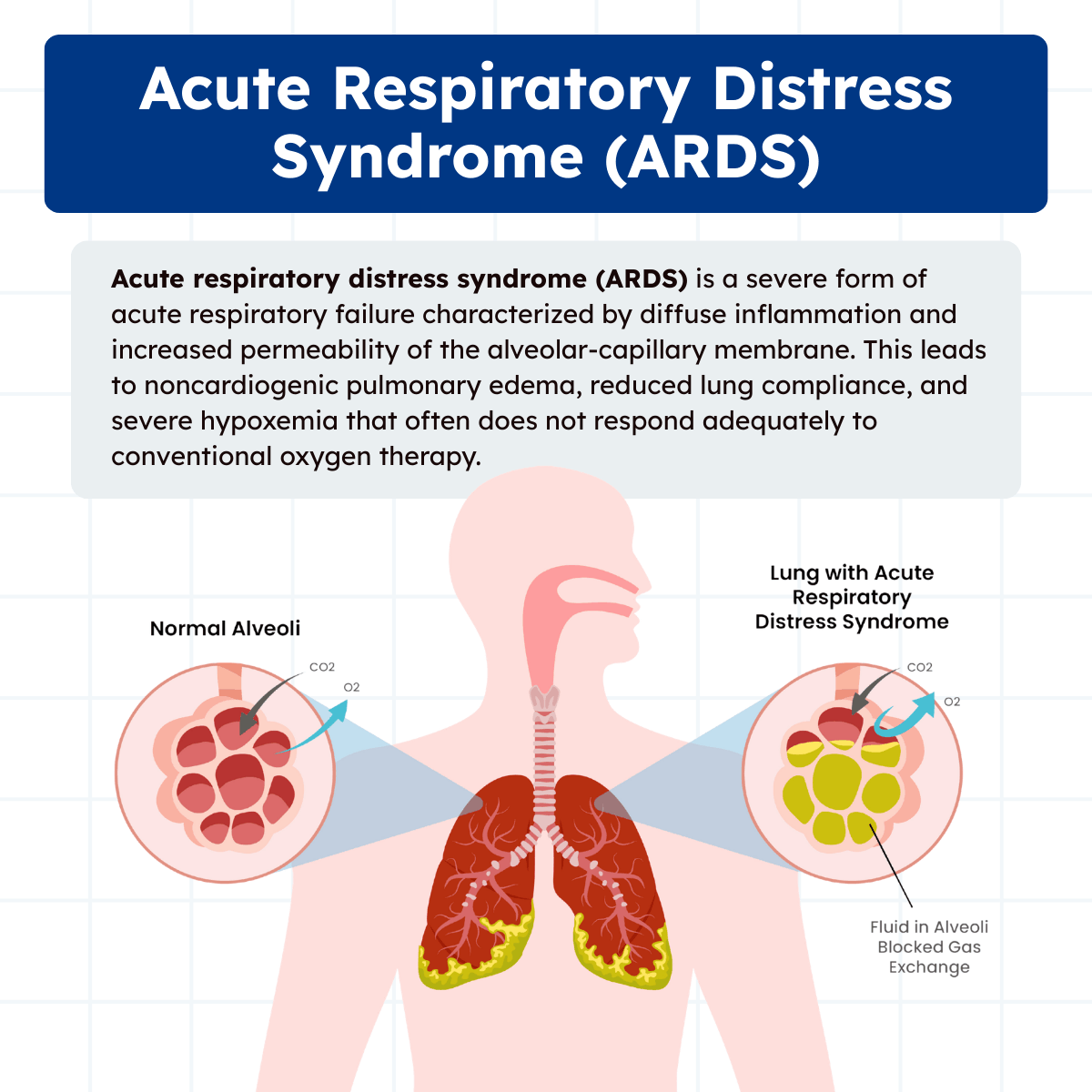
Acute respiratory distress syndrome (ARDS) is a clinical syndrome marked by rapid onset of respiratory failure caused by diffuse inflammation and injury to the alveolar-capillary membrane. This injury increases the permeability of pulmonary capillaries, allowing fluid, proteins, and inflammatory cells to enter the alveolar spaces. As a result, pulmonary edema develops even though the heart is functioning normally.
The accumulation of fluid in the alveoli interferes with normal gas exchange. Oxygen diffusion becomes impaired, which leads to hypoxemia. In many cases, the hypoxemia is refractory, meaning that it does not adequately improve with standard oxygen therapy alone.
ARDS also affects the mechanical properties of the lungs. The lungs become stiff due to edema, inflammation, and collapse of alveoli. This reduces lung compliance and increases the work of breathing. Patients often require mechanical ventilation to support oxygenation and ventilation while the underlying condition is treated.
The syndrome can develop rapidly, often within hours or days after a triggering event. Without prompt recognition and supportive care, ARDS can progress quickly and result in life threatening respiratory failure.
Pathophysiology of ARDS
Injury to the Alveolar-Capillary Membrane
The central pathophysiologic feature of ARDS is injury to the alveolar-capillary membrane. Under normal conditions, this membrane provides a thin barrier that allows efficient gas exchange between the alveoli and pulmonary capillaries. In ARDS, inflammatory mediators and immune cells damage this barrier.
Neutrophils play a major role in this process. They release inflammatory cytokines, proteases, and reactive oxygen species that damage endothelial and epithelial cells within the lungs. As the membrane becomes more permeable, plasma and proteins leak into the interstitial space and alveoli.
Development of Noncardiogenic Pulmonary Edema
Because the alveolar-capillary barrier is disrupted, fluid accumulates within the lungs even though hydrostatic pressures in the pulmonary circulation may be normal. This type of pulmonary edema is referred to as noncardiogenic pulmonary edema.
The presence of fluid within the alveoli prevents normal ventilation of affected lung units. Gas exchange becomes inefficient, and oxygen levels in the blood decline.
Ventilation-Perfusion Mismatch and Shunting
ARDS produces significant abnormalities in ventilation-perfusion relationships. Many alveoli become filled with fluid or collapse due to loss of surfactant. Blood flow may still pass through these areas, which results in physiologic shunting.
In a shunt, blood passes through the lungs without being adequately oxygenated. This contributes to the severe hypoxemia commonly seen in ARDS. Increasing the fraction of inspired oxygen often provides limited improvement because the underlying issue is the lack of functional alveoli available for gas exchange.
Reduced Lung Compliance
Another hallmark of ARDS is decreased lung compliance. The combination of alveolar edema, inflammation, and collapse makes the lungs stiff and difficult to expand.
Reduced compliance increases the work required for breathing and makes spontaneous ventilation more difficult. For this reason, many patients with ARDS require mechanical ventilation to maintain adequate oxygenation and ventilation.
Causes and Risk Factors
ARDS can develop after a wide range of direct lung injuries or systemic illnesses. The condition often represents the final common pathway of several types of inflammatory injury affecting the lungs.
Direct Pulmonary Causes
Some causes of ARDS originate within the lungs themselves. These conditions directly injure the alveoli or airways and trigger inflammation.
Common pulmonary causes include:
- Pneumonia
- Aspiration of gastric contents
- Pulmonary contusion from trauma
- Inhalation injury from toxic gases or smoke
Note: These conditions damage the alveolar structures and promote inflammatory responses that lead to increased permeability of the alveolar-capillary membrane.
Extrapulmonary Causes
ARDS may also develop as a complication of systemic illnesses that affect the lungs indirectly. In these cases, inflammatory mediators circulating in the bloodstream contribute to lung injury.
Common extrapulmonary causes include:
- Sepsis
- Severe trauma or shock
- Burns
- Acute pancreatitis
- Massive blood transfusion
Note: Sepsis is one of the most common causes of ARDS in critically ill patients. The widespread inflammatory response associated with severe infection can cause diffuse injury to pulmonary tissues.
Clinical Features
Patients with ARDS often present with rapidly worsening respiratory symptoms. The onset typically occurs within one week of a known clinical insult or the development of new respiratory symptoms.
Signs and Symptoms
Common clinical manifestations include:
- Severe shortness of breath
- Rapid breathing
- Increased work of breathing
- Use of accessory respiratory muscles
- Cyanosis in severe cases
Note: On physical examination, clinicians may hear diffuse crackles during lung auscultation. These sounds reflect the presence of fluid within the alveoli and interstitial tissues.
Signs of Hypoxemia
Hypoxemia is a defining feature of ARDS. Patients may exhibit several physiologic signs that indicate inadequate oxygenation.
These include:
- Tachycardia
- Restlessness or agitation
- Central cyanosis
- Low oxygen saturation despite supplemental oxygen
Note: Because oxygenation is severely impaired, many patients require high levels of oxygen support or mechanical ventilation early in the course of the illness.
The Berlin Definition of ARDS
To standardize the diagnosis of ARDS, clinicians use the Berlin Definition, which describes specific clinical criteria.
Timing
Symptoms must develop within one week of a known clinical insult or new respiratory symptoms.
Chest Imaging Findings
Chest radiography or computed tomography typically shows bilateral infiltrates or opacities that are consistent with pulmonary edema. These abnormalities cannot be fully explained by pleural effusions, lung collapse, or pulmonary nodules.
Origin of Edema
The pulmonary edema observed in ARDS must not be caused by cardiac failure or fluid overload. If the cause is uncertain, additional testing such as echocardiography may be used to evaluate cardiac function.
Oxygenation Criteria
The severity of ARDS is classified according to the ratio of arterial oxygen pressure to the fraction of inspired oxygen, commonly known as the P/F ratio. Measurements are made while the patient is receiving at least 5 cmH2O of PEEP or CPAP.
The severity categories are:
- Mild ARDS: P/F ratio 201 to 300
- Moderate ARDS: P/F ratio 101 to 200
- Severe ARDS: P/F ratio less than 100
Note: These categories help clinicians assess the severity of the disease and guide treatment decisions.
Diagnostic Evaluation
Diagnosing ARDS requires a combination of clinical assessment, imaging studies, and laboratory testing. The goal is to confirm the presence of acute lung injury while excluding other potential causes of respiratory failure.
Arterial Blood Gas Analysis
Arterial blood gas testing is commonly performed to assess oxygenation, ventilation, and acid-base balance. Patients with ARDS often demonstrate severe hypoxemia with a low PaO2 despite high levels of supplemental oxygen.
ABG analysis also helps clinicians calculate the P/F ratio, which is used to classify the severity of the syndrome.
Chest Imaging
Chest radiography or computed tomography is used to identify the bilateral infiltrates associated with ARDS. These imaging findings reflect fluid accumulation and inflammatory changes within the lungs.
Imaging studies also help clinicians evaluate other possible causes of respiratory failure, such as pneumonia, atelectasis, or pleural effusion.
Evaluation of Cardiac Function
Because cardiogenic pulmonary edema can produce similar clinical findings, it is important to evaluate cardiac function when ARDS is suspected.
Echocardiography may be used to assess left ventricular function and identify signs of heart failure. In some cases, measurement of biomarkers such as brain natriuretic peptide may also assist in differentiating cardiac and noncardiac causes of pulmonary edema.
Why ARDS Is Relevant to Respiratory Therapists
ARDS is a high acuity condition in which respiratory support is often the deciding factor between stabilization and rapid deterioration. Respiratory therapists are central to the bedside management of ARDS because the syndrome is defined by severe hypoxemia, decreased lung compliance, and the need for carefully controlled ventilatory strategies to avoid ventilator-induced lung injury (VILI).
RTs contribute across several domains:
- Early recognition of worsening oxygenation and work of breathing
- Accurate assessment of severity using the P/F ratio and response to PEEP
- Implementation and monitoring of lung-protective ventilation protocols
- Ventilator waveforms and mechanics assessment, including plateau pressure and compliance trends
- Support for adjunctive strategies such as prone positioning and neuromuscular blockade when indicated
- Coordination of rescue therapies for life-threatening hypoxemia in collaboration with the ICU team
- Education and protocol adherence, which is especially relevant for exam preparation and standardized care pathways
Differentiating ARDS From Cardiogenic Pulmonary Edema
ARDS is defined as noncardiogenic pulmonary edema, but patients often present with bilateral infiltrates and severe hypoxemia that can resemble congestive heart failure. Differentiation is important because initial treatment strategies differ.
Cardiogenic pulmonary edema often improves with diuresis and afterload reduction, whereas ARDS management focuses on treating the trigger and providing lung-protective ventilatory support.
Clinical History and Triggers
The history often provides the most useful clues. ARDS frequently follows a known inflammatory trigger such as:
- Pneumonia
- Aspiration of gastric contents
- Sepsis
- Shock or major trauma
- Burns
- Pancreatitis
- Pulmonary contusion
Note: The presence of these triggers supports ARDS, especially when respiratory failure develops within one week.
Physical Exam and Imaging Limitations
Physical examination and chest radiography frequently show findings consistent with pulmonary edema in both ARDS and cardiogenic pulmonary edema. Diffuse crackles, tachypnea, and bilateral opacities are common in both conditions. For this reason, the bedside evaluation should not rely on auscultation or chest x-ray alone.
Evidence Against Cardiac Failure or Fluid Overload
The Berlin definition requires that pulmonary edema is not fully explained by cardiac failure or fluid overload. When the diagnosis is uncertain, objective testing is used to evaluate cardiac function and volume status.
Useful findings that argue against cardiogenic pulmonary edema include:
- No cardiomegaly or pleural effusions on imaging
- No jugular venous distension
- No S3 or S4 gallop
Useful tests include:
- Echocardiography to evaluate left ventricular function and filling pressures
- BNP to help support or argue against heart failure in context
- CVP trends to assess overhydration and guide fluid balance decisions, recognizing the limitations of any single measurement
Initial Assessment and Severity Classification
Once ARDS is suspected, clinicians assess oxygenation and classify severity. Severity classification is based on the P/F ratio measured with at least 5 cmH2O of PEEP or CPAP.
Recognizing Severe Hypoxemia
Clinical indicators of severe hypoxemia and high risk of deterioration include:
- SpO2 less than 90% despite FiO2 greater than 0.30
- Rising FiO2 requirements with persistent dyspnea
- Tachycardia, central cyanosis, diaphoresis
- Increasing work of breathing and thoracoabdominal paradox
Note: ABG assessment is typically recommended to objectively quantify PaO2, determine the P/F ratio, and evaluate acid-base status.
Lung-Protective Ventilation
Mechanical ventilation is often required in ARDS, but the ventilator can worsen lung injury if settings produce overdistension or repetitive opening and closing of unstable lung units. Lung-protective ventilation seeks to minimize VILI while maintaining acceptable oxygenation and pH.
Core Principles
Key goals commonly include:
- Low tidal volume ventilation based on predicted body weight (PBW), not actual body weight
- Plateau pressure at or below 30 cmH2O
- PEEP at least 5 cmH2O with titration of FiO2 and PEEP to achieve oxygenation targets
- Acceptance of permissive hypercapnia when needed and when safe
- Avoidance of dyssynchrony that increases transpulmonary stress
Predicted Body Weight and Tidal Volume Selection
PBW requires an accurate height measurement. Once PBW is calculated, tidal volume targets are set per protocol.
A common approach is:
- Start with tidal volume 8 mL/kg PBW
- Reduce in steps to 7 mL/kg, then 6 mL/kg over the first several hours
- If plateau pressure remains high, reduce further to as low as 4 mL/kg PBW in small steps
Note: Respiratory therapists are responsible for ensuring tidal volume is based on PBW, tracking plateau pressure, and documenting changes and patient response.
Plateau Pressure Monitoring
Plateau pressure reflects static pressure in the alveoli and is used to reduce overdistension.
Common protocol-based actions include:
- If plateau pressure is greater than 30 cmH2O, decrease tidal volume in 1 mL/kg steps to a minimum of 4 mL/kg PBW
- If plateau pressure is less than 25 cmH2O and tidal volume is below 6 mL/kg, consider increasing tidal volume by 1 mL/kg steps up to 6 mL/kg while monitoring plateau pressure
- If dyssynchrony or breath stacking occurs while plateau pressure remains less than 30 cmH2O, carefully adjusting tidal volume and sedation strategy may be considered, depending on the protocol and patient status
Note: Plateau pressure should be assessed routinely and after changes in tidal volume or PEEP.
Oxygenation Targets and FiO2 and PEEP Titration
Typical oxygenation targets include:
- SpO2 88% to 95%
- PaO2 55 to 80 torr
Note: Respiratory therapists frequently adjust FiO2 and PEEP using protocol-based tables to maintain these targets while limiting oxygen toxicity. A common goal is to reduce FiO2 below 0.60 as soon as feasible by increasing PEEP as appropriate.
Ventilator Rate and pH Targets
Because low tidal volume ventilation can lead to hypercapnia, ventilator rate is often increased to maintain adequate minute ventilation.
A typical pH goal is 7.30 to 7.45. Protocol-based adjustments may include:
- Increasing respiratory rate up to a maximum near 35/min if pH drops below target
- If severe acidemia persists, carefully increasing tidal volume in small steps may be considered even if plateau pressure targets may be exceeded, with additional options such as bicarbonate in selected situations
Permissive Hypercapnia
Permissive hypercapnia allows PaCO2 to rise when necessary to maintain lung-protective settings, as long as pH remains acceptable. This strategy is avoided or used cautiously when contraindications exist, such as elevated intracranial pressure.
Note: Respiratory therapists monitor ABGs, pH trends, ventilator waveforms, and patient comfort, and they communicate when gas exchange goals conflict with protective pressure limits.
Adjunctive Strategies
Some supportive measures can improve oxygenation or reduce ventilator stress when standard lung-protective ventilation is insufficient.
Sedation and Dyssynchrony Management
Dyssynchrony can increase airway pressures and worsen lung injury. Sedation may be used to improve ventilator tolerance and allow protective ventilation targets. If dyssynchrony remains severe, deeper sedation or additional strategies may be required.
Neuromuscular Blockade
Neuromuscular blockade may be considered in severe cases to eliminate patient effort, reduce dyssynchrony, and allow permissive hypercapnia and protective settings. Agents such as cisatracurium are used selectively and typically for limited durations under close monitoring.
Prone Positioning
Prone positioning is a recommended strategy in severe ARDS, commonly defined by a P/F ratio less than 150 with high oxygen requirements and adequate PEEP.
Proning is typically applied for long sessions, often at least 16 hours per day. It can recruit collapsed lung units and improve V/Q matching by shifting perfusion away from heavily shunted regions. RT involvement includes ventilator management during turning, airway security, secretion management, and monitoring for changes in oxygenation and compliance.
Fluid-Conservative Management
After initial resuscitation, conservative fluid management is often used to reduce lung water and improve oxygenation. Diuretics may be used to maintain neutral fluid balance and prevent overload. This strategy is generally avoided in patients with shock or signs of tissue hypoperfusion.
RTs support this approach by tracking oxygenation trends, ventilator mechanics, and secretion burden, which can change with fluid status.
Patient Positioning and Prevention Measures
Head-of-bed elevation to 30 to 45 degrees reduces aspiration risk and helps prevent ventilator-associated pneumonia. RTs frequently ensure these measures are maintained alongside ventilator care and airway management.
Rescue Therapies for Life-Threatening Hypoxemia
Rescue therapies may produce short term improvement in oxygenation but do not consistently improve mortality across populations. They are considered for refractory hypoxemia when lung-protective ventilation and adjunctive strategies are insufficient.
Common options include:
- Inhaled nitric oxide, often started at low doses and titrated within a limited range
- High-frequency oscillatory ventilation in select settings and institutional protocols
- ECMO for a small subset of patients with very severe ARDS who fail conventional strategies, recognizing that availability depends on center capability and patient selection
Note: Respiratory therapists may help initiate, monitor, and assess response to these therapies, while documenting objective changes in oxygenation and ventilator parameters.
Therapies Not Recommended
Several interventions have not shown consistent benefit in ARDS management and are generally not recommended for routine treatment.
Examples include:
- Corticosteroids as routine therapy for ARDS
- Surfactant therapy
- Beta agonists
- N-acetylcysteine
Note: Routine use of a pulmonary artery catheter for daily ARDS management is also not recommended. Fluid balance and perfusion assessment can often be guided by clinical assessment, echocardiography, CVP trends, and other indicators.
ARDS Practice Questions
1. What is acute respiratory distress syndrome (ARDS) characterized by?
ARDS is characterized by rapid-onset, severe inflammation in the lungs, leading to fluid accumulation and significant breathing difficulties.
2. What are the clinical hallmarks of ARDS?
Hypoxemia, bilateral radiographic opacities, and diffuse alveolar damage.
3. What should a respiratory therapist monitor in patients with ARDS?
Cardiovascular compromise (decreased carbon dioxide), changes in blood pressure, decreased pulse intensity, oxygen saturation, mental status changes, and laboratory values.
4. What can be seen in the chest imaging of patients with ARDS?
Bilateral opacities that are not fully explained by effusions, lobar/lung collapse, or nodules.
5. What is the origin of edema in ARDS?
Respiratory failure that is not fully explained by cardiac failure or fluid overload. If no risk factors are present, echocardiography can be used to exclude hydrostatic edema.
6. What are the most common risk factors for ARDS?
Severe sepsis, pneumonia, aspiration, trauma (including pulmonary contusion), multiple transfusions, pancreatitis, near-drowning, medical prescription overdose, hyper transfusion, burns, infections, post-resuscitation, and cardiopulmonary bypass.
7. What are the signs and symptoms of ARDS?
This disease has a rapid onset, occurring 12-48 hours after insult/injury, respiratory distress, and multi-organ dysfunction syndrome.
8. How do you diagnose ARDS?
Diagnosis happens simultaneously with interventions, chest x-ray, CT scan of the chest with or without contrast, CBC count, comprehensive metabolic panel, CE, lactate, and urine drug testing. The medical history is important to consider (i.e., what occurred within 48 hours), type of work, drug use, medications, and the patient’s past medical history.
9. What can be observed on the chest x-ray of a patient with ARDS?
It is indistinguishable from those of cardiogenic pulmonary edema. Bilateral opacities consistent with pulmonary edema with diffuse bilateral infiltrates (i.e., white-out). Bilateral infiltrates may be patchy or asymmetric and may include pleural effusions.
10. What are some treatment methods for ARDS?
Oxygen therapy, prone positioning, administration of Nitric oxide and steroids, inverse ratio ventilation, and high-frequency oscillatory ventilation.
11. What are the pathologic or structural changes with ARDS?
Interstitial and intra-alveolar edema and hemorrhage, alveolar consolidation, intra-alveolar hyaline membrane, and pulmonary surfactant deficiency or abnormality atelectasis
12. What is another name for ARDS?
“Shock Lung Syndrome”
13. What etiologic factors can produce ARDS?
These include aspiration, disseminated intravascular coagulation, drug overdose, fat or air emboli, fluid overload, infection, inhalation of toxins and irritants, immunologic reaction, massive blood transfusion, oxygen toxicity, and pulmonary ischemia. Also, radiation-induced lung injury, shock, systemic reactions to processes initiated outside the lungs, thoracic trauma (i.e., pneumothorax), and uremia.
14. What are the clinical manifestations of ARDS?
Atelectasis, alveolar consolidation, and increased alveolar-capillary membrane thickness.
15. What clinical data can be obtained at the bedside of patients with ARDS?
Patients manifest increased RR (respiratory rate), HR (heart rate), BP (blood pressure, and CO (carbon monoxide). The chest has a dull percussion note, bronchial breath sounds, and crackles.
16. What are the typical ABG results for a patient with ARDS?
Mild to moderate-acute alveolar hyperventilation with hypoxemia. In severe cases, acute ventilatory failure with hypoxemia.
17. What are the general radiologic findings for ARDS?
Increased opacity
18. What are the ideal ventilator settings for ARDS patients?
Low tidal volumes (4-6 mL/kg) and high respiratory rates (as high as 35 bpm).
19. Which white blood cell is most commonly implicated in the inflammatory process of ARDS?
Neutrophils
20. What is the mortality rate for ARDS?
The mortality rate for ARDS is not definite and depends on the severity of the condition. Mortality correlates with the driving pressure, the difference between plateau and positive end-expiratory pressure (PEEP).
21. What clinical features are seen in both ARDS and CHF patients?
They both have diffused alveolar and interstitial infiltrates on a chest radiograph.
22. What time frame does ARDS typically occur?
Between one and three days.
23. What is not a common finding in the exudative phase of ARDS?
Bradypnea
24. What mode of mechanical ventilation is designed to optimize ventilation by recruiting alveolar units while minimizing ventilator-induced barotrauma in patients with ARDS?
Airway pressure release ventilation (APRV)
25. What organ plays a major role in the induction and modulation of the systemic inflammatory response?
Liver
26. What is a secondary risk factor for ARDS?
Sepsis
27. What treatment is not recommended for patients with ARDS?
The routine use of extracorporeal membrane oxygenation (ECMO) is not recommended.
28. What mode of mechanical ventilation is designed to optimize ventilation by reducing alveolar collapse while using small tidal volumes in patients with ARDS?
High-frequency ventilation (HFV)
29. What can be observed in the physical size of the lungs of patients suffering from ARDS?
The lungs are reduced by 20-30% of their normal size.
30. What is the indication that inhaled nitric oxide may be useful for patients with ARDS?
Severe elevation of the pulmonary vascular resistance.
31. What mechanisms ultimately lead to ARDS regardless of the etiology?
Disruption of the endothelial and epithelial barriers.
32. What assessment tool is most useful in distinguishing ARDS from CHF?
Swan-Ganz catheter
33. What is considered an experimental therapy for patients with ARDS?
Inhaled nitric oxide (iNO)
34. What tidal volume range is recommended for patients with ARDS?
4-6 mL/kg
35. What parameter is important in determining the optimal level of PEEP for a patient with ARDS?
Oxygen delivery
36. What frequent assessments should be completed by a respiratory therapist in the treatment of a patient with ARDS?
Arterial blood gas, hemodynamic parameters, and evaluation of the effectiveness of treatment.
37. What ventilatory strategy has been found to be useful for avoiding barotrauma in the treatment of patients with ARDS?
Permissive hypercapnia
38. What drug therapy is available for ARDS?
Antibiotics, diuretics, and sedation in mechanically ventilated patients.
39. What parameters are important in the management of patients with ARDS?
Keep hemoglobin saturation above 90%, ensure adequate urine output, and keep the mean arterial pressure above 60 mmHg.
40. What lung protective strategies can be used during mechanical ventilation?
Low tidal volume (i.e., 4-6 mL/kg) and low to moderately high PEEP (i.e., 5-20 cmH20) to keep alveoli open and diminish the negative effects of high-pressure settings.
41. What is the benefit of prone positioning when treating ARDS?
It produces transient improvement of gas exchange.
42. What is the maximal inspiratory pressure that should be targeted when using pressure control ventilation in patients with ARDS?
30-35 cmH2O
43. What benefit has not been associated with the use of PEEP when treating ARDS?
Improved venous return
44. What complication has been associated with the use of PEEP in patients with ARDS?
Reduced cardiac output
45. What is the name of the period that follows the exudative phase of ARDS?
Fibroproliferative
46. What test provides useful information in making the diagnosis of ARDS for patients with inconclusive results on traditional tests?
Examination of bronchoalveolar lavage fluid.
47. What is the difference between acute lung injury (ALI) and acute respiratory distress syndrome (ARDS)?
Acute lung injury is when the P/F ratio is 200-300. The alveoli fill with fluid resulting in severe dyspnea, hypoxemia refractory to supplemental oxygen, reduced lung compliance, and diffuse pulmonary infiltrates. On the other hand, ARDS is a sudden and progressive form of acute respiratory failure in which the alveolar-capillary interface becomes damaged and more permeable to intravascular fluid. The P/F ratio for ARDS is less than 200.
48. What are the most common causes of ARDS?
ARDS is caused by aspiration of gastric contents or other substances, viral or bacterial pneumonia, sepsis, and severe massive trauma. Other cause includes chest trauma, embolism, near-drowning, oxygen toxicity, DIC (disseminated intravascular coagulation), pancreatitis, severe head injury, and shock.
49. What are pulmonary insults that can cause ARDS?
These are inhaled or aspirated noxious agents that induce the inflammatory response in the lung and result in alveolar collapse and endothelial damage, which leads to hyaline membrane formation.
50. What are the most important causes of ARDS?
Pneumonia, aspiration, sepsis, and trauma.
51. What is the result of both pulmonary and systematic causes of ARDS?
Increased permeability of the alveolar-capillary membrane leading to pulmonary edema.
52. What is the result of a lung scan in patients with ARDS?
There will be a ventilation/perfusion (V/Q) mismatch.
53. What causes arterial hypoxemia in ARDS?
Shunting and mixing of unoxygenated blood.
54. What manifestation can be seen in the blood oxygen level of patients with ARDS?
Severe arterial hypoxemia
55. Does ARDS result in increased or decreased compliance?
Decreased compliance
56. In ARDS, will the lungs increase or decrease in stiffness?
ARDS causes increased lung stiffness.
57. What is the typical onset time of ARDS after a triggering event?
Within 72 hours or 7 days after a triggering event.
58. What are the severity levels of ARDS?
ARDS is classified as mild, 200-300 mmHg; moderate, 100-200 mmHg; and severe, less than 100 mmHg, based on the PaO2/FiO2 ratio.
59. What is the summary of the clinical assessment of ARDS?
Hyperventilation, respiratory alkalosis, dyspnea, hypoxemia, metabolic acidosis, respiratory acidosis, hypotension, decreased carbon dioxide, and death.
60. What is not required as a component in the diagnosis of ARDS?
Heart failure
61. What is the basic pathogenesis of ARDS?
Initiation (includes triggering/injuring event), amplification, and injury.
62. What happens in the initiation phase of the pathogenesis of ARDS?
A precipitating event and inflammatory response.
63. What is the amplification phase of the pathogenesis of ARDS?
Immune cells (e.g., neutrophils) are recruited and activated, then migrate into the pulmonary parenchyma.
64. What is the injury phase of the pathogenesis of ARDS?
Immune cells (e.g., neutrophils) release damaging substances that injure the lung tissue.
65. What are the clinical presentations of ARDS?
Decreased pulmonary compliance, increased work of breathing, fatigue, decreased tidal volume, and diminished gas exchange.
66. What happens to the lung parenchyma as ARDS worsens?
End-stage fibrosis, remodeling of lung architecture, and “honeycomb lung.”
67. What lung field does ARDS affect?
ARDS typically affects most lung fields.
68. How does oxygen therapy affect patients with ARDS?
Hypoxemia may occur despite oxygen administration because of the shunting and mixing of unoxygenated blood.
69. What are the clinical phases of ARDS?
Phase 1 (acute injury), Phase 2 (latent phase), Phase 3 (acute respiratory failure), and Phase 4 (severe abnormalities).
70. What happens in Phase 1 of ARDS?
Phase 1, or the “acute injury” phase, is characterized by edema and thickening of the alveolar-capillary membrane. The chest x-ray will be normal. Early changes in this phase result in dyspnea and tachypnea. Intervention for this is to provide oxygen therapy and support.
71. What happens in Phase 2 of ARDS?
Phase 2, or the “latent phase”, happens 6-38 hours after the injury. The manifestation of increasing edema, right-to-left pulmonary shunting, V/Q mismatch, hyperventilation that leads to hypocapnia, and increased work of breathing can be observed. Patchy infiltrates form from pulmonary edema is an early stage change of this phase. It can be intervened through mechanical ventilation and prevention of complications.
72. What happens in Phase 3 of ARDS?
Phase 3, or the “acute respiratory failure” phase, involves inflammatory damage of type II alveolar cells, which results in the inhibition of surfactant production. This inhibition causes decreased compliance that leads to increased work of breathing such as tachypnea, dyspnea, high-pitched, and diffuse crackles. Phase 3 occurs over 2-10 days with an early-stage change of progressive hypoxemia that can be managed by maintaining oxygenation and supporting the failing lung until it can heal.
73. What happens in Phase 4 of ARDS?
Phase 4, or the “severe abnormalities phase,” is considered a chronic phase with characteristics of late effects that develop over time. It includes fibrin deposition resulting in fibrosis, permanent alveolar damage, severe hypoxemia that is unresponsive to therapy, and metabolic and respiratory acidosis. Phase 4 occurs after 10 days and can lead to pulmonary fibrosis pneumonia. At this stage, ARDS may be irreversible.
74. How should you treat ARDS?
While there is no known cure for ARDS, treatment involves managing the symptoms.
75. What does “alveolar recruitment” mean?
It involves the opening of closed alveoli (i.e., recruiting more alveoli to hold air).
76. Does ARDS affect all parts of the lung?
No, even in this condition, there are patches of normal lung.
77. What can affect ARDS symptoms?
Position; patients should be turned periodically to improve oxygenation.
78. What is the prognosis for acute respiratory failure with ARDSnet?
26-44% mortality
79. What is a characteristic of ARDS?
Severe hypoxemia that can rapidly lead to acute respiratory failure.
80. Is ARDS difficult to diagnose, and if not promptly treated, can it be fatal?
Yes, diagnosing this disease is difficult and can be fatal within 48 hours of onset.
81. What mortality rate is highest for patients with ARDS?
Patients 65 years and older with coexisting organ failure.
82. What are the lasting effects that can occur from severe cases of ARDS?
Persistent pulmonary fibrosis, symptoms of restrictive lung diseases with decreased expansion, increased work of breathing (WOB), and inadequate ventilation.
83. The acute phase of ARDS may cause a rapid onset of what?
There is a rapid onset of severe dyspnea that occurs 12-48 hours after the initial injury.
84. What is a characteristic of ARDS when dealing with supplemental oxygen?
ARDS causes arterial hypoxemia that doesn’t respond to supplemental oxygen.
85. What are some other signs and symptoms of ARDS?
Rapid, shallow breathing; intercostal retractions; rhonchi and crackles; tachycardia; decreased urine output; respiratory alkalosis; cyanosis; altered mental status due to low oxygen levels and hypotension.
86. What is the Berlin definition requirement for PEEP or CPAP when diagnosing ARDS?
At least 5 cmH2O of PEEP or CPAP.
87. What PaO2/FiO2 (P/F) ratio range defines mild ARDS?
200 to 300 mmHg
88. What PaO2/FiO2 (P/F) ratio range defines moderate ARDS?
100 to 200 mmHg
89. What PaO2/FiO2 (P/F) ratio defines severe ARDS?
Less than 100 mmHg
90. What is diffuse alveolar damage (DAD)?
The hallmark pathologic pattern of ARDS involving injury to the alveolar epithelium and capillary endothelium with protein-rich edema and inflammation.
91. What are hyaline membranes and why are they important in ARDS?
They are fibrin-rich deposits lining damaged alveoli and indicate severe alveolar-capillary injury.
92. Which alveolar cell type produces surfactant and is commonly injured in ARDS?
Type II pneumocytes
93. What is the primary oxygenation strategy when ARDS hypoxemia is refractory to standard ventilation?
Use higher PEEP and prone positioning as part of a lung-protective strategy.
94. What plateau pressure target is commonly recommended in lung-protective ventilation for ARDS?
Keep plateau pressure at or below 30 cmH2O.
95. What is driving pressure, and why does it matter in ARDS?
Driving pressure is plateau pressure minus PEEP, and lower values are associated with less ventilator-induced lung injury.
96. What is volutrauma?
Lung injury caused by overdistension from excessive tidal volume.
97. What is barotrauma in ARDS?
Injury from high airway pressures that can lead to complications such as pneumothorax.
98. Why is permissive hypercapnia used in ARDS?
To allow low tidal volume ventilation while limiting ventilator-induced lung injury, accepting higher PaCO2 when pH remains acceptable.
99. What is a common acceptable lower pH target when using permissive hypercapnia in ARDS?
Approximately 7.20, depending on clinical context and contraindications.
100. What clinical condition is a common contraindication to permissive hypercapnia?
Elevated intracranial pressure or severe intracranial pathology.
Final Thoughts
Acute respiratory distress syndrome (ARDS) is a rapidly progressive cause of acute respiratory failure driven by diffuse inflammatory lung injury and noncardiogenic pulmonary edema. The syndrome produces severe hypoxemia, reduced lung compliance, and shunt physiology that often requires mechanical ventilation and careful titration of PEEP and oxygen.
Respiratory therapists play a key role in severity assessment, implementation of lung-protective ventilation, monitoring plateau pressure and gas exchange, and supporting adjunctive strategies such as proning and neuromuscular blockade when indicated.
Consistent protocol adherence and close reassessment help reduce ventilator-associated lung injury while treatment targets the underlying cause.

Written by:
John Landry is a registered respiratory therapist from Memphis, TN, and has a bachelor's degree in kinesiology. He enjoys using evidence-based research to help others breathe easier and live a healthier life.
References
- Diamond M, Peniston HL, Sanghavi DK, et al. Acute Respiratory Distress Syndrome. [Updated 2024 Jan 31]. In: StatPearls [Internet]. Treasure Island (FL): StatPearls Publishing; 2025.