
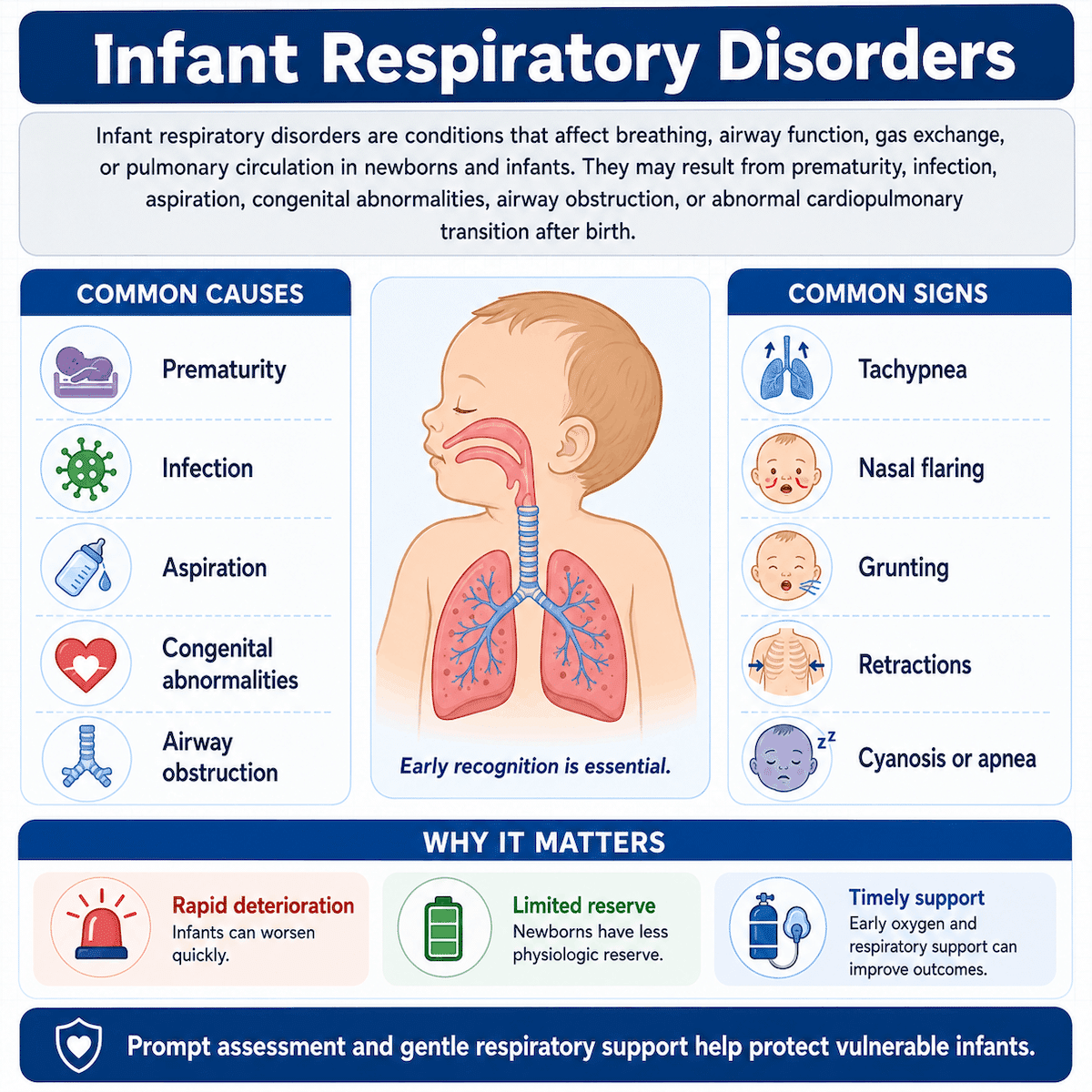
Infant respiratory disorders are conditions that affect breathing, gas exchange, airway function, or pulmonary circulation in newborns and young infants. These disorders are especially important in neonatal and pediatric respiratory care because infants have smaller airways, immature lungs, weaker respiratory muscles, and less physiologic reserve than older children and adults.
Premature infants are at even greater risk because their lungs may not be fully developed at birth.
Understanding these conditions helps clinicians recognize respiratory distress early, choose appropriate treatment, and prevent complications from oxygen therapy, ventilation, infection, and poor cardiopulmonary adaptation.

What Are Infant Respiratory Disorders?
Infant respiratory disorders are diseases or conditions that interfere with normal breathing during the newborn period or early infancy. Some are caused by prematurity and lung immaturity, while others result from infection, delayed transition after birth, aspiration, congenital abnormalities, airway obstruction, pulmonary vascular problems, or complications of medical treatment.
The newborn respiratory system must make a major transition immediately after birth. Before delivery, the lungs are filled with fluid, and the placenta handles gas exchange. After birth, the infant must clear lung fluid, inflate the alveoli, establish functional residual capacity, increase pulmonary blood flow, and begin effective breathing.
If any part of this transition fails, respiratory distress can occur. Signs may include tachypnea, nasal flaring, grunting, retractions, cyanosis, apnea, abnormal breath sounds, poor feeding, and increased oxygen needs.
Premature Infants Are at Higher Risk
Premature infants are especially vulnerable because they may have:
- Surfactant deficiency
- Weak respiratory muscles
- Immature respiratory control
- Highly compliant chest walls
- Underdeveloped alveoli
- Immature pulmonary blood vessels
- Increased risk of infection
- Reduced ability to tolerate hypoxemia or acidosis
Note: Respiratory therapists and other clinicians must assess these patients carefully because infant respiratory distress can progress quickly.
Neonatal Respiratory Distress Syndrome
Neonatal respiratory distress syndrome (RDS) is one of the most common and important respiratory disorders in premature infants. It is primarily caused by a deficiency of pulmonary surfactant.
Surfactant is produced by type II alveolar cells and helps lower surface tension inside the alveoli. This allows the alveoli to remain open during exhalation and makes the lungs easier to expand during inspiration. When surfactant is lacking or ineffective, the alveoli become unstable and collapse. This leads to atelectasis, decreased lung compliance, impaired gas exchange, and increased work of breathing.
RDS is strongly associated with prematurity because surfactant production increases later in gestation. The more premature the infant, the higher the risk. Low birth weight, maternal diabetes, cesarean delivery without labor, and perinatal asphyxia may also increase the risk.
The pathophysiology of RDS involves a cycle of worsening respiratory failure. Surfactant deficiency causes alveolar collapse, which reduces functional residual capacity and causes ventilation-perfusion mismatch. As oxygenation worsens, the infant may develop hypoxemia, hypercapnia, and respiratory acidosis. These changes can increase pulmonary vascular resistance and promote right-to-left shunting through fetal circulatory pathways.
Common signs of RDS include:
- Tachypnea
- Nasal flaring
- Grunting
- Intercostal or substernal retractions
- Cyanosis
- Low oxygen saturation
- Increased oxygen requirement
- Poor air movement
- Signs of fatigue in severe cases
Chest radiographs often show low lung volumes and a diffuse ground-glass appearance. Air bronchograms may also be present.
Treatment focuses on improving oxygenation, supporting ventilation, preventing alveolar collapse, and replacing surfactant when indicated. Antenatal corticosteroids may be given to mothers at risk of preterm delivery to accelerate fetal lung maturation. After birth, treatment may include supplemental oxygen, continuous positive airway pressure, surfactant replacement therapy, and mechanical ventilation when needed.
CPAP helps maintain functional residual capacity and reduces alveolar collapse. Surfactant therapy directly treats the underlying deficiency and can improve lung compliance and oxygenation. Mechanical ventilation may be required for severe respiratory failure, but ventilator pressures and oxygen levels should be used carefully to reduce the risk of lung injury.
Bronchopulmonary Dysplasia
Bronchopulmonary dysplasia (BPD) is a chronic lung disease most often seen in premature infants who require prolonged oxygen therapy, mechanical ventilation, or both. It is closely linked to the survival of extremely premature infants.
BPD develops when the immature lung is exposed to injury during a critical period of growth. Premature lungs are still developing alveoli and pulmonary blood vessels. When these fragile lungs are exposed to high oxygen levels, positive-pressure ventilation, inflammation, infection, or fluid overload, normal lung development may be disrupted.
The causes of BPD are multifactorial and may include:
- Prematurity
- Oxygen toxicity
- Mechanical ventilation
- Barotrauma
- Volutrauma
- Atelectrauma
- Infection
- Inflammation
- Patent ductus arteriosus
- Fluid overload
- Poor nutrition
- Genetic susceptibility
In older descriptions of BPD, infants developed lung damage with areas of atelectasis, emphysema, fibrosis, and airway injury. In modern neonatal care, BPD often involves arrested lung development, meaning the infant may develop fewer and larger alveoli instead of many small, healthy alveoli. Pulmonary vascular development may also be abnormal.
Clinical signs of BPD may include persistent tachypnea, retractions, oxygen dependence, poor feeding, poor weight gain, wheezing, and recurrent respiratory infections. Some infants require prolonged CPAP, high-flow oxygen, mechanical ventilation, or tracheostomy.
Management depends on severity. Treatment may include oxygen therapy, nutritional support, diuretics, bronchodilators, corticosteroids in selected cases, treatment of infection, and careful fluid management. Long-term oxygen may be needed after discharge.
Prevention is a major part of BPD care. Clinicians aim to avoid unnecessary intubation, use noninvasive support when appropriate, minimize oxygen exposure, use gentle ventilation strategies, prevent infection, and support growth and nutrition.
Note: BPD may improve as the child grows, but some patients continue to have airway reactivity, reduced pulmonary function, exercise intolerance, or increased risk of rehospitalization.
Transient Tachypnea of the Newborn
Transient tachypnea of the newborn (TTN) is a usually mild and self-limited respiratory disorder caused by delayed clearance of fetal lung fluid.
Before birth, the fetal lungs are filled with fluid. During labor and after delivery, this fluid is normally cleared through hormonal changes, mechanical forces, lymphatic drainage, and absorption into the pulmonary circulation. If this clearance is delayed, excess fluid remains in the lungs and interferes with ventilation.
TTN is more common in term or near-term infants. It is especially associated with cesarean delivery without labor because labor helps stimulate fluid clearance. Other risk factors may include maternal diabetes, male sex, macrosomia, and rapid delivery.
The main clinical feature is tachypnea shortly after birth. The infant may also have mild retractions, nasal flaring, grunting, or a need for supplemental oxygen. Unlike RDS, TTN usually improves within hours to a few days.
Chest radiographs may show hyperinflation, prominent interstitial markings, fluid in the fissures, and increased lung markings. These findings reflect retained lung fluid.
Treatment is supportive. Many infants only need monitoring and time. Some may require supplemental oxygen, CPAP, or intravenous fluids if feeding is unsafe because of rapid breathing. Antibiotics may be considered if infection cannot be ruled out, especially early in the evaluation.
Note: The prognosis for TTN is generally excellent. However, clinicians must monitor the infant carefully because early signs can resemble more serious disorders such as RDS, neonatal pneumonia, sepsis, or congenital heart disease.
Neonatal Pneumonia
Neonatal pneumonia is an infection of the lung tissue that occurs before birth, during delivery, or after birth. It can be congenital, perinatal, or postnatal.
Congenital pneumonia may occur when an infection reaches the fetus before delivery. Perinatal pneumonia may occur when the infant aspirates infected amniotic fluid or is exposed to organisms during birth. Postnatal pneumonia may develop after exposure in the hospital or community.
Risk factors include:
- Prematurity
- Prolonged rupture of membranes
- Maternal fever
- Chorioamnionitis
- Group B Streptococcus exposure
- Sepsis
- Mechanical ventilation
- Endotracheal intubation
- Immature immune function
The infection causes inflammation in the lungs, which can impair gas exchange, reduce compliance, increase airway resistance, and worsen oxygenation. Neonatal pneumonia may be difficult to distinguish from RDS, TTN, or sepsis because symptoms may be nonspecific.
Clinical signs may include:
- Tachypnea
- Grunting
- Retractions
- Nasal flaring
- Apnea
- Cyanosis
- Poor feeding
- Lethargy
- Temperature instability
- Increased oxygen requirement
Diagnosis may include chest radiography, blood cultures, complete blood count, inflammatory markers, tracheal cultures if intubated, and evaluation for sepsis. Chest x-ray findings may include diffuse infiltrates, focal infiltrates, or patterns that overlap with other neonatal lung diseases.
Treatment includes antibiotics and supportive respiratory care. Depending on severity, the infant may require supplemental oxygen, CPAP, mechanical ventilation, fluid management, and hemodynamic support.
Note: Early recognition is important because neonatal infection can progress quickly. Any infant with respiratory distress and signs of systemic illness should be evaluated carefully for pneumonia and sepsis.
Meconium Aspiration Syndrome
Meconium aspiration syndrome (MAS) occurs when a newborn aspirates meconium-stained amniotic fluid into the lungs before, during, or shortly after birth. It is most common in term or post-term infants and is often associated with fetal stress or hypoxia.
Meconium is the infant’s first stool. When fetal distress occurs, the fetus may pass meconium into the amniotic fluid. If the infant gasps before or during delivery, meconium-stained fluid may enter the airways.
MAS affects the lungs in several ways. First, meconium can mechanically obstruct the airways. Complete obstruction may cause atelectasis. Partial obstruction can create a ball-valve effect, allowing air to enter during inspiration but preventing complete exhalation. This leads to air trapping, hyperinflation, and increased risk of pneumothorax.
Second, meconium irritates the airways and lung tissue, producing chemical pneumonitis and inflammation. Third, it can inactivate surfactant, causing decreased compliance and alveolar collapse. Severe cases may lead to persistent pulmonary hypertension of the newborn.
Clinical signs of MAS may include:
- Respiratory distress at birth
- Tachypnea
- Nasal flaring
- Grunting
- Retractions
- Cyanosis
- Coarse breath sounds
- Barrel-shaped chest
- Low oxygen saturation
- Evidence of meconium staining
Chest radiographs may show patchy infiltrates, hyperinflation, areas of atelectasis, and sometimes air leaks.
Treatment depends on severity. Mild cases may require oxygen and observation. More severe cases may require CPAP, mechanical ventilation, surfactant therapy, inhaled nitric oxide, high-frequency ventilation, or extracorporeal membrane oxygenation.
Note: Routine endotracheal suctioning of vigorous infants with meconium-stained fluid is no longer emphasized in the same way as older practice patterns. Current management focuses on supporting ventilation and oxygenation without delaying effective resuscitation when needed.
Persistent Pulmonary Hypertension of the Newborn
Persistent pulmonary hypertension of the newborn (PPHN) is a serious disorder in which pulmonary vascular resistance remains abnormally high after birth.
In fetal life, pulmonary vascular resistance is high because the lungs are not used for gas exchange. Most blood bypasses the lungs through the ductus arteriosus and foramen ovale. After birth, lung inflation and rising oxygen levels normally cause pulmonary vascular resistance to fall. This allows blood to flow through the lungs for oxygenation.
In PPHN, this transition fails. Pulmonary vascular resistance remains elevated, and blood continues to bypass the lungs through right-to-left shunting. As a result, the infant may remain severely hypoxemic even with oxygen therapy.
PPHN may occur with:
- Meconium aspiration syndrome
- Pneumonia
- Sepsis
- Asphyxia
- Respiratory distress syndrome
- Pulmonary hypoplasia
- Congenital diaphragmatic hernia
- Congenital heart disease
The main problem is impaired pulmonary perfusion. The alveoli may receive oxygen, but blood is not adequately reaching them. Hypoxia and acidosis worsen pulmonary vasoconstriction, creating a cycle of worsening oxygenation.
Clinical signs may include cyanosis, tachypnea, respiratory distress, labile oxygen saturation, and poor response to oxygen. One clue is a difference between preductal and postductal oxygen saturation. For example, the right hand may have a higher oxygen saturation than the lower extremities if right-to-left shunting is occurring through the ductus arteriosus.
Diagnosis often involves echocardiography to assess pulmonary pressures, shunting, ventricular function, and congenital heart disease.
Treatment focuses on improving oxygenation, correcting acidosis, maintaining systemic blood pressure, and reducing pulmonary vascular resistance. Inhaled nitric oxide is commonly used because it selectively dilates pulmonary blood vessels in ventilated lung regions. Mechanical ventilation may be needed, but excessive lung inflation should be avoided because high intrathoracic pressure can reduce pulmonary blood flow. Severe cases may require ECMO.
Neonatal Apnea
Neonatal apnea is a pause in breathing that may be central, obstructive, or mixed. It is especially common in premature infants because the respiratory control centers in the brain are immature.
Central apnea occurs when the infant stops making respiratory effort. Obstructive apnea occurs when airflow is blocked despite respiratory effort. Mixed apnea includes both central and obstructive components.
Apnea of prematurity is usually defined as a pause in breathing that is prolonged or associated with bradycardia, oxygen desaturation, color change, or decreased muscle tone. Premature infants may also have periodic breathing, which includes brief pauses followed by rapid breathing. Periodic breathing can be common in preterm infants, but significant apnea requires evaluation and treatment.
Possible causes or contributors include:
- Immature respiratory control
- Infection
- Hypothermia
- Hypoglycemia
- Anemia
- Hypoxemia
- Intracranial problems
- Airway obstruction
- Gastroesophageal reflux
- Maternal drug exposure
- Medication effects
Clinical signs include pauses in breathing, oxygen desaturation, bradycardia, cyanosis, pallor, limpness, or need for stimulation.
Treatment depends on severity and cause. Mild episodes may respond to tactile stimulation and correction of contributing factors. Caffeine is commonly used to stimulate respiratory drive in apnea of prematurity. CPAP may help if airway obstruction or low lung volume contributes to the episodes. Severe or recurrent apnea may require mechanical ventilation.
Note: Neonatal apnea must be evaluated carefully because it may be the first sign of infection, metabolic instability, neurologic disease, or worsening respiratory failure.
Air Leak Syndromes
Air leak syndromes occur when air escapes from the alveoli or airways into spaces where it does not normally belong. Neonates are vulnerable because their lungs may be immature, stiff, overdistended, infected, or exposed to positive-pressure ventilation.
Common types of neonatal air leak include:
- Pneumothorax
- Pulmonary interstitial emphysema
- Pneumomediastinum
- Pneumopericardium
- Pneumoperitoneum
- Subcutaneous emphysema
A pneumothorax occurs when air enters the pleural space. This can compress the lung and impair ventilation. A tension pneumothorax is life-threatening because increasing pressure in the chest can shift the mediastinum, reduce venous return, lower cardiac output, and cause cardiovascular collapse.
Risk factors include RDS, meconium aspiration syndrome, pneumonia, pulmonary hypoplasia, vigorous resuscitation, and mechanical ventilation. High pressures, high tidal volumes, and uneven lung disease can increase the risk.
Clinical signs may include sudden respiratory distress, increased oxygen requirement, asymmetric chest movement, decreased breath sounds on one side, cyanosis, bradycardia, hypotension, or sudden deterioration in a ventilated infant.
Diagnosis may involve clinical assessment, transillumination, chest radiograph, or emergency needle decompression if tension pneumothorax is suspected.
Note: Treatment depends on severity. Small, stable pneumothoraces may resolve with observation. Larger or symptomatic pneumothoraces may require needle aspiration or chest tube placement. Prevention includes careful ventilation, appropriate pressure limits, avoiding overdistention, and using lung-protective strategies.
Pulmonary Hemorrhage
Pulmonary hemorrhage is a severe neonatal condition involving bleeding into the lungs. It may present as bloody fluid from the endotracheal tube or airway, along with acute respiratory deterioration.
This condition is often associated with critically ill premature infants. It may occur in infants with RDS, sepsis, shock, coagulopathy, patent ductus arteriosus, or severe cardiopulmonary instability. It has also been described after surfactant therapy, especially when pulmonary blood flow increases in the presence of a PDA.
Risk factors may include:
- Prematurity
- Respiratory distress syndrome
- Patent ductus arteriosus
- Sepsis
- Shock
- Coagulopathy
- Severe hypoxemia
- Surfactant therapy
- Mechanical ventilation
The pathophysiology may involve increased pulmonary blood flow, fragile pulmonary capillaries, impaired coagulation, inflammation, and increased pressure gradients between systemic and pulmonary circulation.
Clinical signs include sudden worsening oxygenation, increased ventilator requirements, bloody airway secretions, bradycardia, hypotension, and respiratory failure.
Management requires rapid stabilization. Treatment may include increasing PEEP or mean airway pressure to help tamponade bleeding and improve oxygenation, suctioning only as needed, correcting anemia or coagulopathy, treating shock, treating infection, and addressing PDA if present.
Note: Pulmonary hemorrhage is life-threatening and requires immediate respiratory and cardiovascular support.
Congenital Diaphragmatic Hernia
Congenital diaphragmatic hernia (CDH) is a serious birth defect in which an opening in the diaphragm allows abdominal organs to move into the chest cavity. This interferes with normal lung development and can cause pulmonary hypoplasia.
The most common type is a posterolateral defect, often on the left side. When the stomach, intestines, liver, or spleen enter the thoracic cavity, they compress the developing lungs. This can lead to small, underdeveloped lungs and abnormal pulmonary blood vessel development.
Infants with CDH often develop severe respiratory distress immediately after birth. They may have cyanosis, tachypnea, poor breath sounds on the affected side, a scaphoid abdomen, and mediastinal shift. The condition is also strongly associated with persistent pulmonary hypertension of the newborn.
A key management point is that bag-mask ventilation should generally be avoided when CDH is suspected because air can enter the stomach and intestines, worsening compression of the lungs. Instead, these infants often require early endotracheal intubation and gastric decompression with an orogastric or nasogastric tube.
Treatment includes respiratory support, careful oxygenation and ventilation, management of pulmonary hypertension, hemodynamic stabilization, and surgical repair after stabilization. Severe cases may require high-frequency ventilation, inhaled nitric oxide, or ECMO.
Note: CDH is not simply a structural defect of the diaphragm. It is also a disorder of lung development and pulmonary vascular function, which is why respiratory management is so complex.
Pulmonary Hypoplasia
Pulmonary hypoplasia refers to underdevelopment of the lungs. In this condition, the lungs may have fewer airways, fewer alveoli, reduced surface area for gas exchange, and abnormal pulmonary blood vessel development.
Pulmonary hypoplasia may occur with congenital diaphragmatic hernia, prolonged oligohydramnios, renal abnormalities, skeletal deformities, neuromuscular disorders, prolonged rupture of membranes, or conditions that restrict fetal lung growth.
Normal fetal lung development depends on adequate space in the chest, normal fetal breathing movements, sufficient amniotic fluid, and proper airway and vascular development. When these factors are disrupted, lung growth may be impaired.
Clinical severity varies. Some infants have mild respiratory symptoms, while others develop severe respiratory failure at birth. Signs may include cyanosis, tachypnea, retractions, poor lung expansion, hypoxemia, and persistent pulmonary hypertension.
Diagnosis may be suspected prenatally by ultrasound or after birth based on clinical findings, imaging, and associated congenital conditions.
Treatment is supportive and depends on severity. Infants may require oxygen therapy, mechanical ventilation, high-frequency ventilation, inhaled nitric oxide, blood pressure support, or ECMO. However, severe pulmonary hypoplasia can be difficult to treat because the problem is not just poor ventilation, but inadequate lung structure for gas exchange.
Note: Pulmonary hypoplasia is important to include because it explains why some infants do not respond normally to standard respiratory support.
Bronchiolitis
Bronchiolitis is one of the most common lower respiratory tract infections in infants. It usually affects children younger than 2 years and is most often caused by respiratory syncytial virus, or RSV. Other viruses can also cause bronchiolitis.
The disease involves inflammation, edema, and mucus production in the small airways. Because infant airways are narrow, even mild swelling or mucus can significantly increase airway resistance. This can lead to wheezing, air trapping, atelectasis, increased work of breathing, and impaired gas exchange.
Signs and symptoms often begin like an upper respiratory infection, with nasal congestion, rhinorrhea, and cough. As the illness progresses, the infant may develop tachypnea, wheezing, crackles, retractions, nasal flaring, poor feeding, irritability, and oxygen desaturation.
Infants at higher risk for severe disease include premature infants, young infants, those with BPD, congenital heart disease, immunodeficiency, or neuromuscular disease.
Treatment is mainly supportive. This may include nasal suctioning, hydration, oxygen therapy, and respiratory support if needed. Some infants require high-flow nasal cannula, CPAP, or mechanical ventilation in severe cases.
Routine bronchodilators, corticosteroids, and antibiotics are not used for every case because bronchiolitis is usually viral and often does not respond like asthma. However, clinical judgment is needed, especially if the infant has recurrent wheezing or another condition.
Note: Respiratory therapists play an important role in monitoring work of breathing, oxygenation, airway clearance needs, and escalation of support.
Croup
Croup, also called laryngotracheobronchitis, is an upper-airway disorder caused by inflammation and swelling around the larynx, trachea, and bronchi. It is most common in young children, but infants can be affected.
Croup is usually caused by a viral infection, especially parainfluenza virus. The swelling occurs in the subglottic region, which is already narrow in infants and young children. Even a small amount of edema can increase resistance and produce upper-airway obstruction.
Classic signs include a barking cough, inspiratory stridor, hoarseness, and varying degrees of respiratory distress. Symptoms often worsen at night. Mild cases may only involve a barking cough, while severe cases can cause stridor at rest, retractions, agitation, fatigue, cyanosis, or decreased air movement.
Assessment should focus on the severity of airway obstruction. Stridor at rest, significant retractions, altered mental status, and poor oxygenation are concerning signs.
Treatment may include corticosteroids to reduce airway inflammation and nebulized epinephrine for moderate to severe cases. Oxygen may be given if hypoxemia is present. The infant should be kept calm because agitation can worsen airway obstruction.
Note: Most cases improve with supportive care and medication, but severe croup requires close monitoring because upper-airway obstruction can progress.
Epiglottitis
Epiglottitis is a serious upper-airway emergency involving inflammation and swelling of the epiglottis and surrounding structures. Although it is less common today because of Haemophilus influenzae type b vaccination, it remains important because it can cause sudden airway obstruction.
Epiglottitis can occur in children and, less commonly, infants. The swollen epiglottis can rapidly block airflow, making this condition potentially life-threatening.
Clinical signs may include high fever, toxic appearance, severe sore throat, drooling, dysphagia, muffled voice, stridor, respiratory distress, and preference for sitting upright. The child may appear anxious and may resist lying down.
One of the most important principles is to avoid unnecessary agitation. Throat examination, forced positioning, or stressful procedures can worsen obstruction. Airway management should be performed by experienced clinicians in a controlled setting.
Treatment includes securing the airway if needed, antibiotics, oxygen, and supportive care. Some patients may require endotracheal intubation until swelling improves.
Note: Epiglottitis is worth including in an article on infant respiratory disorders because it highlights the importance of recognizing upper-airway emergencies. Unlike bronchiolitis or RDS, the main problem is not alveolar gas exchange but potential obstruction above the trachea.
Cystic Fibrosis
Cystic fibrosis (CF) is a genetic disorder that affects chloride transport and causes thick, sticky secretions in the lungs, pancreas, and other organs. It can affect infants, children, and adults.
In the respiratory system, thick mucus can obstruct airways, impair mucociliary clearance, promote infection, and cause chronic inflammation. Over time, this can lead to bronchiectasis, reduced lung function, and recurrent respiratory exacerbations.
Infants with CF may present with respiratory symptoms such as cough, wheezing, recurrent infections, or difficulty clearing secretions. Some infants are identified through newborn screening before significant symptoms develop. Other clues may include meconium ileus, failure to thrive, poor weight gain, greasy stools, or salty-tasting skin.
Respiratory management includes airway clearance therapy, inhaled medications, infection control, antibiotics when indicated, nutrition support, pancreatic enzyme replacement if needed, and CFTR modulator therapy for eligible patients.
Airway clearance is especially important because retained secretions contribute to obstruction and infection. Techniques may include chest physiotherapy, positive expiratory pressure devices in older children, and other age-appropriate methods.
Note: CF is not limited to infancy, but it should be included because respiratory complications can begin early in life and require long-term multidisciplinary care.
Foreign Body Aspiration
Foreign body aspiration occurs when an object enters the airway. It is more common in older infants and toddlers because they explore objects with their mouths and may not have fully developed chewing and swallowing coordination.
Common aspirated objects include food pieces, nuts, seeds, small toy parts, and other household items. The object may lodge in the larynx, trachea, or bronchi.
The presentation depends on the size and location of the object. A large object in the upper airway can cause sudden choking, coughing, stridor, cyanosis, or complete airway obstruction. A smaller object in a bronchus may cause coughing, wheezing, asymmetric breath sounds, recurrent pneumonia, or persistent respiratory symptoms.
A classic clue is sudden onset of coughing or choking while eating or playing. However, the event may not always be witnessed.
Diagnosis may include history, physical examination, chest radiography, inspiratory and expiratory films, or bronchoscopy. Chest x-ray may show air trapping, atelectasis, or a visible object if it is radiopaque.
Treatment depends on severity. Complete airway obstruction requires immediate emergency response. Stable patients with suspected aspiration may need bronchoscopy for diagnosis and removal.
Note: Foreign body aspiration is important because it can mimic asthma, pneumonia, bronchiolitis, or croup. Delayed recognition can lead to persistent obstruction, infection, or lung damage.
Gastroesophageal Reflux-Related Respiratory Problems
Gastroesophageal reflux occurs when stomach contents flow back into the esophagus. Reflux is common in infants and is often mild. However, in some cases, reflux may contribute to respiratory symptoms.
Possible respiratory effects include cough, wheezing, choking episodes, recurrent aspiration, apnea-like events, stridor, or worsening lung disease in vulnerable infants. Infants with neurologic impairment, airway abnormalities, prematurity, or chronic lung disease may be at higher risk for complications.
The relationship between reflux and respiratory symptoms can be complex. Not every infant with reflux has respiratory disease, and not every respiratory symptom is caused by reflux. Careful evaluation is needed before attributing breathing problems to GERD.
Clinical concerns may include feeding difficulty, poor weight gain, recurrent vomiting, irritability with feeds, coughing during feeds, recurrent pneumonia, or oxygen desaturation associated with feeding.
Management may include feeding modifications, positioning strategies while awake and supervised, thickened feeds when appropriate, treatment of swallowing dysfunction, and medical therapy in selected cases. Infants with aspiration risk may need evaluation by a feeding specialist or speech-language pathologist.
Note: Respiratory therapists may encounter reflux-related problems in infants with chronic lung disease, airway abnormalities, or recurrent respiratory symptoms. The key is to recognize aspiration risk and coordinate care with the broader medical team.
Congenital Heart Defects With Respiratory Distress
Congenital heart defects are not primary lung diseases, but they can cause respiratory distress in newborns and infants. They should be included because they often mimic or worsen respiratory disorders.
Some defects cause cyanosis because deoxygenated blood bypasses the lungs or mixes with oxygenated blood. Others cause pulmonary overcirculation, where too much blood flows to the lungs, leading to tachypnea, retractions, poor feeding, diaphoresis with feeds, and failure to thrive.
Examples of congenital heart defects that may present with respiratory symptoms include:
- Tetralogy of Fallot
- Transposition of the great arteries
- Total anomalous pulmonary venous return
- Hypoplastic left heart syndrome
- Ventricular septal defect
- Patent ductus arteriosus
- Atrioventricular canal defect
Infants with cardiac disease may have tachypnea, cyanosis, poor perfusion, hepatomegaly, murmur, weak pulses, differential saturations, poor feeding, or shock. One important point is that oxygen may not fully correct hypoxemia if the cause is right-to-left shunting. This can help distinguish cyanotic heart disease or PPHN from some primary lung disorders.
Evaluation may include pulse oximetry screening, chest x-ray, blood gas analysis, electrocardiogram, echocardiography, and cardiology consultation. Treatment depends on the defect and may include oxygen, prostaglandin infusion for ductal-dependent lesions, diuretics, ventilatory support, catheter-based procedures, or surgery.
Note: These conditions remind clinicians that not all infant respiratory distress starts in the lungs.
Sudden Infant Death Syndrome
Sudden infant death syndrome (SIDS) is the sudden unexplained death of an infant younger than 1 year after a complete investigation. It is not classified as a typical pulmonary disorder, but it is often discussed in relation to infant breathing control, sleep safety, and respiratory risk factors.
The exact cause of SIDS is not fully understood. It is commonly explained through a model involving a vulnerable infant, a critical developmental period, and an external stressor during sleep. Possible contributors may involve immature cardiorespiratory control, impaired arousal responses, rebreathing, overheating, prone sleeping, and exposure to smoke.
Risk factors include:
- Prone sleeping position
- Soft bedding
- Bed-sharing in unsafe conditions
- Maternal smoking
- Smoke exposure
- Prematurity
- Low birth weight
- Young maternal age
- Inadequate prenatal care
- Overheating
Prevention focuses on safe sleep practices. Infants should be placed on their backs for sleep, on a firm sleep surface, without loose blankets, pillows, stuffed animals, or soft bedding. Room-sharing without bed-sharing is generally recommended. Avoiding smoke exposure is also important.
Home apnea monitors may be used for selected high-risk infants, but they have not been proven to prevent SIDS. This distinction is important because SIDS prevention depends more on safe sleep practices than routine monitoring.
Recognizing Respiratory Distress in Infants
Early recognition is essential because infants can deteriorate quickly. Unlike adults, infants have limited respiratory reserve and may progress from mild distress to respiratory failure in a short period.
Common signs of infant respiratory distress include:
- Tachypnea
- Nasal flaring
- Grunting
- Retractions
- Cyanosis
- Apnea
- Head bobbing
- Poor feeding
- Irritability
- Lethargy
- Decreased breath sounds
- Wheezing or stridor
- Increased oxygen requirement
Grunting is especially important in neonates because it represents an attempt to maintain positive pressure in the airways during exhalation. Retractions indicate increased work of breathing. Nasal flaring reflects the infant’s attempt to reduce airway resistance.
Respiratory failure may present with worsening hypoxemia, hypercapnia, acidosis, apnea, bradycardia, poor perfusion, altered mental status, or fatigue. A quiet infant with decreased respiratory effort may be more concerning than an infant who is visibly working hard.
Note: Assessment should include respiratory rate, work of breathing, breath sounds, oxygen saturation, color, perfusion, mental status, feeding tolerance, temperature, and response to interventions.
Delivery Room Management
Delivery room management is an important part of caring for infants at risk for respiratory distress. The goal is to support the newborn’s transition from fetal to extrauterine life while recognizing signs of respiratory compromise as early as possible. This is especially important for premature infants, infants exposed to meconium-stained amniotic fluid, and infants with suspected congenital abnormalities such as congenital diaphragmatic hernia or congenital heart disease.
At birth, the newborn must clear fetal lung fluid, establish functional residual capacity, begin effective gas exchange, and reduce pulmonary vascular resistance. Clinicians assess the infant’s breathing effort, heart rate, color, tone, and response to stimulation. If the infant is breathing well with a stable heart rate, routine care may include warming, drying, positioning, clearing secretions only if needed, and continued observation.
If signs of respiratory distress are present, such as apnea, gasping, cyanosis, poor tone, bradycardia, or inadequate respiratory effort, intervention must begin quickly. Initial steps may include positioning the airway, providing gentle stimulation, and supporting ventilation. Positive-pressure ventilation may be required if the infant is apneic, gasping, or has a low heart rate despite initial measures. Oxygen should be titrated carefully based on the infant’s condition and oxygen saturation targets, especially in premature infants who are vulnerable to oxygen toxicity.
For premature infants at risk for respiratory distress syndrome, early respiratory support may include CPAP to help establish lung volume and prevent alveolar collapse. If respiratory distress is severe or persistent, endotracheal intubation and surfactant replacement therapy may be needed. The goal is to improve lung compliance and oxygenation while avoiding unnecessary high pressures that can contribute to barotrauma, volutrauma, and air leak syndromes.
In infants born through meconium-stained amniotic fluid, management focuses on assessing whether the infant is vigorous and supporting ventilation when needed. Routine aggressive suctioning is no longer emphasized for vigorous infants. If the infant is not breathing effectively, priority should be placed on establishing ventilation rather than delaying care for unnecessary suctioning.
Some conditions require special delivery room planning. For example, if congenital diaphragmatic hernia is suspected, bag-mask ventilation is generally avoided because air can enter the stomach and intestines, worsening lung compression. These infants often require early endotracheal intubation and gastric decompression with an orogastric or nasogastric tube.
Note: Respiratory therapists play an important role in delivery room management by assisting with airway positioning, oxygen delivery, CPAP, positive-pressure ventilation, intubation support, surfactant administration, and monitoring the infant’s response. Careful assessment and timely intervention can help stabilize the newborn, reduce complications, and improve outcomes during the first critical minutes of life.
Respiratory Care Priorities
The management of infant respiratory disorders depends on the underlying condition, but several priorities apply across many disorders.
- Oxygenation and ventilation must be supported while avoiding unnecessary injury. Oxygen should be titrated carefully because both hypoxemia and excessive oxygen exposure can be harmful, especially in premature infants.
- Lung volume should be maintained when alveolar collapse is a problem. CPAP and PEEP can help stabilize alveoli in conditions such as RDS, TTN, and some cases of BPD.
- Ventilation should be adjusted based on lung mechanics. Stiff, low-compliance lungs may require strategies that improve recruitment without excessive pressures. Obstructive diseases, such as meconium aspiration with air trapping, require adequate expiratory time to prevent auto-PEEP.
- The underlying cause should be treated. Surfactant deficiency may require surfactant therapy. Infection requires antibiotics. Pulmonary hypertension may require inhaled nitric oxide and hemodynamic support. Air leaks may require decompression. Upper-airway obstruction requires airway-focused management.
- Clinicians must prevent complications of treatment. Mechanical ventilation can cause barotrauma, volutrauma, atelectrauma, oxygen toxicity, air leaks, airway injury, infection, and chronic lung disease.
Note: Neonatal care emphasizes gentle ventilation, early noninvasive support when appropriate, careful monitoring, and individualized therapy.
Infant Respiratory Disorders Practice Questions
1. What are infant respiratory disorders?
Infant respiratory disorders are conditions that affect breathing, oxygenation, ventilation, lung development, or pulmonary circulation in newborns and infants.
2. Why are infants at increased risk for respiratory disorders?
Infants have smaller airways, immature immune defenses, fewer respiratory reserves, and, in premature infants, underdeveloped lungs and inadequate surfactant production.
3. What are common signs of respiratory distress in infants?
Common signs include tachypnea, nasal flaring, grunting, retractions, cyanosis, apnea, poor feeding, and increased work of breathing.
4. What does grunting indicate in an infant with respiratory distress?
Grunting is a compensatory maneuver that helps create positive pressure during exhalation to keep the alveoli open.
5. What do retractions indicate in an infant?
Retractions indicate increased work of breathing as the infant uses accessory muscles to move air into the lungs.
6. What does nasal flaring indicate in an infant?
Nasal flaring indicates increased respiratory effort and is commonly seen in infants with respiratory distress.
7. What does cyanosis indicate in an infant with respiratory distress?
Cyanosis indicates inadequate oxygenation and may be a sign of significant hypoxemia.
8. What is Respiratory Distress Syndrome (RDS)?
Respiratory Distress Syndrome (RDS) is a disorder of premature infants caused by insufficient pulmonary surfactant, leading to widespread atelectasis, decreased lung compliance, hypoxemia, and increased work of breathing.
9. What is RDS also known as?
RDS is also known as hyaline membrane disease.
10. What is the primary cause of RDS?
The primary cause of RDS is surfactant deficiency due to immature type II alveolar cells.

Access our quiz, which includes sample TMC practice questions and detailed explanations to help you master the key concepts of neonatal/pediatric care.
11. Which infants are at the highest risk for RDS?
Premature infants are at the highest risk, especially those born before 34 weeks of gestation.
12. What are common risk factors for RDS?
Risk factors include prematurity, maternal diabetes, cesarean delivery without labor, male sex, multiple gestation, perinatal asphyxia, and a previous sibling with RDS.
13. How does surfactant deficiency cause RDS?
Surfactant deficiency increases alveolar surface tension, which causes alveolar collapse, reduced functional residual capacity, decreased lung compliance, and impaired gas exchange.
14. What are the signs and symptoms of RDS?
Signs and symptoms include tachypnea, nasal flaring, grunting, retractions, diminished breath sounds, cyanosis, hypoxemia, hypercapnia, and respiratory acidosis.
15. When do symptoms of RDS usually appear?
Symptoms usually appear within minutes to a few hours after birth and may worsen over the first 24 to 48 hours if untreated.
16. What does a chest x-ray typically show in RDS?
A chest x-ray typically shows low lung volumes, diffuse reticulogranular or ground-glass opacities, and air bronchograms.
17. What ABG findings are common in RDS?
ABG findings may show hypoxemia, hypercapnia, respiratory acidosis, and mixed acidosis in severe cases.
18. How can RDS be prevented before birth?
RDS can be reduced by preventing preterm birth when possible and administering antenatal corticosteroids to mothers at risk of premature delivery.
19. What medications are commonly used for antenatal steroid therapy?
Betamethasone and dexamethasone are commonly used to accelerate fetal lung maturity.
20. What is the treatment for RDS?
Treatment includes thermoregulation, oxygen therapy, CPAP, surfactant replacement therapy, and mechanical ventilation when necessary.
21. Why is CPAP helpful in RDS?
CPAP helps keep the alveoli open, increases functional residual capacity, improves oxygenation, and reduces the work of breathing.
22. When is mechanical ventilation indicated for RDS?
Mechanical ventilation may be indicated when the infant has apnea, severe respiratory distress, worsening acidosis, persistent hypoxemia, or failure of noninvasive support.
23. What is surfactant replacement therapy?
Surfactant replacement therapy is the administration of exogenous surfactant into the airway to improve lung compliance and gas exchange.
24. What are complications of RDS?
Complications include air leak syndromes, patent ductus arteriosus, intraventricular hemorrhage, retinopathy of prematurity, bronchopulmonary dysplasia, and respiratory failure.
25. What is Bronchopulmonary Dysplasia (BPD)?
Bronchopulmonary Dysplasia (BPD) is a chronic lung disease of prematurity associated with prolonged oxygen exposure, mechanical ventilation, inflammation, and abnormal lung development.
26. Which infants are most at risk for BPD?
Infants at greatest risk include very premature infants, very low birth weight infants, and those who require prolonged oxygen therapy or mechanical ventilation.
27. What factors contribute to the development of BPD?
Contributing factors include lung immaturity, oxygen toxicity, ventilator-induced lung injury, inflammation, infection, poor nutrition, and abnormal alveolar development.
28. What are the signs of BPD?
Signs include persistent oxygen requirement, tachypnea, retractions, wheezing, poor feeding, poor growth, and prolonged need for respiratory support.
29. How is BPD classified?
BPD is commonly classified as mild, moderate, or severe based on the infant’s need for supplemental oxygen or respiratory support at a corrected gestational age.
30. What is mild BPD?
Mild BPD generally means the infant required oxygen for a period of time but is breathing room air by the time of assessment.
31. What is moderate BPD?
Moderate BPD generally means the infant still requires less than 30% supplemental oxygen at the time of assessment.
32. What is severe BPD?
Severe BPD generally means the infant requires at least 30% supplemental oxygen, positive pressure support, or mechanical ventilation.
33. What is the treatment for BPD?
Treatment focuses on minimizing further lung injury, providing adequate oxygenation, optimizing nutrition, managing fluids, treating infections, and using medications such as bronchodilators, diuretics, corticosteroids, or pulmonary vasodilators when indicated.
34. What are possible long-term complications of BPD?
Long-term complications include recurrent respiratory infections, reactive airway disease, exercise intolerance, pulmonary hypertension, poor growth, and neurodevelopmental impairment.
35. What is Transient Tachypnea of the Newborn (TTN)?
Transient Tachypnea of the Newborn (TTN) is a temporary breathing disorder caused by delayed clearance of fetal lung fluid after birth.
36. What is another name for TTN?
TTN is also called wet lung syndrome.
37. Which infants are most likely to develop TTN?
TTN is more common in term or near-term infants, especially those born by cesarean delivery without labor.
38. What causes TTN?
TTN occurs when fetal lung fluid is not absorbed quickly enough after birth, causing mild pulmonary edema and reduced lung compliance.
39. What are the signs of TTN?
Signs include tachypnea, mild retractions, nasal flaring, grunting, and mild oxygen requirement shortly after birth.
40. What does a chest x-ray show in TTN?
A chest x-ray may show hyperinflation, prominent pulmonary vascular markings, perihilar streaking, and fluid in the interlobar fissures.
41. How long does TTN usually last?
TTN usually improves within 24 to 72 hours.
42. How is TTN treated?
Treatment is supportive and may include oxygen therapy, monitoring, withholding oral feeds if tachypnea is significant, and CPAP if needed.
43. How is TTN different from RDS?
TTN is caused by retained fetal lung fluid and usually resolves quickly, while RDS is caused by surfactant deficiency and is more common in premature infants.
44. What is neonatal pneumonia?
Neonatal pneumonia is a lung infection that occurs in a newborn and can cause respiratory distress, hypoxemia, and systemic illness.
45. What are common causes of neonatal pneumonia?
Common causes include Group B Streptococcus, Escherichia coli, Klebsiella, Listeria monocytogenes, Staphylococcus aureus, Pseudomonas, Chlamydia trachomatis, and viral pathogens.
46. What are risk factors for neonatal pneumonia?
Risk factors include prematurity, low birth weight, prolonged rupture of membranes, maternal infection, chorioamnionitis, meconium aspiration, and prolonged mechanical ventilation.
47. How can neonatal pneumonia be transmitted?
Neonatal pneumonia may be acquired transplacentally, through ascending infection before birth, during delivery, or postnatally from caregivers, equipment, or the environment.
48. What are the signs of neonatal pneumonia?
Signs include tachypnea, grunting, nasal flaring, retractions, cyanosis, temperature instability, apnea, poor feeding, lethargy, and respiratory failure.
49. What diagnostic tests may be used for neonatal pneumonia?
Tests may include chest x-ray, blood cultures, complete blood count, C-reactive protein, blood gas analysis, pulse oximetry, and cultures from suspected infection sources.
50. What does a chest x-ray show in neonatal pneumonia?
A chest x-ray may show diffuse or patchy infiltrates, consolidation, pleural effusion, or findings that overlap with other neonatal respiratory disorders.
51. How is neonatal pneumonia treated?
Treatment includes appropriate antibiotics or antiviral therapy when indicated, oxygen therapy, ventilatory support, fluid management, thermoregulation, and close monitoring.
52. How can neonatal pneumonia be prevented in the NICU?
Prevention includes hand hygiene, infection control practices, sterile technique, limiting unnecessary invasive procedures, reducing ventilator days, and screening or treating maternal infections when indicated.
53. What is Meconium Aspiration Syndrome (MAS)?
Meconium Aspiration Syndrome (MAS) occurs when a newborn inhales meconium-stained amniotic fluid into the lungs before, during, or shortly after birth.
54. Which infants are most commonly affected by MAS?
MAS is most common in term or post-term infants, especially those who experience fetal distress.
55. What is meconium?
Meconium is the newborn’s first stool, made of intestinal secretions, bile pigments, mucus, and swallowed fetal materials.
56. How does meconium injure the lungs?
Meconium can obstruct airways, cause air trapping, trigger inflammation, inactivate surfactant, and contribute to pulmonary hypertension.
57. What are the signs of MAS?
Signs include meconium-stained skin or nails, respiratory distress, tachypnea, grunting, retractions, cyanosis, barrel-shaped chest, coarse breath sounds, and low Apgar scores.
58. What does a chest x-ray show in MAS?
A chest x-ray may show patchy infiltrates, areas of atelectasis, hyperinflation, flattened diaphragms, and air leak complications.
59. What are complications of MAS?
Complications include pneumothorax, persistent pulmonary hypertension of the newborn, respiratory failure, infection, and long-term pulmonary problems in severe cases.
60. How is MAS treated?
Treatment may include supportive oxygen therapy, CPAP, mechanical ventilation, surfactant therapy, antibiotics if infection is suspected, inhaled nitric oxide for pulmonary hypertension, and ECMO in severe cases.
61. What is Persistent Pulmonary Hypertension of the Newborn (PPHN)?
Persistent Pulmonary Hypertension of the Newborn (PPHN) is a failure of normal circulatory transition after birth, resulting in high pulmonary vascular resistance and right-to-left shunting.
62. What is PPHN also called?
PPHN has historically been called persistent fetal circulation.
63. What happens to pulmonary vascular resistance after normal birth?
Pulmonary vascular resistance normally falls after birth as the lungs expand and oxygen levels rise.
64. What happens in PPHN?
Pulmonary vascular resistance remains high, causing blood to bypass the lungs through fetal pathways such as the ductus arteriosus or foramen ovale.
65. What are causes or associations of PPHN?
PPHN may be associated with MAS, pneumonia, sepsis, RDS, pulmonary hypoplasia, congenital diaphragmatic hernia, perinatal asphyxia, and congenital heart disease.
66. What are the signs of PPHN?
Signs include severe hypoxemia, cyanosis, tachypnea, retractions, grunting, labile oxygen saturations, and respiratory failure.
67. What diagnostic test is commonly used to confirm PPHN?
Echocardiography is commonly used to confirm PPHN and evaluate for right-to-left shunting and congenital heart disease.
68. How is PPHN treated?
Treatment includes oxygen therapy, mechanical ventilation, correction of acidosis and hypothermia, sedation when needed, inhaled nitric oxide, pulmonary vasodilators, high-frequency ventilation, and ECMO in severe cases.
69. What is inhaled nitric oxide used for in PPHN?
Inhaled nitric oxide is used as a selective pulmonary vasodilator to reduce pulmonary vascular resistance and improve oxygenation.
70. Why should unnecessary stimulation be minimized in infants with PPHN?
Excessive stimulation can increase oxygen demand and worsen pulmonary vasoconstriction, leading to unstable oxygenation.
71. What is neonatal apnea?
Neonatal apnea is a pause in breathing that lasts at least 20 seconds or is associated with bradycardia, cyanosis, or oxygen desaturation.
72. What is apnea of prematurity?
Apnea of prematurity is apnea caused by immature respiratory control in premature infants.
73. Which infants are most at risk for apnea of prematurity?
Premature infants, especially those born before 34 weeks of gestation, are at highest risk.
74. What are the types of neonatal apnea?
The main types are central apnea, obstructive apnea, and mixed apnea.
75. What is central apnea?
Central apnea occurs when the brain temporarily fails to send signals to the respiratory muscles.
76. What is obstructive apnea?
Obstructive apnea occurs when airflow is blocked despite respiratory effort.
77. What is mixed apnea?
Mixed apnea includes both central and obstructive components and is common in premature infants.
78. What are signs associated with neonatal apnea?
Signs include pauses in breathing, bradycardia, oxygen desaturation, cyanosis, limpness, choking, or poor color.
79. How is apnea of prematurity treated?
Treatment may include monitoring, gentle stimulation, caffeine therapy, CPAP, oxygen therapy, and ventilatory support when needed.
80. Why is caffeine used in apnea of prematurity?
Caffeine stimulates the respiratory center, reduces apnea episodes, and may reduce the need for mechanical ventilation.
81. What is an air leak syndrome?
An air leak syndrome occurs when air escapes from the alveoli into abnormal spaces outside the normal airways.
82. What are examples of air leak syndromes?
Examples include pulmonary interstitial emphysema, pneumothorax, pneumomediastinum, pneumopericardium, pneumoperitoneum, subcutaneous emphysema, and systemic air embolism.
83. What causes air leak syndromes in infants?
Air leak syndromes may occur from overdistention, uneven ventilation, air trapping, fragile premature lungs, RDS, MAS, pulmonary hypoplasia, or mechanical ventilation.
84. What is pulmonary interstitial emphysema?
Pulmonary interstitial emphysema occurs when air leaks into the interstitial tissues of the lung, often in ventilated premature infants.
85. What is pneumothorax?
Pneumothorax is the presence of air in the pleural space, which can partially or completely collapse the lung.
86. What are signs of pneumothorax in an infant?
Signs include sudden respiratory distress, increased oxygen requirement, asymmetric chest movement, decreased breath sounds on one side, cyanosis, bradycardia, and hypotension in severe cases.
87. How is pneumothorax diagnosed in infants?
Diagnosis may involve chest x-ray, transillumination in some newborns, ultrasound, or clinical assessment in emergencies.
88. How is a tension pneumothorax treated?
A tension pneumothorax is treated with immediate needle decompression followed by chest tube placement when indicated.
89. What is pneumomediastinum?
Pneumomediastinum is air in the mediastinum, the central space of the chest surrounding the heart and major vessels.
90. What is pneumopericardium?
Pneumopericardium is air in the pericardial sac surrounding the heart and can cause cardiac tamponade in severe cases.
91. What is pulmonary hemorrhage in infants?
Pulmonary hemorrhage is bleeding into the lungs or airways, often presenting with sudden respiratory deterioration and bloody secretions.
92. Which infants are at risk for pulmonary hemorrhage?
Risk factors include prematurity, RDS, surfactant therapy, patent ductus arteriosus, infection, coagulopathy, and severe respiratory failure.
93. What are signs of pulmonary hemorrhage?
Signs include blood from the endotracheal tube or airway, worsening oxygenation, bradycardia, hypotension, pallor, and sudden respiratory failure.
94. How is pulmonary hemorrhage treated?
Treatment includes airway stabilization, oxygenation, ventilatory support with adequate PEEP, correction of coagulopathy, blood products when needed, and treatment of underlying causes.
95. What is pulmonary hypoplasia?
Pulmonary hypoplasia is underdevelopment of the lungs, resulting in reduced lung tissue and impaired gas exchange.
96. What conditions are associated with pulmonary hypoplasia?
Pulmonary hypoplasia may be associated with congenital diaphragmatic hernia, prolonged oligohydramnios, renal anomalies, skeletal abnormalities, and impaired fetal lung expansion.
97. What is congenital diaphragmatic hernia?
Congenital diaphragmatic hernia is a defect in the diaphragm that allows abdominal organs to move into the chest, impairing lung development and causing pulmonary hypoplasia.
98. Why is oxygen therapy carefully monitored in premature infants?
Oxygen is carefully monitored because both hypoxemia and hyperoxia can be harmful, and excess oxygen increases the risk of retinopathy of prematurity and lung injury.
99. What is retinopathy of prematurity?
Retinopathy of prematurity is abnormal retinal blood vessel development in premature infants that can lead to retinal detachment and vision loss.
100. What is the key concept to remember about infant respiratory disorders?
Infant respiratory disorders often involve immature lungs, impaired gas exchange, infection, retained lung fluid, aspiration, abnormal pulmonary circulation, apnea, or air leaks, so early recognition and supportive respiratory care are essential.
Final Thoughts
Infant respiratory disorders include a wide range of conditions involving lung immaturity, infection, airway obstruction, aspiration, abnormal pulmonary circulation, congenital abnormalities, and complications of respiratory support.
Some, such as RDS and BPD, are strongly linked to prematurity. Others, such as bronchiolitis, croup, foreign body aspiration, and cystic fibrosis, may affect infants beyond the newborn period.
The key is early recognition of respiratory distress, careful assessment of the underlying cause, and treatment that supports gas exchange while reducing the risk of injury. For respiratory therapy students and clinicians, these disorders provide an important foundation for neonatal and pediatric care.

Written by:
John Landry is a registered respiratory therapist from Memphis, TN, and has a bachelor's degree in kinesiology. He enjoys using evidence-based research to help others breathe easier and live a healthier life.
References
- Gallacher DJ, Hart K, Kotecha S. Common respiratory conditions of the newborn. Breathe (Sheff). 2016.