

Ventilator management is a fundamental aspect of respiratory care that involves the initiation, adjustment, monitoring, and discontinuation of mechanical ventilatory support. It requires a thorough understanding of respiratory physiology, ventilator mechanics, and patient-specific conditions.
The primary objective is to maintain adequate oxygenation and ventilation while minimizing complications and supporting recovery from the underlying disease process.
Effective management depends on continuous assessment and timely adjustments based on clinical findings, ensuring that the ventilator works in harmony with the patient’s needs.

What Is Ventilator Management?
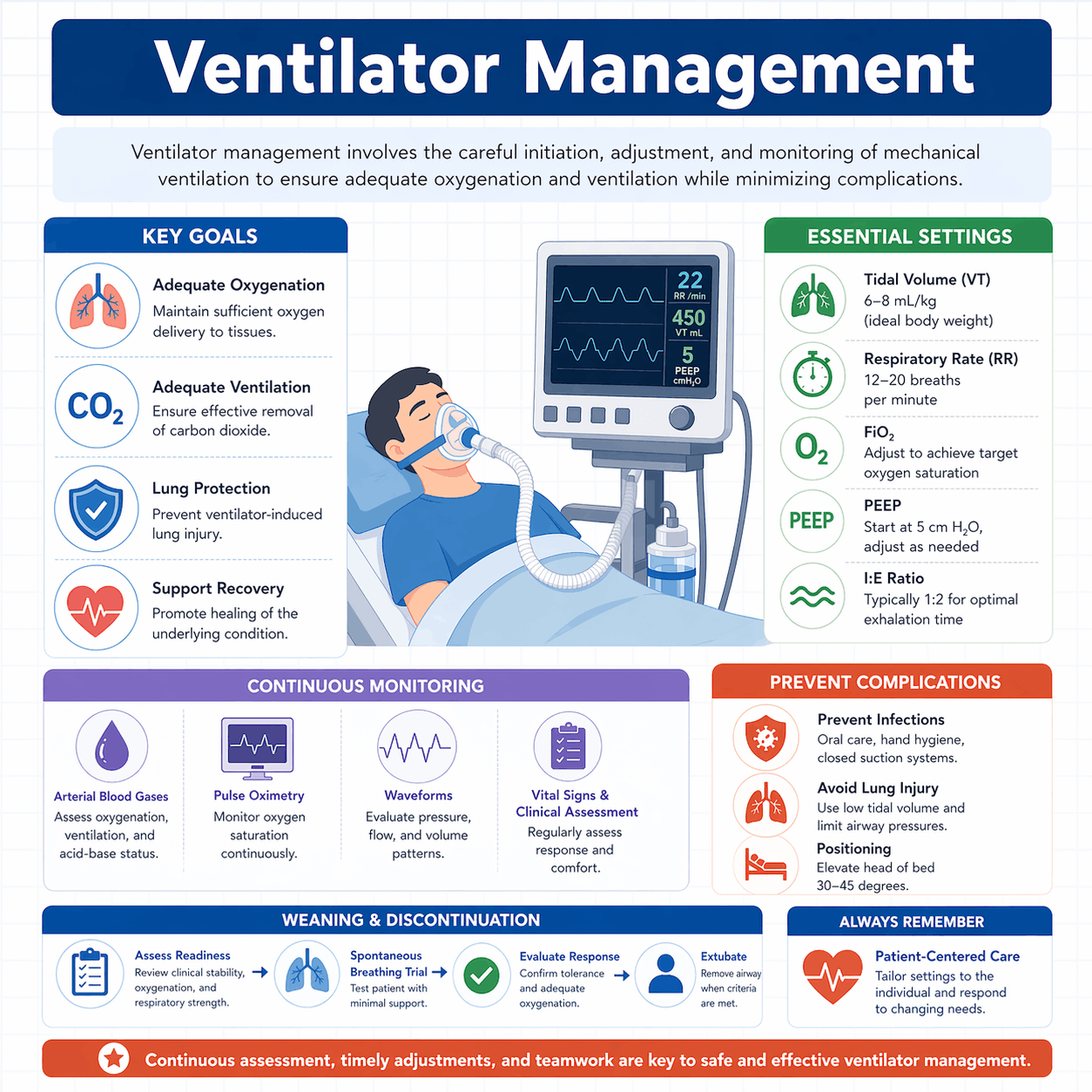
Ventilator management is the process of initiating, adjusting, monitoring, and discontinuing mechanical ventilatory support to maintain adequate gas exchange in patients who cannot breathe effectively on their own. It involves selecting the appropriate ventilator mode, setting parameters such as tidal volume, respiratory rate, FiO₂, and PEEP, and making ongoing adjustments based on the patient’s condition.
Clinicians use tools like arterial blood gases, pulse oximetry, and ventilator waveforms to assess oxygenation, ventilation, and lung mechanics. The goal is to ensure sufficient oxygen delivery and carbon dioxide removal while minimizing complications such as lung injury or infection.
Effective ventilator management also includes maintaining the airway, responding to alarms, and supporting the patient through weaning when their condition improves.
Overview of Mechanical Ventilation
Mechanical ventilation is a life-support intervention used when a patient cannot maintain adequate gas exchange independently. It assists or replaces spontaneous breathing by delivering a controlled flow of gas into the lungs. This support may be temporary, such as during anesthesia, or prolonged in cases of critical illness.
The need for mechanical ventilation typically arises from one or more of the following conditions:
- Ventilatory failure, characterized by elevated arterial carbon dioxide levels
- Oxygenation failure, indicated by inadequate arterial oxygen levels
- Increased work of breathing leading to fatigue
- Neuromuscular impairment affecting respiratory muscles
- Airway obstruction or severe lung pathology
Note: Mechanical ventilation can be delivered through invasive methods, such as an endotracheal or tracheostomy tube, or through noninvasive methods using a mask interface. The choice depends on the severity of the patient’s condition and their ability to protect the airway.
Goals of Ventilator Management
The primary goals of ventilator management focus on maintaining physiologic stability while promoting recovery. These goals include:
Adequate Oxygenation
Ensuring sufficient oxygen delivery to tissues is essential. This is typically assessed using arterial oxygen tension and oxygen saturation. Interventions such as adjusting the fraction of inspired oxygen and applying positive end-expiratory pressure help achieve this goal.
Adequate Ventilation
Ventilation refers to the removal of carbon dioxide from the body. Proper ventilation maintains normal arterial carbon dioxide levels and acid-base balance. Adjustments in tidal volume and respiratory rate are commonly used to control ventilation.
Reduction of Work of Breathing
Mechanical ventilation decreases the energy expenditure required for breathing, allowing respiratory muscles to rest and recover.
Lung Protection
Preventing ventilator-induced lung injury is a key objective. This involves using appropriate tidal volumes and limiting airway pressures to avoid damage such as barotrauma or volutrauma.
Support of Underlying Condition
Ventilator management is not a standalone therapy. It must be integrated with treatment of the underlying disease, such as infection, pulmonary edema, or airway obstruction.
Indications for Mechanical Ventilation
Mechanical ventilation is initiated when clinical assessment indicates that the patient cannot sustain adequate gas exchange. Common indications include:
Respiratory Failure
Respiratory failure is broadly categorized into:
- Hypoxemic failure, where oxygenation is impaired
- Hypercapnic failure, where ventilation is inadequate
Increased Work of Breathing
Signs such as tachypnea, use of accessory muscles, and fatigue suggest that the patient may soon be unable to maintain effective breathing.
Altered Mental Status
Decreased consciousness can impair airway protection and respiratory drive, increasing the risk of aspiration and hypoventilation.
Hemodynamic Instability
Severe shock or cardiac dysfunction may necessitate ventilatory support to reduce oxygen demand and stabilize the patient.
Postoperative Support
Some patients require temporary ventilation following surgery, especially after major thoracic or abdominal procedures.
Types of Mechanical Ventilation
Mechanical ventilation can be classified based on the interface and method of delivery.
Invasive Mechanical Ventilation
This involves placement of an artificial airway, such as an endotracheal tube. It provides full control over ventilation and is used in critically ill patients.
Advantages include:
- Reliable airway protection
- Precise control of ventilation parameters
- Ability to manage severe respiratory failure
Disadvantages include:
- Risk of infection
- Need for sedation
- Potential airway injury
Noninvasive Ventilation (NIV)
Noninvasive ventilation delivers support through a mask, avoiding the need for intubation.
Common forms include:
- Continuous positive airway pressure
- Bilevel positive airway pressure
NIV is often used in conditions such as chronic obstructive pulmonary disease exacerbations and acute cardiogenic pulmonary edema.
Advantages include:
- Reduced risk of infection
- Preservation of airway defenses
- Improved patient comfort
Note: It requires patient cooperation and is not suitable for those with severe respiratory distress or impaired consciousness.
Ventilator Modes and Their Principles
Ventilator modes determine how breaths are delivered and controlled. Understanding these modes is essential for effective management.
Control Variables
Ventilation is primarily controlled by either volume or pressure.
Volume-Controlled Ventilation
In this mode, a preset tidal volume is delivered with each breath. This ensures consistent minute ventilation.
Key features:
- Predictable carbon dioxide elimination
- Variable airway pressures depending on lung compliance and resistance
Pressure-Controlled Ventilation
Here, a preset pressure is applied during inspiration, and the resulting tidal volume varies based on lung mechanics.
Key features:
- Lower risk of high airway pressures
- Variable tidal volumes
Common Ventilator Modes
Assist/Control (A/C)
This mode provides full support. Each breath, whether initiated by the patient or the ventilator, delivers a preset volume or pressure.
Clinical uses:
- Initial management of critically ill patients
- Patients with minimal or no spontaneous breathing
Synchronized Intermittent Mandatory Ventilation (SIMV)
SIMV delivers a set number of mandatory breaths while allowing spontaneous breathing between them.
Clinical uses:
- Partial ventilatory support
- Transition phase during recovery
Pressure Support Ventilation (PSV)
PSV assists spontaneous breaths with a preset level of pressure, reducing the work of breathing.
Clinical uses:
- Weaning from mechanical ventilation
- Patients with adequate respiratory drive
Continuous Positive Airway Pressure (CPAP)
CPAP provides constant positive pressure throughout the respiratory cycle without delivering mandatory breaths.
Clinical uses:
- Noninvasive support
- Sleep apnea management
- Mild respiratory failure
Initial Ventilator Settings
Establishing appropriate initial settings is a critical step in ventilator management. These settings must balance effective gas exchange with lung protection.
Tidal Volume
Tidal volume is typically set based on ideal body weight. Common values range from 6 to 8 mL per kilogram. Lower tidal volumes are preferred in patients with acute lung injury to reduce the risk of overdistension.
Respiratory Rate
The respiratory rate is adjusted to achieve adequate minute ventilation. It is often set between 12 and 20 breaths per minute, depending on the patient’s condition.
Fraction of Inspired Oxygen (FiO₂)
FiO₂ is often started at a high level to ensure adequate oxygenation and then reduced as tolerated to minimize oxygen toxicity.
Positive End-Expiratory Pressure (PEEP)
PEEP is applied to prevent alveolar collapse at the end of expiration. A typical starting value is 5 cm H₂O.
Inspiratory Flow and I:E Ratio
Inspiratory flow determines how quickly the tidal volume is delivered. The inspiratory-to-expiratory ratio is usually set at 1:2 to allow sufficient time for exhalation.
Importance of Alarm Settings
Ventilator alarms are critical safety features that alert clinicians to potential problems. Proper alarm configuration is essential.
Common alarms include:
- High pressure alarm
- Low pressure alarm
- Low tidal volume alarm
- Apnea alarm
- High respiratory rate alarm
Note: Each alarm must be set appropriately based on the patient’s condition. Ignoring or disabling alarms without investigation can lead to serious complications.
Monitoring the Mechanically Ventilated Patient
Continuous monitoring is essential for safe and effective ventilator management. The patient’s condition can change rapidly, especially during the early phases of mechanical ventilation, making frequent reassessment necessary.
Monitoring allows clinicians to evaluate the effectiveness of ventilation, detect complications, and guide adjustments to ventilator settings.
Vital Signs and Clinical Assessment
Basic clinical observations remain a critical part of monitoring. These include:
- Heart rate
- Blood pressure
- Respiratory rate
- Temperature
- Level of consciousness
Note: Clinicians assess the patient’s work of breathing, use of accessory muscles, chest expansion, and overall comfort. Changes in these parameters may indicate deterioration or improvement and should prompt further evaluation.
Arterial Blood Gases (ABGs)
Arterial blood gas analysis provides direct information about oxygenation, ventilation, and acid-base status. Key values include:
- PaO₂ for oxygenation
- PaCO₂ for ventilation
- pH for acid-base balance
- Bicarbonate (HCO₃⁻) for metabolic status
Note: ABGs are typically obtained shortly after initiating mechanical ventilation and following any significant changes in settings. They guide decisions regarding adjustments in tidal volume, respiratory rate, FiO₂, and PEEP.
Pulse Oximetry and Capnography
Pulse oximetry offers continuous, noninvasive monitoring of oxygen saturation. While useful, it does not provide information about carbon dioxide levels or acid-base status.
Capnography measures end-tidal carbon dioxide (ETCO₂) and provides insight into ventilation and perfusion. It is especially useful for detecting hypoventilation, airway obstruction, or disconnection.
Ventilator Parameters and Lung Mechanics
Modern ventilators provide real-time data that help assess lung function and patient-ventilator interaction.
Peak Inspiratory Pressure (PIP)
PIP reflects the pressure required to deliver a breath and is influenced by airway resistance and lung compliance. An increase in PIP may indicate obstruction, secretions, or worsening lung stiffness.
Plateau Pressure (Pplat)
Plateau pressure represents alveolar pressure during a pause in inspiration. It is a key indicator of lung distensibility and should generally remain below 30 cm H₂O to reduce the risk of lung injury.
Compliance
Compliance measures the ease with which the lungs expand. Decreased compliance is seen in conditions such as acute respiratory distress syndrome or pulmonary edema.
Airway Resistance
Airway resistance reflects obstruction within the airways. Increased resistance may result from bronchospasm, secretions, or a kinked endotracheal tube.
Ventilator Waveforms and Graphics
Ventilator waveforms provide valuable visual information about the respiratory cycle. These graphics help clinicians detect abnormalities that may not be apparent through numerical data alone.
- Pressure-Time Waveform: This waveform shows airway pressure over time. It can reveal issues such as high pressures, inadequate PEEP, or patient effort.
- Flow-Time Waveform: The flow waveform displays inspiratory and expiratory flow patterns. It is useful for identifying air trapping, incomplete exhalation, and flow asynchrony.
- Volume-Time Waveform: This waveform illustrates changes in lung volume during the respiratory cycle. It can help detect leaks or incomplete ventilation.
Note: Interpretation of waveforms requires practice but is an essential skill for optimizing ventilator performance and patient comfort.
Adjusting Ventilator Settings
Ventilator adjustments are guided by clinical assessment, ABG results, and monitoring data. The goal is to correct abnormalities in oxygenation or ventilation while minimizing the risk of complications.
Managing Ventilation (PaCO₂)
Respiratory Acidosis
Elevated PaCO₂ indicates inadequate ventilation. To correct this:
- Increase respiratory rate
- Increase tidal volume if safe
Note: These adjustments raise minute ventilation and enhance carbon dioxide elimination.
Respiratory Alkalosis
Low PaCO₂ suggests excessive ventilation. Management includes:
- Decreasing respiratory rate
- Reducing tidal volume
Note: This prevents excessive removal of carbon dioxide and helps restore normal pH.
Managing Oxygenation (PaO₂)
Increasing FiO₂
Raising the fraction of inspired oxygen is the quickest way to improve oxygenation. However, prolonged exposure to high FiO₂ levels can lead to oxygen toxicity, so it should be reduced as soon as possible.
Increasing PEEP
PEEP improves oxygenation by preventing alveolar collapse and increasing functional residual capacity. It is particularly useful in conditions such as acute respiratory distress syndrome. Care must be taken, as excessive PEEP can reduce venous return and cardiac output.
Advanced Strategies for Oxygenation
In severe cases, standard adjustments may not be sufficient. Advanced strategies are used to improve oxygenation while protecting the lungs.
Lung-Protective Ventilation
This approach focuses on minimizing lung injury by:
- Using low tidal volumes
- Limiting plateau pressure
- Accepting mild elevations in PaCO₂ when necessary
Prone Positioning
Placing the patient in a prone position improves ventilation-perfusion matching and enhances oxygenation. It is commonly used in severe acute respiratory distress syndrome.
Recruitment Maneuvers
These involve temporarily increasing airway pressure to open collapsed alveoli. They must be used cautiously due to the risk of hemodynamic instability.
Extracorporeal Support
In extreme cases, extracorporeal membrane oxygenation (ECMO) may be used to provide oxygenation and carbon dioxide removal outside the body.
Patient–Ventilator Interaction
Effective ventilator management requires synchronization between the patient and the ventilator. Poor interaction can lead to discomfort, increased work of breathing, and prolonged dependence on mechanical support.
Types of Asynchrony
- Trigger Asynchrony: Occurs when the ventilator fails to recognize the patient’s effort to initiate a breath.
- Flow Asynchrony: Happens when the inspiratory flow provided by the ventilator does not match the patient’s demand.
- Cycle Asynchrony: Results from premature or delayed termination of inspiration.
Management of Asynchrony
Adjustments may include:
- Modifying trigger sensitivity
- Changing inspiratory flow settings
- Adjusting inspiratory time
- Switching ventilator modes
Note: In some cases, sedation may be necessary to improve comfort and synchrony.
Troubleshooting Ventilator Problems
A systematic approach is essential when addressing ventilator issues. The first priority is always the patient.
Initial Assessment
If the patient shows signs of distress:
- Disconnect the ventilator
- Provide manual ventilation with a resuscitation bag
- Assess airway patency and chest movement
Note: This helps determine whether the issue is related to the patient or the equipment.
Common Causes of Problems
Airway Issues
- Tube displacement
- Obstruction from secretions
- Kinking of the tube
Lung Problems
- Pneumothorax
- Decreased compliance
- Worsening disease
Equipment Problems
- Circuit disconnection
- Ventilator malfunction
- Leaks in the system
DOPE Mnemonic
A commonly used method for rapid troubleshooting includes:
- Displacement
- Obstruction
- Pneumothorax
- Equipment failure
Note: This structured approach helps identify life-threatening problems quickly.
Ventilator Alarms and Their Interpretation
Ventilator alarms provide early warning of potential issues and must be addressed promptly.
- High Pressure Alarm: Indicates increased resistance or decreased compliance. Possible causes include secretions, bronchospasm, or a kinked tube.
- Low Pressure Alarm: Suggests a leak or disconnection in the system.
- Low Tidal Volume Alarm: May indicate inadequate ventilation or leaks.
- Apnea Alarm: Signals the absence of spontaneous breathing and requires immediate intervention.
- High Respiratory Rate Alarm: May reflect patient distress, pain, or ventilator malfunction.
Care of the Ventilator Circuit and Artificial Airway
Proper care of the ventilator circuit and artificial airway is essential for maintaining effective ventilation and preventing complications. The integrity of the system must be preserved at all times to ensure consistent delivery of prescribed settings.
Ventilator Circuit Management
The ventilator circuit connects the patient to the ventilator and must remain patent and free of leaks or obstructions. Key considerations include:
- Ensuring secure connections between all components
- Monitoring for condensation within the tubing
- Avoiding unnecessary circuit disconnections
- Verifying proper function of filters and humidification systems
Note: Condensation can accumulate in the circuit and should be drained carefully to prevent aspiration. Circuit changes should be minimized and performed only when visibly soiled or malfunctioning to reduce infection risk.
Humidification and Temperature Control
Inspired gases must be adequately humidified and warmed to prevent airway irritation and secretion buildup. The upper airway normally performs this function, but it is bypassed in patients with artificial airways.
Methods of humidification include:
- Heated humidifiers
- Heat and moisture exchangers (HMEs)
Note: Proper humidification helps maintain mucociliary function and prevents thick secretions that can obstruct the airway.
Artificial Airway Management
The artificial airway, such as an endotracheal or tracheostomy tube, must be monitored continuously to ensure patency and proper positioning.
Key aspects include:
- Securing the tube to prevent displacement
- Monitoring cuff pressure to prevent air leaks and aspiration
- Assessing for signs of obstruction or kinking
Note: Cuff pressure is typically maintained within a safe range to ensure a seal without causing tracheal injury.
Airway Suctioning
Suctioning is performed to remove secretions and maintain airway patency. It should be done only when clinically indicated, such as when breath sounds are diminished or secretions are visible.
Best practices include:
- Preoxygenating the patient before suctioning
- Limiting suction duration to less than 10 seconds
- Using appropriate suction pressure
- Monitoring for signs of hypoxia or arrhythmias
Note: Closed suction systems are often preferred because they allow suctioning without disconnecting the ventilator, preserving PEEP and reducing infection risk.
Prevention of Complications
Mechanical ventilation is associated with several potential complications. Preventive strategies are essential to reduce morbidity and improve outcomes.
Barotrauma and Volutrauma
Excessive airway pressures or volumes can cause lung injury. Preventive measures include:
- Using low tidal volumes
- Limiting plateau pressure
- Avoiding excessive PEEP
Note: These strategies help reduce the risk of alveolar rupture and air leak syndromes.
Atelectrauma
Repeated opening and closing of alveoli can lead to injury. Maintaining adequate PEEP helps keep alveoli open and reduces this risk.
Ventilator-Associated Pneumonia (VAP)
VAP is a significant complication that occurs when pathogens enter the lower respiratory tract. Prevention strategies include:
- Elevating the head of the bed to 30 to 45 degrees
- Performing regular oral care
- Practicing strict hand hygiene
- Using closed suction systems
- Minimizing unnecessary ventilator circuit changes
Note: These measures reduce the likelihood of infection and improve patient outcomes.
Hemodynamic Effects
Positive pressure ventilation can decrease venous return to the heart, leading to reduced cardiac output. Monitoring blood pressure and fluid status is essential, especially when applying higher levels of PEEP.
Fluid, Electrolyte, and Nutritional Management
Ventilator management extends beyond respiratory support. Proper management of fluids, electrolytes, and nutrition is necessary for optimal patient recovery.
Fluid Balance
Both fluid overload and deficit can negatively impact respiratory function. Excess fluid can worsen pulmonary edema, while insufficient fluid can reduce tissue perfusion.
Electrolyte Balance
Electrolytes such as potassium, magnesium, and calcium play important roles in muscle function, including the respiratory muscles. Abnormalities can impair ventilation and should be corrected promptly.
Nutritional Support
Adequate nutrition is essential for maintaining respiratory muscle strength and supporting recovery. Key considerations include:
- Providing sufficient caloric intake
- Avoiding overfeeding, which increases carbon dioxide production
- Ensuring an appropriate balance of carbohydrates, fats, and proteins
Note: Nutritional support is typically provided through enteral or parenteral routes, depending on the patient’s condition.
Weaning from Mechanical Ventilation
Weaning is the process of reducing and eventually discontinuing ventilatory support as the patient recovers.
Assessing Readiness for Weaning
Before initiating weaning, the patient must meet certain criteria:
- Improvement or resolution of the underlying condition
- Adequate oxygenation with minimal support
- Stable hemodynamics
- Sufficient respiratory drive and muscle strength
Spontaneous Breathing Trial (SBT)
The spontaneous breathing trial is a commonly used method to assess readiness for extubation. During an SBT, the patient breathes with minimal ventilatory assistance for a set period, typically 20 to 30 minutes.
Signs of success include:
- Stable vital signs
- Adequate oxygen saturation
- Absence of respiratory distress
Note: Failure may be indicated by tachypnea, hypoxemia, or increased work of breathing.
Extubation
If the patient successfully completes the SBT, extubation may be considered. Before removing the artificial airway, clinicians must ensure:
- Adequate airway protection
- Effective cough and secretion clearance
- Minimal risk of airway obstruction
Causes of Weaning Failure
Some patients may not tolerate weaning attempts. Common causes include:
- Respiratory muscle weakness
- Increased airway resistance
- Decreased lung compliance
- Cardiac dysfunction
- Persistent underlying disease
Note: Identifying and addressing these factors is essential for successful weaning.
Special Considerations in Ventilator Management
- Permissive Hypercapnia: In certain cases, clinicians may allow higher levels of carbon dioxide to avoid lung injury from aggressive ventilation. This strategy is used in lung-protective ventilation approaches.
- Sedation and Comfort: Sedation may be required to improve patient comfort and synchrony with the ventilator. However, excessive sedation can delay weaning and prolong ventilation.
- Noninvasive Ventilation as a Bridge: Noninvasive ventilation can be used as a transition during weaning or to prevent reintubation in selected patients.
Ventilator Management Practice Questions
1. What is ventilator management?
Ventilator management is the process of initiating, adjusting, monitoring, and discontinuing mechanical ventilation to ensure adequate gas exchange.
2. What is the primary goal of mechanical ventilation?
To maintain adequate oxygenation and ventilation while reducing the work of breathing.
3. What does oxygenation refer to in ventilator management?
Oxygenation refers to the delivery of oxygen to the blood, typically measured by PaO₂ and SpO₂.
4. What does ventilation refer to?
Ventilation refers to the removal of carbon dioxide from the body.
5. What is a common indication for mechanical ventilation?
Respiratory failure, including hypoxemia or hypercapnia.
6. What is tidal volume (VT)?
The amount of air delivered to the lungs with each breath.
7. What is the typical tidal volume setting for most patients?
6–8 mL/kg of ideal body weight.
8. What is FiO₂?
The fraction of inspired oxygen delivered to the patient.
9. Why is FiO₂ reduced after initial stabilization?
To prevent oxygen toxicity.
10. What is PEEP?
Positive end-expiratory pressure that prevents alveolar collapse.
11. What is the typical starting PEEP level?
5 cm H₂O
12. What is respiratory rate (RR)?
The number of breaths delivered per minute.
13. What happens to PaCO₂ if ventilation is inadequate?
PaCO₂ increases, leading to respiratory acidosis.
14. How can you reduce elevated PaCO₂?
Increase respiratory rate or tidal volume.
15. What causes respiratory alkalosis on a ventilator?
Excessive ventilation leading to low PaCO₂.
16. What is plateau pressure (Pplat)?
The pressure in the alveoli during a pause in inspiration.
17. What is a safe plateau pressure limit?
Generally less than 30 cm H₂O.
18. What does peak inspiratory pressure (PIP) indicate?
Airway resistance and lung compliance.
19. What may cause an increase in PIP?
Secretions, bronchospasm, or decreased compliance.
20. What is compliance in ventilator management?
A measure of how easily the lungs expand.
21. What is airway resistance?
The opposition to airflow in the airways.
22. What is assist/control (A/C) mode?
A mode that delivers a preset breath with every patient or machine trigger.
23. What is SIMV mode?
A mode that provides mandatory breaths with spontaneous breathing allowed between them.
24. What is pressure support ventilation (PSV)?
A mode that assists spontaneous breaths with additional pressure.
25. What is CPAP?
A mode that provides continuous positive pressure without mandatory breaths.
26. What is minute ventilation?
The total volume of air breathed per minute, calculated as tidal volume multiplied by respiratory rate.
27. Why is minute ventilation important?
It determines the effectiveness of carbon dioxide removal.
28. What is hypercapnia?
An elevated level of carbon dioxide in the blood.
29. What is hypoxemia?
A low level of oxygen in the blood.
30. What is the purpose of PEEP in oxygenation?
To increase functional residual capacity and keep alveoli open.
31. What is functional residual capacity (FRC)?
The volume of air remaining in the lungs after a normal exhalation.
32. What is dead space?
Areas of the lung that are ventilated but not perfused.
33. How can dead space affect ventilation?
It reduces the efficiency of gas exchange.
34. What is permissive hypercapnia?
Allowing higher levels of CO₂ to avoid lung injury from aggressive ventilation.
35. What is a ventilator waveform?
A graphical display of pressure, flow, or volume over time.
36. What does a pressure-time waveform show?
Changes in airway pressure during the respiratory cycle.
37. What does a flow-time waveform show?
Inspiratory and expiratory airflow patterns.
38. What does a volume-time waveform show?
Changes in lung volume during breathing.
39. What is patient-ventilator asynchrony?
A mismatch between the patient’s breathing effort and the ventilator.
40. What is trigger asynchrony?
Failure of the ventilator to recognize a patient’s effort to initiate a breath.
41. What is flow asynchrony?
When the ventilator does not provide adequate inspiratory flow to meet demand.
42. What is cycle asynchrony?
Improper timing of breath termination.
43. What is a high-pressure alarm?
An alert indicating increased airway pressure.
44. What can cause a low-pressure alarm?
Circuit disconnection or air leaks.
45. What is an apnea alarm?
An alert indicating the absence of spontaneous breathing.
46. What is the DOPE mnemonic used for?
Troubleshooting ventilator problems.
47. What does “D” stand for in DOPE?
Displacement of the airway.
48. What does “O” stand for in DOPE?
Obstruction of the airway.
49. What does “P” stand for in DOPE?
Pneumothorax
50. What does “E” stand for in DOPE?
Equipment failure
51. What is ventilator-associated pneumonia (VAP)?
A lung infection that develops in patients receiving mechanical ventilation.
52. How can VAP be prevented?
By elevating the head of the bed, maintaining hygiene, and minimizing circuit changes.
53. What is barotrauma?
Lung injury caused by excessive airway pressure.
54. What is volutrauma?
Lung injury caused by excessive tidal volume.
55. What is atelectrauma?
Lung injury from repeated alveolar collapse and reopening.
56. What is auto-PEEP?
Unintentional positive pressure caused by incomplete exhalation.
57. What can cause auto-PEEP?
High respiratory rates or inadequate expiratory time.
58. What is the effect of auto-PEEP on the patient?
It can increase the work of breathing and reduce cardiac output.
59. Why is humidification important in ventilated patients?
To prevent airway drying and thick secretions.
60. What are heat and moisture exchangers (HMEs)?
Devices that conserve heat and moisture in the airway.
61. What is suctioning used for in ventilated patients?
To remove secretions and maintain airway patency.
62. How long should suctioning last?
Less than 10 seconds.
63. Why should patients be preoxygenated before suctioning?
To prevent hypoxia during the procedure.
64. What is the purpose of cuff pressure in an endotracheal tube?
To create a seal and prevent aspiration.
65. What can happen if cuff pressure is too high?
Tracheal injury may occur.
66. What is lung-protective ventilation?
A strategy using low tidal volumes and limited pressures to reduce lung injury.
67. What is prone positioning used for?
To improve oxygenation in severe lung disease.
68. What are recruitment maneuvers?
Techniques used to open collapsed alveoli.
69. What is ECMO?
A technique that provides oxygenation and CO₂ removal outside the body.
70. What is the role of fluid management in ventilated patients?
To prevent fluid overload and maintain adequate perfusion.
71. How does overfeeding affect ventilated patients?
It increases CO₂ production and can worsen ventilation.
72. What electrolytes are important for respiratory muscle function?
Potassium, magnesium, and calcium.
73. What is weaning in ventilator management?
The gradual reduction of ventilatory support.
74. What is a spontaneous breathing trial (SBT)?
A test to assess readiness for extubation.
75. What indicates a successful SBT?
Stable vital signs and absence of respiratory distress.
76. What is extubation?
The removal of an endotracheal tube after successful weaning.
77. What must be assessed before extubation?
Airway protection, cough strength, and secretion clearance.
78. What is a common cause of weaning failure?
Respiratory muscle weakness.
79. How does decreased lung compliance affect ventilation?
It makes the lungs harder to expand, increasing the work of breathing.
80. What condition can cause increased airway resistance?
Bronchospasm
81. Why is monitoring hemodynamics important during ventilation?
Positive pressure can reduce cardiac output.
82. What is the effect of high PEEP on circulation?
It can decrease venous return to the heart.
83. What is noninvasive ventilation (NIV)?
Ventilatory support delivered through a mask instead of an artificial airway.
84. When is NIV commonly used?
In COPD exacerbations and cardiogenic pulmonary edema.
85. What is BiPAP?
A form of NIV that provides different pressures for inhalation and exhalation.
86. What is CPAP used for in NIV?
To provide continuous pressure and improve oxygenation.
87. What is the purpose of inspiratory flow rate?
To determine how quickly a breath is delivered.
88. What is the typical I:E ratio?
1:2
89. Why is sufficient expiratory time important?
To prevent air trapping and auto-PEEP.
90. What is air trapping?
Retention of air in the lungs due to incomplete exhalation.
91. What is the role of sedation in ventilator management?
To improve comfort and synchrony.
92. What is the risk of excessive sedation?
Delayed weaning and prolonged ventilation.
93. What is ventilator dependence?
Inability to be weaned from mechanical ventilation.
94. What is the importance of continuous reassessment?
To ensure ventilator settings remain appropriate.
95. What does ETCO₂ measure?
The level of carbon dioxide at the end of exhalation.
96. What does a sudden drop in ETCO₂ suggest?
Possible disconnection or decreased perfusion.
97. What is the significance of chest expansion assessment?
It helps evaluate ventilation effectiveness.
98. Why is circuit integrity important?
Leaks or disconnections can impair ventilation.
99. What is the role of documentation in ventilator management?
To track patient progress and guide care decisions.
100. What is the ultimate goal of ventilator management?
To support breathing while promoting recovery and minimizing complications.
Final Thoughts
Ventilator management is a complex and evolving process that requires careful attention to patient physiology, ventilator mechanics, and clinical response. From initial setup to weaning and discontinuation, clinicians must continuously assess and adjust therapy to ensure effective gas exchange while minimizing complications.
Successful management depends on a systematic approach that integrates monitoring, timely intervention, and preventive strategies. By applying these principles, healthcare providers can optimize patient outcomes and support recovery in those requiring mechanical ventilatory support.

Written by:
John Landry is a registered respiratory therapist from Memphis, TN, and has a bachelor's degree in kinesiology. He enjoys using evidence-based research to help others breathe easier and live a healthier life.
References
- Hickey SM, Sankari A, Giwa AO. Mechanical Ventilation. [Updated 2024 Mar 30]. In: StatPearls [Internet]. Treasure Island (FL): StatPearls Publishing; 2026.