

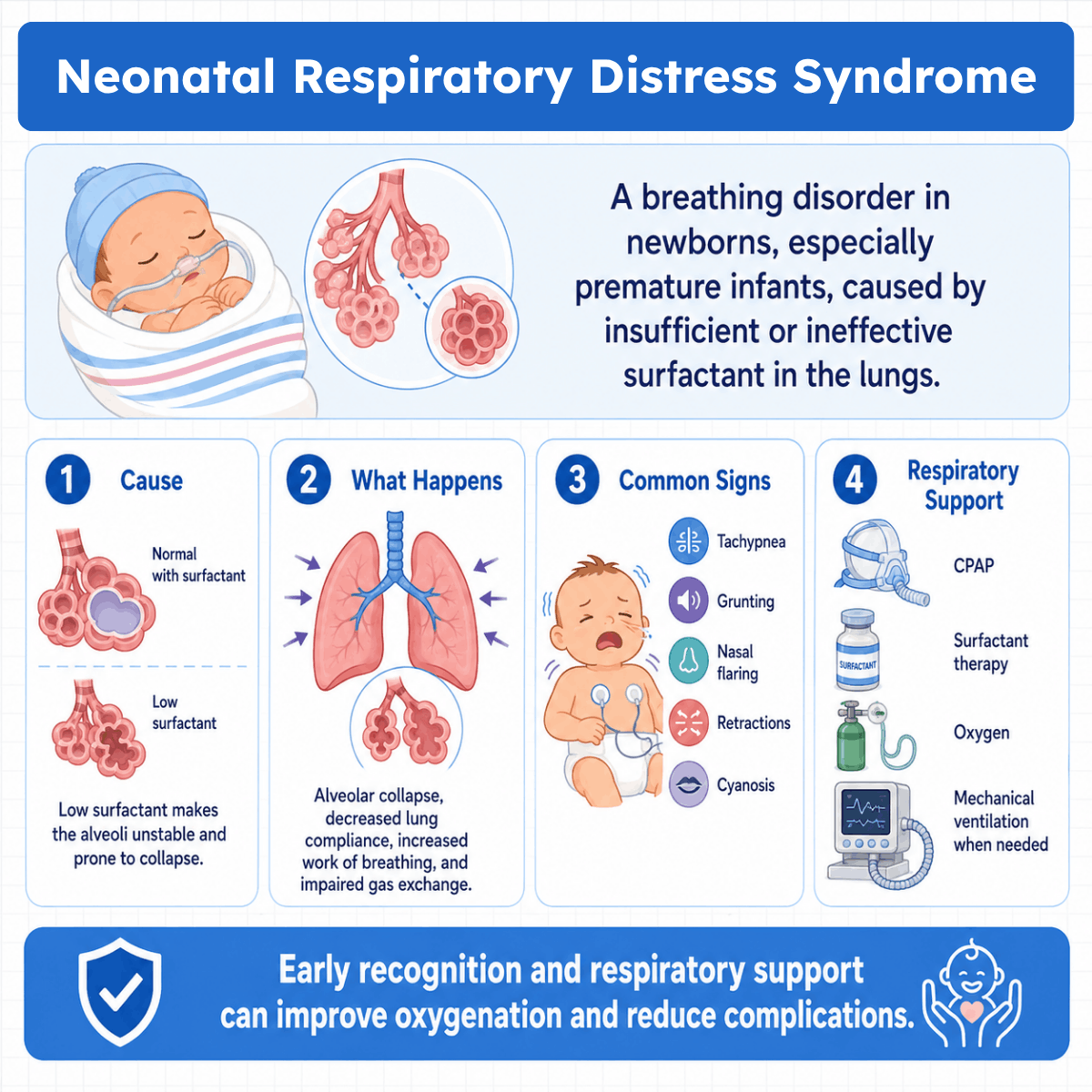
Neonatal respiratory distress syndrome (RDS) is a serious breathing disorder that primarily affects premature infants. It occurs when the newborn’s lungs do not have enough effective surfactant, a substance that helps keep the alveoli open during breathing.
Without adequate surfactant, the lungs become stiff, unstable, and difficult to inflate, leading to atelectasis, hypoxemia, increased work of breathing, and possible respiratory failure.
Because RDS can progress quickly after birth, early recognition and appropriate respiratory support are essential for improving outcomes.

What Is Neonatal Respiratory Distress Syndrome?
Neonatal respiratory distress syndrome (RDS) is a lung disorder of newborns caused mainly by insufficient or ineffective pulmonary surfactant. It is most common in premature infants because surfactant production increases later in fetal development, especially during the third trimester.
This condition was formerly known as hyaline membrane disease because of the membrane-like material that can form in the alveoli when the lungs are injured. These hyaline membranes interfere with gas exchange and make breathing even more difficult.
RDS is not simply a problem of low oxygen. It is a disorder that affects lung mechanics, alveolar stability, pulmonary blood flow, gas exchange, and the infant’s ability to maintain normal ventilation. As the disease progresses, the infant may develop worsening hypoxemia, carbon dioxide retention, respiratory acidosis, and increased pulmonary vascular resistance.
In simple terms, RDS occurs when the newborn’s lungs are not mature enough to stay open and function properly after birth.
Why RDS Is Common in Premature Infants
Prematurity is the most important risk factor for neonatal RDS. The more premature the infant is, the greater the risk. Infants born before 28 weeks of gestation are at especially high risk because their lungs are still developing structurally and functionally.
Several features of the premature lung contribute to RDS:
- Inadequate surfactant production
- Poor surfactant release into the alveoli
- Immature alveolar structure
- Reduced lung compliance
- Weak respiratory muscles
- A highly compliant chest wall
- Reduced alveolar surface area for gas exchange
- Immature pulmonary capillary development
In a term newborn, the lungs are usually developed enough to support effective gas exchange after birth. In a premature infant, however, the lungs may not be ready for the sudden transition from fetal life to air breathing.
During fetal life, the placenta handles oxygen and carbon dioxide exchange. After birth, the lungs must take over this function immediately. If the lungs lack surfactant and are unable to remain open, respiratory distress can appear within minutes to hours.
Role of Surfactant in Normal Lung Function
Pulmonary surfactant is a substance produced by type II alveolar cells. Its main job is to lower surface tension inside the alveoli.
Surface tension is the force that tends to make alveoli collapse, especially during exhalation. Surfactant reduces this force so that the alveoli can remain open at low lung volumes. This helps maintain functional residual capacity (FRC), which is the amount of air left in the lungs after a normal exhalation.
Surfactant helps the lungs in several important ways:
- Prevents alveolar collapse
- Improves lung compliance
- Reduces the work of breathing
- Helps maintain FRC
- Promotes more even ventilation
- Improves oxygenation
- Reduces atelectasis
Note: When surfactant is deficient, the alveoli become unstable. They collapse during exhalation, and the infant must generate much greater pressure to reopen them during the next breath. This makes breathing difficult and exhausting.
Pathophysiology of Neonatal RDS
The pathophysiology of neonatal RDS begins with surfactant deficiency or dysfunction. Without effective surfactant, alveolar surface tension increases. This causes alveoli to collapse, producing widespread atelectasis.
Atelectasis reduces the amount of lung tissue available for gas exchange. As more alveoli collapse, lung compliance decreases. The lungs become stiff, and the infant must work harder to breathe.
This leads to several major physiologic problems:
- Decreased lung compliance
- Reduced functional residual capacity
- Ventilation-perfusion mismatch
- Increased work of breathing
- Hypoxemia
- Hypercapnia
- Respiratory acidosis
- Increased pulmonary vascular resistance
- Right-to-left shunting
As oxygen levels fall and carbon dioxide levels rise, the infant becomes acidotic. Hypoxemia and acidosis cause pulmonary vasoconstriction, which increases pulmonary vascular resistance. When pulmonary vascular resistance rises, blood may bypass the lungs through fetal circulatory pathways, such as the ductus arteriosus and foramen ovale.
This right-to-left shunting worsens hypoxemia because blood passes from the right side of the circulation to the left side without being oxygenated in the lungs. The result is a harmful cycle: surfactant deficiency causes atelectasis and poor gas exchange, which causes hypoxemia and acidosis, which increases pulmonary vascular resistance and worsens shunting.
Note: Hypoxemia and acidosis can also reduce surfactant production and release even further. This makes the condition progressively worse if treatment is not provided.
Hyaline Membrane Formation
The older term for neonatal RDS is hyaline membrane disease. This name refers to the formation of hyaline membranes within the alveoli.
When alveoli collapse and gas exchange worsens, the delicate lining of the alveoli can become injured. Fluid, plasma proteins, and cellular debris may leak into the airspaces. This material forms a membrane-like layer along the alveolar walls.
These hyaline membranes interfere with oxygen and carbon dioxide exchange. They also make the lungs stiffer and more difficult to ventilate. As a result, the infant’s respiratory distress may worsen.
Note: Although the term hyaline membrane disease is still used in some contexts, neonatal respiratory distress syndrome is now the more common term.
Risk Factors for Neonatal RDS
The most important risk factor for neonatal RDS is prematurity, but several other factors can increase the risk.
Common risk factors include:
- Premature birth
- Very low birth weight
- Male sex
- Maternal diabetes
- Cesarean delivery without labor
- Perinatal asphyxia
- Hypothermia
- Multiple gestation
- Family history of RDS
- Genetic surfactant disorders
Maternal diabetes is an important risk factor because high fetal insulin levels may delay surfactant production. This means that even some larger infants of diabetic mothers may be at increased risk for respiratory distress.
Cesarean delivery without labor can also contribute to respiratory difficulty because labor helps stimulate fluid clearance from the fetal lungs. When lung fluid is not cleared effectively, gas exchange may be impaired after birth.
Note: Although RDS is most strongly associated with premature infants, rare genetic disorders affecting surfactant proteins or surfactant transport can cause severe respiratory distress in term newborns.
Clinical Presentation
Neonatal RDS usually appears soon after birth. In many cases, signs begin in the delivery room or within the first 6 hours of life. A premature infant who develops early respiratory distress should always be evaluated for RDS.
Common signs and symptoms include:
- Tachypnea
- Nasal flaring
- Expiratory grunting
- Retractions
- Cyanosis
- Labored breathing
- Decreased breath sounds
- Fine inspiratory crackles
- Poor feeding
- Fatigue
- Apnea in severe cases
Tachypnea is often one of the earliest signs. The infant breathes rapidly in an attempt to improve oxygenation and ventilation. However, rapid breathing alone may not be enough if the alveoli continue to collapse.
Nasal flaring occurs as the infant tries to reduce airway resistance and increase airflow. Retractions occur when the infant uses extra effort to breathe, causing visible pulling inward of the chest wall. These may be seen in the intercostal, subcostal, suprasternal, or substernal areas.
Grunting is an especially important sign. It occurs when the infant partially closes the glottis during exhalation, creating back pressure in the lungs. This is the infant’s attempt to maintain FRC and prevent alveolar collapse.
Cyanosis may occur when oxygenation becomes severely impaired. Central cyanosis, especially involving the lips, tongue, or trunk, is more concerning than peripheral cyanosis of the hands and feet.
Note: A decreasing respiratory rate in an infant with significant distress can be dangerous. It may indicate fatigue and impending respiratory failure rather than improvement.
Assessment of the Infant With Suspected RDS
Assessment begins immediately after birth. The clinician should consider gestational age, birth weight, maternal history, delivery details, and the infant’s respiratory status.
Important assessment findings include:
- Gestational age
- Birth weight
- Apgar scores
- Respiratory rate
- Work of breathing
- Chest wall movement
- Breath sounds
- Oxygen saturation
- Skin color
- Heart rate
- Blood gas values
- Chest radiograph findings
The respiratory therapist should closely observe the infant’s breathing pattern. Signs such as grunting, nasal flaring, and retractions suggest increased work of breathing. Paradoxical breathing may be seen because the premature infant’s chest wall is very compliant.
Pulse oximetry is used to monitor oxygenation. However, oxygen saturation should be interpreted in context. The goal is to provide enough oxygen to correct hypoxemia while avoiding excessive oxygen exposure.
Note: Blood gas analysis may be needed to evaluate oxygenation, ventilation, and acid-base status. In RDS, blood gases may show hypoxemia, elevated PaCO₂, and respiratory acidosis, especially as the condition worsens.
Chest Radiograph Findings
Chest radiography is commonly used to support the diagnosis of neonatal RDS. The classic findings include low lung volumes, diffuse reticulogranular appearance, and air bronchograms.
Typical chest x-ray findings include:
- Low lung volume
- Diffuse ground-glass appearance
- Reticulogranular pattern
- Air bronchograms
- Poor lung expansion
Low lung volume occurs because alveoli are collapsed and difficult to inflate. The ground-glass or reticulogranular pattern reflects diffuse atelectasis and poor aeration throughout the lungs.
Air bronchograms appear because the air-filled bronchi stand out against surrounding collapsed or fluid-filled alveoli. This is a common radiographic feature of RDS.
Note: Chest radiography also helps rule out other causes of neonatal respiratory distress, such as transient tachypnea of the newborn, pneumonia, meconium aspiration syndrome, pneumothorax, or congenital lung abnormalities.
Blood Gas Findings
Blood gas analysis provides important information about the infant’s respiratory status. In early or mild RDS, the main problem may be hypoxemia. As the disease progresses, ventilation may worsen, leading to carbon dioxide retention and acidosis.
Possible blood gas findings include:
- Low PaO₂
- Elevated PaCO₂
- Low pH
- Respiratory acidosis
- Mixed respiratory and metabolic acidosis in severe cases
Hypoxemia occurs because collapsed alveoli cannot participate in gas exchange. Hypercapnia develops when the infant cannot ventilate effectively due to stiff lungs, fatigue, or worsening respiratory failure.
Note: Acidosis is especially concerning because it can increase pulmonary vascular resistance and worsen right-to-left shunting. This can further reduce oxygenation and accelerate clinical deterioration.
Differential Diagnosis
Not every newborn with respiratory distress has RDS. Several conditions can produce similar signs, so clinicians must evaluate the full clinical picture.
Common conditions in the differential diagnosis include:
- Transient tachypnea of the newborn
- Meconium aspiration syndrome
- Neonatal pneumonia
- Sepsis
- Persistent pulmonary hypertension of the newborn
- Pneumothorax
- Congenital diaphragmatic hernia
- Pulmonary hypoplasia
- Congenital heart disease
- Airway obstruction
Transient tachypnea of the newborn is often related to delayed clearance of fetal lung fluid and is more common in term or late preterm infants. Meconium aspiration syndrome typically occurs in term or post-term infants exposed to meconium-stained amniotic fluid.
Pneumonia and sepsis may also cause respiratory distress, poor perfusion, temperature instability, and abnormal laboratory findings. Congenital heart disease should be considered if hypoxemia does not improve as expected with oxygen and respiratory support.
Note: RDS is most likely when a premature infant develops respiratory distress shortly after birth and has chest radiograph findings consistent with surfactant deficiency.
Prevention of Neonatal RDS
Prevention focuses on reducing premature birth when possible and improving fetal lung maturity when preterm delivery is expected.
One important preventive measure is antenatal corticosteroid therapy. When given to a pregnant patient at risk for preterm delivery, corticosteroids help accelerate fetal lung maturation and stimulate surfactant production.
Antenatal corticosteroids can reduce the incidence and severity of neonatal RDS. They may also reduce complications associated with prematurity.
Other preventive strategies include:
- Appropriate prenatal care
- Management of high-risk pregnancies
- Avoiding unnecessary early delivery
- Treating maternal conditions that increase preterm birth risk
- Planning delivery at facilities with neonatal intensive care support when needed
Note: In some cases, clinicians may assess fetal lung maturity before delivery using markers related to surfactant production. These may include the lecithin/sphingomyelin ratio and the presence of phosphatidylglycerol. Mature results suggest a lower risk of RDS, while immature results suggest a higher risk.
Initial Management After Birth
The initial management of a newborn at risk for RDS focuses on stabilization, oxygenation, ventilation, and temperature control.
Important early steps include:
- Maintain a neutral thermal environment
- Assess breathing and heart rate
- Provide appropriate oxygen support
- Apply CPAP when indicated
- Monitor oxygen saturation
- Evaluate work of breathing
- Obtain blood gas analysis when needed
- Prepare for surfactant therapy if indicated
- Avoid unnecessary lung injury
Premature infants are especially vulnerable to heat loss. Hypothermia can worsen respiratory distress and increase oxygen consumption, so maintaining body temperature is important.
Oxygen should be used carefully. Too little oxygen can worsen hypoxemia, but too much oxygen can contribute to oxidative injury, especially in premature infants. Oxygen therapy should be titrated based on target oxygen saturation ranges and the infant’s clinical condition.
Continuous Positive Airway Pressure
Continuous positive airway pressure (CPAP) is commonly used in premature infants with RDS who are breathing spontaneously but need help keeping the lungs open.
CPAP provides a constant distending pressure throughout the respiratory cycle. This pressure helps prevent alveolar collapse, improve FRC, reduce atelectasis, and improve oxygenation.
Benefits of CPAP include:
- Stabilizes alveoli
- Improves lung volume
- Reduces work of breathing
- Improves oxygenation
- May reduce the need for intubation
- Helps support spontaneous breathing
CPAP is especially useful in early RDS when the infant is breathing but showing signs of increased work of breathing or oxygen need. It may be delivered using nasal prongs, nasal mask, bubble CPAP, or ventilator-based CPAP systems.
Bubble CPAP is commonly used in neonatal care. It provides continuous pressure and may create small pressure oscillations that help gas exchange, although its main function is maintaining distending pressure.
Note: CPAP is not appropriate for every infant. If the infant has severe apnea, worsening hypercapnia, unstable cardiovascular status, or an untreated pneumothorax, more advanced support may be needed.
Surfactant Replacement Therapy
Surfactant replacement therapy directly addresses the underlying surfactant deficiency in neonatal RDS. It is one of the most important treatments for premature infants with moderate to severe disease.
Surfactant is usually administered into the airway so it can reach the alveoli. It may be given after intubation, or through less invasive surfactant administration techniques depending on the facility and patient condition.
The goals of surfactant therapy are to:
- Reduce alveolar surface tension
- Improve lung compliance
- Stabilize alveoli
- Improve oxygenation
- Decrease work of breathing
- Reduce the need for high ventilator pressures
- Limit progression of respiratory failure
Some infants receive rescue surfactant after RDS is diagnosed and respiratory support needs increase. Others may receive early selective surfactant when they show signs of significant disease while on CPAP.
One approach is the INSURE method, which stands for Intubate, SURfactant, and Extubate. In this method, the infant is briefly intubated to receive surfactant and then extubated back to CPAP when stable. The goal is to provide surfactant while reducing the duration of invasive mechanical ventilation.
Note: After surfactant administration, lung compliance may improve quickly. This means ventilator pressures and oxygen levels may need to be reduced promptly to avoid overdistension or oxygen toxicity.
Mechanical Ventilation
Mechanical ventilation may be required when an infant with RDS cannot maintain adequate oxygenation or ventilation with noninvasive support.
Indications may include:
- Severe respiratory distress
- Recurrent apnea
- Persistent hypoxemia despite CPAP
- Severe hypercapnia
- Respiratory acidosis
- Poor respiratory effort
- Cardiovascular instability
- Need for surfactant administration through an endotracheal tube
Mechanical ventilation can be lifesaving, but it must be used carefully in premature infants. Their lungs are fragile and easily injured by excessive pressure, volume, or oxygen.
Potential ventilator-related complications include:
- Barotrauma
- Volutrauma
- Atelectrauma
- Oxygen toxicity
- Air leak syndromes
- Bronchopulmonary dysplasia
The goal is to use enough support to maintain acceptable gas exchange while minimizing lung injury. This often means using gentle ventilation strategies, appropriate PEEP, careful oxygen titration, and frequent reassessment.
Note: Because surfactant therapy may rapidly improve lung mechanics, ventilator settings often need to be adjusted after treatment.
High-Frequency Ventilation
High-frequency ventilation may be considered in severe cases of neonatal RDS when conventional ventilation does not provide adequate gas exchange or when high pressures would be required.
High-frequency ventilation uses very rapid respiratory rates and small tidal volumes. The goal is to improve oxygenation and ventilation while reducing the risk of lung injury from large volume changes. It may be used for infants with severe hypoxemia, hypercapnia, or air leak syndromes. However, it requires careful monitoring and experienced clinical management.
Note: High-frequency ventilation is not needed for every infant with RDS. Many infants can be managed with CPAP, surfactant therapy, or conventional mechanical ventilation.
Oxygen Therapy and Monitoring
Oxygen therapy is necessary when the infant is hypoxemic, but oxygen must be used with caution. Premature infants are vulnerable to oxygen-related injury.
Excessive oxygen exposure can contribute to complications such as retinopathy of prematurity and chronic lung disease. For this reason, oxygen should be titrated to appropriate saturation targets rather than given at unnecessarily high levels.
Monitoring may include:
- Pulse oximetry
- Arterial blood gases
- Transcutaneous oxygen monitoring
- Transcutaneous carbon dioxide monitoring
- Capnography in selected cases
- Clinical assessment of work of breathing
Pulse oximetry provides continuous information about oxygen saturation, but it does not measure carbon dioxide. Blood gas analysis is needed when ventilation and acid-base status must be evaluated.
Transcutaneous monitoring may be useful in sick neonates, especially when frequent blood sampling is undesirable. However, poor perfusion, hypotension, or shock can reduce the accuracy of transcutaneous values.
Complications of Neonatal RDS
Neonatal RDS can lead to several complications, especially when severe or prolonged. Some complications are caused by the disease itself, while others may be related to oxygen therapy, positive-pressure ventilation, or prematurity.
Possible complications include:
- Pneumothorax
- Pulmonary interstitial emphysema
- Bronchopulmonary dysplasia
- Persistent pulmonary hypertension of the newborn
- Pulmonary hemorrhage
- Intraventricular hemorrhage
- Patent ductus arteriosus
- Retinopathy of prematurity
- Sepsis
- Respiratory failure
Air leak syndromes can occur when pressure causes alveoli to rupture. Air may then escape into the pleural space, causing pneumothorax, or into the lung interstitium, causing pulmonary interstitial emphysema.
Bronchopulmonary dysplasia is a chronic lung condition associated with prematurity, oxygen exposure, mechanical ventilation, inflammation, and lung injury. Infants with severe RDS are at increased risk.
Note: Persistent pulmonary hypertension can occur when pulmonary vascular resistance remains elevated, leading to ongoing right-to-left shunting and hypoxemia.
Prognosis
The prognosis for neonatal RDS has improved significantly because of advances in prenatal care, antenatal corticosteroids, surfactant replacement therapy, CPAP, mechanical ventilation, and neonatal intensive care.
Many infants with RDS recover as their lungs mature and begin producing more effective surfactant. However, outcomes depend on gestational age, birth weight, severity of disease, complications, and other medical problems.
Extremely premature infants are at higher risk for long-term complications. These may include chronic lung disease, neurodevelopmental impairment, feeding difficulties, recurrent respiratory infections, and prolonged oxygen needs.
Note: Early recognition and appropriate treatment improve the chances of survival and reduce the risk of complications.
Role of the Respiratory Therapist
Respiratory therapists play an important role in the care of infants with neonatal RDS. Their responsibilities often include assessment, oxygen delivery, CPAP management, ventilator management, blood gas interpretation, surfactant administration assistance, and ongoing monitoring.
Key responsibilities may include:
- Assessing respiratory distress
- Monitoring oxygen saturation
- Managing CPAP or high-flow support
- Assisting with intubation
- Administering or assisting with surfactant therapy
- Managing mechanical ventilation
- Interpreting blood gases
- Recognizing complications
- Adjusting support based on clinical response
- Communicating changes to the neonatal care team
Note: Respiratory therapists must also recognize when an infant is worsening. Signs such as increasing oxygen requirement, worsening retractions, apnea, bradycardia, rising carbon dioxide, or falling pH may indicate the need for escalation of support.
Key Points for Students
For students learning about neonatal RDS, the most important concept is that this is primarily a surfactant-deficiency disorder of premature infants.
The classic pattern includes:
- Premature birth
- Early respiratory distress
- Surfactant deficiency
- Alveolar collapse
- Low lung compliance
- Increased work of breathing
- Hypoxemia
- Respiratory acidosis
- Ground-glass chest x-ray
- Treatment with CPAP, surfactant, oxygen, and ventilatory support
It is also important to understand that grunting is not just a random symptom. It is the infant’s attempt to create positive pressure during exhalation to keep the alveoli open.
Another key point is that mechanical ventilation can help, but also harm. The goal is always to provide enough support to maintain gas exchange while reducing the risk of lung injury.
Neonatal Respiratory Distress Syndrome Practice Questions
1. What is neonatal respiratory distress syndrome?
Neonatal respiratory distress syndrome (RDS) is a disorder of premature infants caused primarily by surfactant deficiency, leading to alveolar collapse, decreased lung compliance, impaired gas exchange, and increased work of breathing.
2. What is the primary cause of neonatal respiratory distress syndrome?
The primary cause is a deficiency of pulmonary surfactant due to immature type II alveolar cells.
3. Which infants are at the highest risk for neonatal respiratory distress syndrome?
Premature infants are at the highest risk, especially those born before 34 weeks of gestation.
4. Why is RDS more common in premature infants?
Premature infants often have immature lungs with inadequate surfactant production, making it difficult for the alveoli to remain open after birth.
5. What was neonatal respiratory distress syndrome formerly called?
It was formerly called hyaline membrane disease.
6. Why was neonatal RDS called hyaline membrane disease?
It was called hyaline membrane disease because protein-rich fluid, cellular debris, and fibrin can form hyaline membranes that line the collapsed alveoli.
7. What is surfactant?
Surfactant is a substance produced in the lungs that reduces surface tension within the alveoli and helps keep them open during exhalation.
8. Which cells produce pulmonary surfactant?
Pulmonary surfactant is produced by type II pneumocytes.
9. What is the main function of surfactant?
The main function of surfactant is to lower alveolar surface tension, improve lung compliance, reduce the work of breathing, and help prevent atelectasis.
10. What happens when surfactant is deficient?
When surfactant is deficient, alveoli collapse more easily, lung compliance decreases, and the infant must work harder to breathe.
11. How does surfactant deficiency affect lung compliance?
Surfactant deficiency decreases lung compliance, making the lungs stiff and difficult to inflate.
12. How does decreased lung compliance affect the newborn?
Decreased lung compliance increases the work of breathing and can quickly lead to fatigue, hypoxemia, and respiratory failure.
13. What is atelectasis?
Atelectasis is the collapse of alveoli or lung tissue, which reduces ventilation and impairs gas exchange.
14. Why does atelectasis occur in neonatal RDS?
Atelectasis occurs because the lack of surfactant allows alveoli to collapse during exhalation.
15. What is the relationship between surface tension and alveolar collapse?
High surface tension increases the tendency of alveoli to collapse, especially in small alveoli.
16. What happens to oxygenation in neonatal RDS?
Oxygenation decreases because collapsed alveoli reduce the surface area available for gas exchange.
17. What happens to ventilation in severe neonatal RDS?
Ventilation may become impaired as the infant tires, which can lead to carbon dioxide retention and respiratory acidosis.
18. What are the classic early signs of neonatal RDS?
Classic signs include tachypnea, nasal flaring, grunting, retractions, cyanosis, and increased work of breathing shortly after birth.
19. When do symptoms of neonatal RDS usually appear?
Symptoms usually appear within minutes to a few hours after birth and may worsen over the first 24 to 48 hours if untreated.
20. What respiratory rate is considered tachypnea in a newborn?
A respiratory rate greater than 60 breaths per minute is considered tachypnea in a newborn.
21. Why does grunting occur in neonatal RDS?
Grunting occurs because the infant partially closes the glottis during exhalation to create positive pressure and help keep the alveoli open.
22. Why do nasal flaring and retractions occur in neonatal RDS?
They occur because the infant is using increased effort to move air into stiff, poorly compliant lungs.
23. What does cyanosis indicate in neonatal RDS?
Cyanosis indicates inadequate oxygenation and is a serious sign of hypoxemia.
24. What is the most important risk factor for neonatal RDS?
Prematurity is the most important risk factor.
25. How does gestational age affect the risk of RDS?
The younger the gestational age, the higher the risk because surfactant production increases later in fetal development.
26. What maternal condition increases the risk of neonatal RDS?
Maternal diabetes increases the risk because high fetal insulin levels can delay surfactant production.
27. Why can cesarean delivery increase the risk of respiratory distress in newborns?
Cesarean delivery, especially without labor, may reduce the clearance of fetal lung fluid and can increase the risk of neonatal respiratory distress.
28. What other factors can increase the risk of neonatal RDS?
Risk factors include prematurity, maternal diabetes, cesarean delivery without labor, perinatal asphyxia, male sex, multiple gestation, and a previous sibling with RDS.
29. Which fetal lung development stage is important for surfactant production?
The saccular stage is important because terminal sacs develop and type II pneumocytes begin producing increasing amounts of surfactant.
30. Around what gestational age does surfactant first appear?
Surfactant begins to appear during fetal development, but production is often inadequate until later in gestation.
31. Around what gestational age is surfactant usually sufficient for normal breathing?
Surfactant production is usually more adequate by approximately 34 to 36 weeks of gestation.
32. What is lecithin?
Lecithin is a phospholipid component of surfactant that increases as fetal lungs mature.
33. What is sphingomyelin?
Sphingomyelin is a lipid found in amniotic fluid that remains relatively stable during fetal development and is used for comparison with lecithin.
34. What is the lecithin-to-sphingomyelin ratio?
The lecithin-to-sphingomyelin ratio, or L:S ratio, is a test of fetal lung maturity based on the amount of lecithin compared with sphingomyelin in amniotic fluid.
35. What L:S ratio generally suggests fetal lung maturity?
An L:S ratio greater than 2:1 generally suggests fetal lung maturity and a lower risk of RDS.
36. What L:S ratio suggests an increased risk of neonatal RDS?
An L:S ratio less than 2:1 suggests an increased risk, with lower values indicating greater concern for surfactant deficiency.
37. What surfactant component is especially helpful in assessing fetal lung maturity?
Phosphatidylglycerol is a useful marker because its presence is associated with more mature surfactant production.
38. What is dipalmitoyl phosphatidylcholine?
Dipalmitoyl phosphatidylcholine is a major active phospholipid in surfactant that helps reduce alveolar surface tension.
39. What is the typical chest x-ray appearance of neonatal RDS?
A chest x-ray often shows a diffuse reticulogranular or ground-glass appearance with low lung volumes and air bronchograms.
40. What are air bronchograms?
Air bronchograms are visible air-filled bronchi surrounded by poorly aerated or consolidated lung tissue.
41. Why do air bronchograms occur in neonatal RDS?
They occur because collapsed or fluid-filled alveoli make the air-filled bronchi stand out on the chest radiograph.
42. What does a ground-glass appearance on chest x-ray suggest in a premature infant?
In a premature infant with respiratory distress, a diffuse ground-glass appearance strongly suggests neonatal RDS.
43. What lung volume finding is common on chest x-ray in neonatal RDS?
Low lung volumes are common because alveolar collapse reduces overall lung expansion.
44. What blood gas abnormalities may occur in neonatal RDS?
Blood gases may show hypoxemia, hypercapnia, and respiratory acidosis, with metabolic acidosis possible in severe cases.
45. Why can metabolic acidosis occur in severe RDS?
Metabolic acidosis can occur when tissue hypoxia leads to poor perfusion and lactic acid production.
46. What should be included in the initial assessment of a newborn with respiratory distress?
Assessment should include respiratory rate, work of breathing, oxygen saturation, color, breath sounds, temperature, glucose, blood gas results, chest x-ray findings, and maternal history.
47. Why is maternal history important when evaluating neonatal RDS?
Maternal history can reveal risk factors such as prematurity, diabetes, infection, cesarean delivery, prolonged rupture of membranes, and antenatal steroid use.
48. What diagnostic tests are commonly used when neonatal RDS is suspected?
Common tests include chest x-ray, blood gas analysis, pulse oximetry, glucose measurement, complete blood count, blood culture, and assessment for infection when indicated.
49. Why is blood glucose checked in newborns with respiratory distress?
Hypoglycemia can worsen respiratory distress and is common in premature infants and infants of diabetic mothers.
50. Why is infection considered in the differential diagnosis of neonatal RDS?
Neonatal pneumonia or sepsis can cause respiratory distress that may resemble RDS, so infection must be considered and ruled out when appropriate.
51. What are common differential diagnoses for neonatal RDS?
Common differentials include transient tachypnea of the newborn, meconium aspiration syndrome, neonatal pneumonia, pneumothorax, congenital heart disease, pulmonary hypoplasia, and persistent pulmonary hypertension of the newborn.
52. How is transient tachypnea of the newborn different from neonatal RDS?
Transient tachypnea of the newborn is usually caused by retained fetal lung fluid and often improves within 24 to 72 hours, while RDS is caused by surfactant deficiency and is more common in premature infants.
53. What chest x-ray findings are associated with transient tachypnea of the newborn?
Transient tachypnea of the newborn often shows hyperinflation, prominent vascular markings, and fluid in the interlobar fissures.
54. How is meconium aspiration syndrome different from neonatal RDS?
Meconium aspiration syndrome usually occurs in term or post-term infants after aspiration of meconium-stained fluid, while RDS usually occurs in premature infants due to surfactant deficiency.
55. How can pneumothorax present in a newborn with respiratory distress?
Pneumothorax can cause sudden worsening distress, asymmetric breath sounds, increased oxygen needs, and sometimes hypotension.
56. What is pulmonary hypoplasia?
Pulmonary hypoplasia is underdevelopment of the lungs, resulting in reduced lung tissue and impaired gas exchange.
57. Is pulmonary hypoplasia the primary cause of neonatal RDS?
No. The primary cause of neonatal RDS is surfactant deficiency, not pulmonary hypoplasia.
58. What is persistent pulmonary hypertension of the newborn?
Persistent pulmonary hypertension of the newborn is a condition in which pulmonary vascular resistance remains abnormally high after birth, causing right-to-left shunting and severe hypoxemia.
59. How can severe RDS contribute to persistent pulmonary hypertension of the newborn?
Severe hypoxemia and acidosis can cause pulmonary vasoconstriction, which may worsen pulmonary hypertension and right-to-left shunting.
60. What is patent ductus arteriosus?
Patent ductus arteriosus is a condition in which the ductus arteriosus remains open after birth, allowing abnormal blood flow between the aorta and pulmonary artery.
61. Why are premature infants with RDS at risk for patent ductus arteriosus?
Prematurity and hypoxemia can contribute to delayed closure of the ductus arteriosus.
62. What is the goal of oxygen therapy in neonatal RDS?
The goal is to correct hypoxemia while avoiding excessive oxygen exposure that can injure developing tissues.
63. Why should oxygen be carefully titrated in premature infants?
Excess oxygen can increase the risk of complications such as retinopathy of prematurity and lung injury.
64. What is retinopathy of prematurity?
Retinopathy of prematurity is an eye disorder in premature infants involving abnormal retinal blood vessel growth that can lead to vision impairment or blindness.
65. What are common complications associated with severe RDS or its treatment?
Complications may include air leaks, patent ductus arteriosus, intraventricular hemorrhage, retinopathy of prematurity, bronchopulmonary dysplasia, and respiratory failure.
66. What is bronchopulmonary dysplasia?
Bronchopulmonary dysplasia is a chronic lung disease of prematurity associated with prolonged oxygen exposure, mechanical ventilation, inflammation, and abnormal lung development.
67. What factors contribute to bronchopulmonary dysplasia?
Factors include prematurity, oxygen toxicity, ventilator-induced lung injury, inflammation, infection, and prolonged respiratory support.
68. How can mechanical ventilation contribute to lung injury in premature infants?
Mechanical ventilation can contribute to lung injury through excessive pressure, excessive volume, oxygen toxicity, and repeated opening and closing of unstable alveoli.
69. What is ventilator-induced lung injury?
Ventilator-induced lung injury is lung damage caused or worsened by mechanical ventilation, often related to excessive pressure, volume, oxygen concentration, or repetitive alveolar collapse and reopening.
70. What is CPAP?
Continuous positive airway pressure, or CPAP, provides positive pressure throughout the breathing cycle to help keep the alveoli open.
71. Why is CPAP useful in neonatal RDS?
CPAP helps prevent alveolar collapse, improves functional residual capacity, decreases work of breathing, and may reduce the need for intubation.
72. When may CPAP be used in neonatal RDS?
CPAP may be used when the infant is breathing spontaneously but has signs of respiratory distress or increased oxygen requirements.
73. When might intubation be required in neonatal RDS?
Intubation may be required if the infant has severe respiratory distress, apnea, worsening acidosis, poor oxygenation, or failure of noninvasive support.
74. What is surfactant replacement therapy?
Surfactant replacement therapy is the administration of exogenous surfactant into the airway to improve lung compliance and gas exchange in infants with surfactant deficiency.
75. How is surfactant usually administered?
Surfactant is usually administered through an endotracheal tube or through less invasive surfactant administration techniques when appropriate.
76. What are examples of exogenous surfactant preparations?
Examples include beractant, poractant alfa, and calfactant.
77. What is the expected response after surfactant administration?
The infant may show improved oxygenation, better lung compliance, reduced oxygen requirements, and improved chest expansion.
78. Why should ventilator settings be reassessed after surfactant administration?
Lung compliance can improve quickly after surfactant, so ventilator pressures and oxygen may need to be reduced to avoid overdistention and oxygen toxicity.
79. What is antenatal corticosteroid therapy?
Antenatal corticosteroid therapy is the administration of medications such as betamethasone or dexamethasone to a pregnant mother at risk for preterm delivery to accelerate fetal lung maturation.
80. How do antenatal corticosteroids help prevent neonatal RDS?
They stimulate fetal lung maturation and surfactant production, reducing the risk and severity of RDS.
81. Which medications are commonly used for antenatal steroid therapy?
Betamethasone and dexamethasone are commonly used.
82. What is the role of delayed cord clamping in premature infants?
Delayed cord clamping may improve circulatory transition and increase blood volume, which can support oxygen delivery after birth.
83. What temperature management is important in newborns with RDS?
Maintaining normal body temperature is important because hypothermia increases oxygen consumption and can worsen respiratory distress.
84. Why should hypothermia be avoided in premature infants with RDS?
Hypothermia increases metabolic demand, oxygen consumption, and the risk of acidosis.
85. Why is fluid management important in neonatal RDS?
Careful fluid management helps maintain perfusion while avoiding fluid overload, which can worsen pulmonary edema and respiratory status.
86. What is functional residual capacity?
Functional residual capacity is the amount of air remaining in the lungs at the end of a normal exhalation.
87. Why is functional residual capacity reduced in neonatal RDS?
It is reduced because surfactant deficiency allows alveoli to collapse during exhalation.
88. How does CPAP improve functional residual capacity?
CPAP applies positive pressure that helps keep alveoli open at the end of exhalation, increasing functional residual capacity.
89. What is PEEP?
Positive end-expiratory pressure, or PEEP, is pressure maintained in the lungs at the end of exhalation to help prevent alveolar collapse.
90. Why is PEEP used during mechanical ventilation for RDS?
PEEP helps maintain alveolar recruitment, improve oxygenation, and reduce repetitive alveolar collapse.
91. What are signs that respiratory distress is worsening in a newborn?
Worsening signs include increasing retractions, grunting, cyanosis, apnea, poor perfusion, rising carbon dioxide, worsening acidosis, and increasing oxygen requirements.
92. What is apnea in a newborn?
Apnea is a pause in breathing that may be associated with bradycardia, cyanosis, or oxygen desaturation.
93. Why can premature infants with RDS develop apnea?
They may develop apnea due to respiratory muscle fatigue, immature respiratory control, hypoxemia, infection, or worsening respiratory failure.
94. What is the role of pulse oximetry in neonatal RDS?
Pulse oximetry is used to monitor oxygen saturation and guide oxygen therapy.
95. Why are blood gases useful in neonatal RDS?
Blood gases help evaluate oxygenation, ventilation, acid-base status, and the severity of respiratory failure.
96. What is the relationship between RDS and respiratory failure?
Severe RDS can progress to respiratory failure when the infant can no longer maintain adequate oxygenation or ventilation.
97. What is the main goal of respiratory support in neonatal RDS?
The main goal is to support oxygenation and ventilation while minimizing lung injury and allowing the infant’s lungs to mature.
98. What findings support a diagnosis of neonatal RDS?
Findings include prematurity, early respiratory distress, grunting, retractions, hypoxemia, decreased lung compliance, and a chest x-ray showing low lung volumes with diffuse ground-glass opacities and air bronchograms.
99. How has the prognosis of neonatal RDS improved?
The prognosis has improved due to antenatal corticosteroids, surfactant replacement therapy, improved neonatal ventilation strategies, CPAP, and better NICU care.
100. What is the key concept students should remember about neonatal RDS?
Neonatal RDS is primarily a surfactant deficiency disorder of premature infants that causes alveolar collapse, stiff lungs, hypoxemia, increased work of breathing, and the need for careful respiratory support.
Final Thoughts
Neonatal respiratory distress syndrome (RDS) is a major cause of breathing difficulty in premature infants and is primarily caused by surfactant deficiency and immature lung development. The condition leads to alveolar collapse, reduced lung compliance, increased work of breathing, hypoxemia, hypercapnia, and acidosis.
Early signs include tachypnea, grunting, nasal flaring, retractions, and cyanosis. Diagnosis is based on history, clinical findings, blood gas results, and chest radiography.
Treatment includes oxygen therapy, CPAP, surfactant replacement, and mechanical ventilation when needed. With early recognition and careful respiratory support, many infants recover as their lungs mature.

Written by:
John Landry is a registered respiratory therapist from Memphis, TN, and has a bachelor's degree in kinesiology. He enjoys using evidence-based research to help others breathe easier and live a healthier life.
References
- Pattnaik P, Adebisi K, Lee B. Neonatal Respiratory Distress Syndrome. [Updated 2026 Feb 17]. In: StatPearls [Internet]. Treasure Island (FL): StatPearls Publishing; 2026.