

The board exam is a challenging test that evaluates your knowledge across a wide range of respiratory care topics, including pharmacology. Pharmacology, which focuses on medications and their effects on the body, is an especially important subject for respiratory therapists because many clinical decisions involve selecting, administering, monitoring, and evaluating drug therapy.
Mastering pharmacology is not only important for passing the exam, but also for providing safe, effective, and evidence-based patient care in real-world clinical settings.
In this guide, we’ll cover practical tips and strategies to help you strengthen your pharmacology knowledge, answer questions more confidently, and move one step closer to becoming a Registered Respiratory Therapist (RRT).

Take our free course to learn essential tips, insights, and strategies to pass the TMC Exam on your first (or next) attempt.
Why Pharmacology Is an Important Topic on the Board Exam
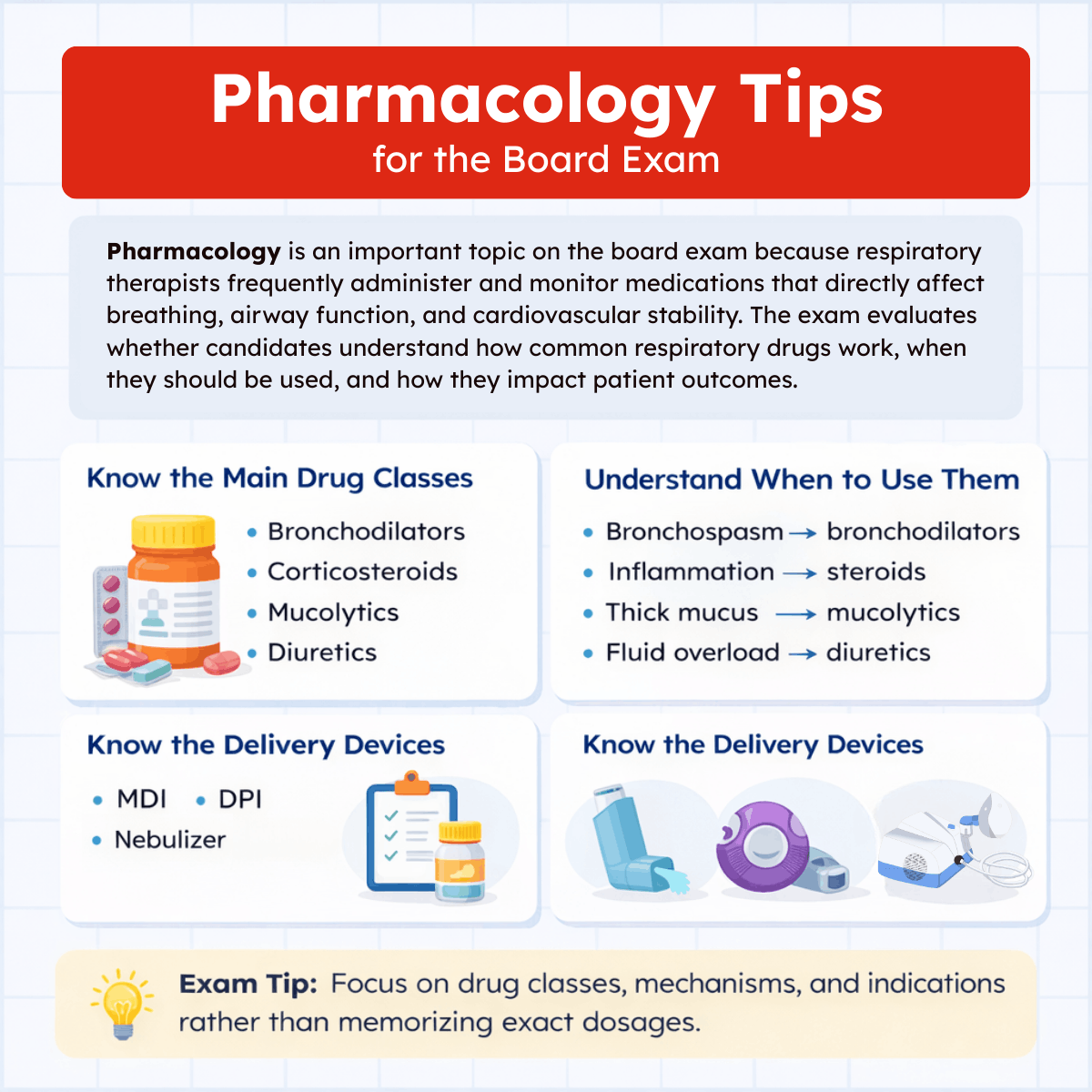
Pharmacology is an important topic on the board exam because respiratory therapists frequently administer and monitor medications that directly affect breathing, airway function, and cardiovascular stability. The exam evaluates whether candidates understand how common respiratory drugs work, when they should be used, and how they impact patient outcomes. This includes medications such as bronchodilators, corticosteroids, mucolytics, diuretics, and anti-infective agents.
In many clinical scenarios, selecting the correct medication is essential for stabilizing a patient and preventing complications. By testing pharmacology knowledge, the board exam ensures that future respiratory therapists can make safe, informed decisions about drug therapy.
A strong understanding of pharmacology also helps clinicians recognize side effects, avoid medication errors, and deliver effective treatment in both emergency and routine respiratory care situations.
Pharmacology Tips for the Board Exam
- Understand the basics
- Don’t stress over drug dosages
- Choose the appropriate aerosol delivery device
- Understand the different types of anti-infective agents
- Recognize when diuretics are needed
- Know the drugs for endotracheal instillation
- Understand how to manage a drug overdose
Watch this video or keep reading to learn essential tips and strategies for mastering the pharmacology section of the board exam.
1. Understand the Basics
The pharmacology section of the board exam often includes questions related to respiratory drugs, their mechanisms of action, indications, adverse effects, and routes of administration. Building a strong understanding of the fundamentals is essential for success.
Instead of trying to memorize isolated facts, focus on learning how major drug classes work, when they are used, and what clinical findings may suggest the need for a specific medication. This approach will help you answer both direct pharmacology questions and scenario-based questions more effectively.
Here’s an overview of key drug categories and their primary characteristics:
- Beta-2 Adrenergic Bronchodilators: These medications treat bronchoconstriction by relaxing smooth muscle in the airways. They are commonly used for patients with asthma, COPD, and other obstructive airway disorders. Examples include short-acting agents such as albuterol and long-acting agents such as arformoterol (Brovana).
- Anticholinergic Bronchodilators: These drugs block acetylcholine, which helps prevent bronchoconstriction and reduce airway narrowing. Common examples include ipratropium bromide and tiotropium bromide. They are especially useful in the management of COPD.
- Methylxanthines (Phosphodiesterase Inhibitors): These medications increase intracellular cAMP levels, which promotes bronchodilation. Theophylline is the classic example. Although it is used less often today, it remains a commonly tested drug because of its narrow therapeutic range and potential for toxicity.
- Corticosteroids: These drugs reduce airway inflammation and help improve long-term control of conditions such as asthma and COPD. Examples include budesonide, fluticasone, and triamcinolone. On the exam, it is important to remember that corticosteroids treat inflammation rather than provide immediate bronchodilation.
- Mucolytic Agents: These medications help break down thick secretions and make mucus easier to clear. Important examples include acetylcysteine (Mucomyst) and dornase alfa (Pulmozyme), which is especially useful in patients with cystic fibrosis.
- Other Drug Types: You may also encounter questions on pulmonary vasodilators, saline solutions, leukotriene modifiers, mast cell stabilizers, and cardiovascular drugs such as inotropes, antiarrhythmics, vasodilators, antianginal agents, and vasopressors.
It is also helpful to understand the difference between a medication’s generic name and brand name, since board-style questions may use either one. For example, you should recognize that albuterol and Ventolin refer to the same drug, just as ipratropium bromide and Atrovent refer to the same medication.
Another smart strategy is to pay attention to common drug endings. For example, many beta-agonists end in -terol, corticosteroids often end in -sone or -ide, and anticholinergics may end in -tropium. These naming patterns can help you quickly identify a drug class even if you do not immediately recognize the full drug name.
Note: Familiarizing yourself with these drug classes, their actions, and their common clinical uses will help you confidently tackle pharmacology questions on the board exam.

Access our quiz, which includes sample TMC practice questions and detailed explanations to help you master the key concepts of pharmacology.
2. Don’t Stress Over Drug Dosages
For the board exam, memorizing exact drug dosages usually is not necessary, as the NBRC rarely emphasizes precise dosing. In most cases, the exam focuses more on drug selection, indications, contraindications, therapeutic effects, and adverse reactions.
That said, there is one dosage that many students choose to remember because it commonly appears in review materials:
- Albuterol SVN Dose: 0.5 mL (2.5 mg) administered 3 to 4 times per day.
This is the standard dose for small-volume nebulizer (SVN) treatments and may occasionally be relevant in exam scenarios. Aside from this, you generally do not need to spend valuable study time memorizing large lists of dosages.
Instead, focus on understanding:
- What the medication is used for
- How it works
- How it is delivered
- What side effects it may cause
- Which patient population is most likely to benefit from it
For example, it is more important to know that albuterol is a short-acting beta-2 agonist used for rapid bronchodilation than it is to memorize multiple dosing variations. Likewise, knowing that ipratropium is an anticholinergic bronchodilator or that budesonide is an anti-inflammatory corticosteroid will help you far more on the exam than memorizing exact administration schedules.
When dosage information does appear in a question, it is often there to support the clinical scenario rather than serve as the primary testing point. In other words, the exam is usually trying to assess your decision-making, not your ability to memorize a drug handbook.
3. Choose the Appropriate Aerosol Delivery Device
On the board exam, selecting the appropriate aerosol delivery device for a patient is a critical skill. You should know when to recommend a small-volume nebulizer (SVN), metered-dose inhaler (MDI), or dry powder inhaler (DPI) based on the patient’s condition, inspiratory ability, and coordination.
Questions in this area often test whether you can match the right device to the right patient. This means you must think beyond the medication itself and consider how the drug will actually be delivered effectively.
Here’s a quick guide to help you make the right choice:
- Small-Volume Nebulizer (SVN): Ideal for patients who have difficulty using handheld inhalers or cannot achieve the necessary inspiratory flow for other devices. SVNs do not require complex coordination or special breathing techniques, which makes them useful for pediatric patients, elderly patients, severely dyspneic patients, and those with altered mental status or significant weakness.
- Metered-Dose Inhaler (MDI): Often preferred because it is portable, efficient, and convenient, provided the patient has good hand-breath coordination. To use an MDI correctly, the patient must actuate the device at the right moment while inhaling slowly and deeply. If coordination is poor, a spacer or holding chamber can significantly improve drug delivery.
- Dry Powder Inhaler (DPI): Recommended for patients who cannot coordinate an MDI but are capable of taking a rapid, forceful, deep breath. DPIs require adequate inspiratory flow, typically at least 40 to 60 L/min, to disperse the powdered medication properly. For that reason, they are not ideal for patients with low inspiratory strength, advanced COPD, or certain neuromuscular disorders.
In general, an MDI or DPI is often preferred over an SVN when the patient can use it correctly, because these devices are portable, relatively inexpensive, and efficient. However, if the patient cannot meet the inspiratory flow requirement for a DPI or lacks the coordination needed for an MDI, an SVN is the better choice.
Here is a simple way to think about it:
- If a patient has severe dyspnea, poor coordination, or low inspiratory flow, choose an SVN.
- If a patient has good hand-breath coordination and can inhale slowly and deeply, recommend an MDI.
- If a patient can generate a fast, forceful inspiration but struggles with MDI timing, suggest a DPI.
Also remember that patient education matters. Even the best medication choice can be ineffective if the patient does not know how to use the device correctly. On the exam, if a patient is using an inhaler improperly, the best next step may be to provide teaching, assess technique, or add a spacer rather than immediately changing the medication.
By mastering these guidelines, you’ll be better equipped to select the most appropriate aerosol delivery device for each patient scenario presented on the board exam.

4. Understand the Different Types of Anti-Infective Agents
Anti-infective agents are medications used to treat infections caused by bacteria, viruses, fungi, or other microorganisms. These drugs play a major role in respiratory care because many pulmonary conditions involve infectious processes that require targeted therapy.
For the board exam, it is important to understand the different categories of anti-infective medications, their mechanisms of action, how they are administered, and which patient populations commonly receive them.
Here are several important anti-infective agents you should recognize:
- Tobramycin (TOBI): This inhaled antibiotic is commonly used to treat respiratory infections in patients with cystic fibrosis. It is particularly effective against Pseudomonas aeruginosa, a pathogen frequently found in these patients. Tobramycin is typically delivered using a nebulizer and helps reduce bacterial colonization in the airways.
- Penicillin: One of the earliest and most widely recognized antibiotics, penicillin is primarily effective against gram-positive bacteria such as Streptococcus and Staphylococcus species. It is commonly used for respiratory infections including pneumonia and other bacterial illnesses.
- Gentamicin: An aminoglycoside antibiotic that is effective against many gram-negative organisms, including E. coli and Pseudomonas. Because of its potency and potential side effects, it is often reserved for serious infections. Important adverse effects include nephrotoxicity and ototoxicity.
- Ribavirin (Virazole): An antiviral medication used to treat respiratory syncytial virus (RSV), particularly in infants and young children. Ribavirin is administered using a Small Particle Aerosol Generator (SPAG) nebulizer, which allows for continuous aerosol delivery over several hours.
- Pentamidine (NebuPent): An anti-protozoal medication used primarily to treat Pneumocystis jiroveci pneumonia (formerly called Pneumocystis carinii pneumonia or PCP) in patients with HIV or severe immunosuppression. It is administered through a specialized nebulizer system designed to reduce healthcare worker exposure.
- Zanamivir (Relenza): An antiviral medication used to treat influenza. It works by inhibiting viral replication and is delivered using a dry powder inhaler. The medication is most effective when started within 48 hours of symptom onset.
When preparing for the board exam, focus on understanding:
- Which organism the medication targets
- How the medication is administered
- Which patient population typically receives it
- Important safety considerations or side effects
Many exam questions present a clinical scenario and ask you to identify the most appropriate treatment. Knowing the indications and typical use of these medications will make those questions much easier to answer.
Note: By understanding the clinical roles of anti-infective agents, you will be well prepared to handle pharmacology questions related to respiratory infections.
5. Recognize When Diuretics Are Needed
Diuretics are medications that increase urine production and help remove excess water and sodium from the body. These drugs are commonly used to treat fluid overload, also known as hypervolemia.
Fluid overload frequently occurs in conditions such as congestive heart failure (CHF) and pulmonary edema. When excess fluid accumulates in the lungs, it interferes with normal gas exchange and can cause significant respiratory distress. Recognizing when a patient needs a diuretic is an important clinical skill and is often tested on the board exam.
One of the most commonly used medications for treating fluid overload is furosemide (Lasix), a powerful loop diuretic that rapidly removes excess fluid from the body.
Key Signs of Hypervolemia to Look For
- Peripheral Edema: Swelling in the legs, ankles, or feet caused by fluid accumulation.
- Jugular Venous Distention (JVD): Visible bulging of the jugular vein in the neck, which indicates elevated venous pressure.
- Crackles on Auscultation: Crackling sounds heard during lung auscultation. These sounds often indicate pulmonary edema or fluid in the alveoli.
- Shortness of Breath: Difficulty breathing caused by fluid accumulation in the lungs.
Note: A common exam scenario involves a patient with wheezing and shortness of breath caused by pulmonary edema. In this situation, a bronchodilator alone will not resolve the underlying problem. The patient needs a diuretic to remove the excess fluid causing airway compression and impaired gas exchange.
Types of Diuretics to Know
- Loop Diuretics (e.g., Furosemide/Lasix): These are the most powerful diuretics and are commonly used to treat acute pulmonary edema and severe fluid overload.
- Thiazide Diuretics (e.g., Hydrochlorothiazide): Often used for long-term management of hypertension and mild fluid retention.
- Potassium-Sparing Diuretics (e.g., Spironolactone): Help prevent potassium loss that may occur with other diuretics. They are sometimes combined with loop or thiazide diuretics.
- Osmotic Diuretics (e.g., Mannitol): Primarily used to reduce intracranial pressure or treat acute renal failure rather than for routine pulmonary fluid management.
Note: By recognizing the signs of fluid overload and knowing which diuretic class is most appropriate, you will be better prepared to answer pharmacology questions on the board exam.
6. Know the Drugs for Endotracheal Instillation
Endotracheal instillation refers to administering medications directly into the trachea through an endotracheal tube. This method is typically used in emergency situations when intravenous access is not immediately available, such as during cardiopulmonary resuscitation (CPR).
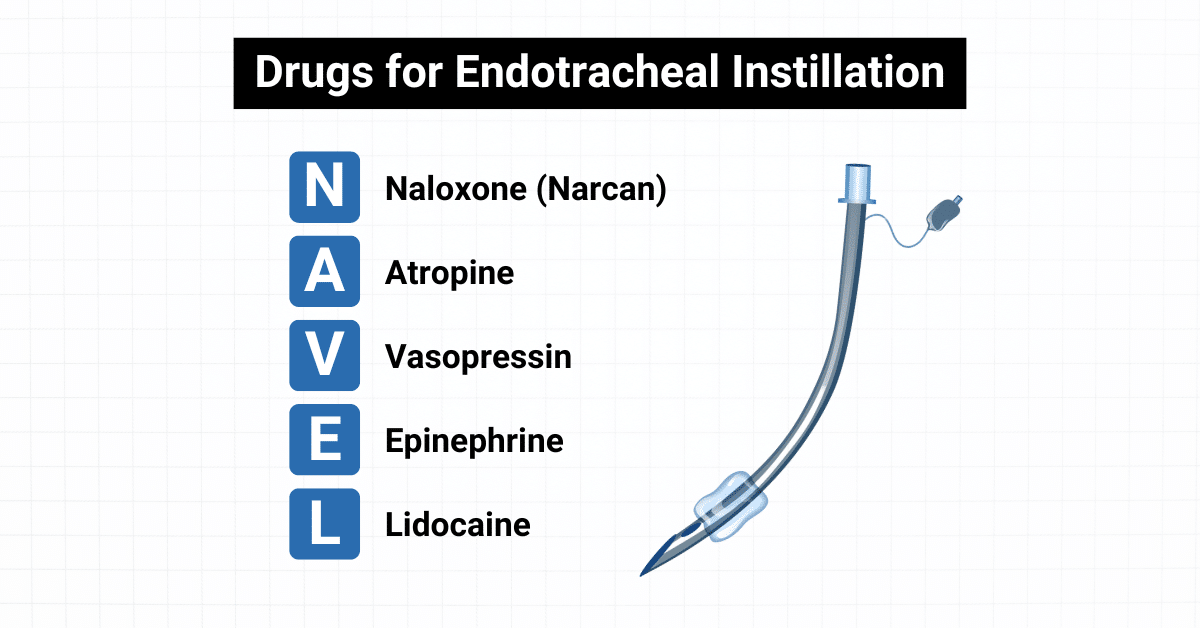
Only certain medications can be administered through the endotracheal tube. The most common ones are remembered using the NAVEL mnemonic.
- N – Naloxone (Narcan): Used to reverse opioid overdose.
- A – Atropine: Used to treat bradycardia.
- V – Vasopressin: A potent vasoconstrictor used during cardiac arrest.
- E – Epinephrine: Used during cardiac arrest to increase heart rate and blood pressure.
- L – Lidocaine: An antiarrhythmic used to treat ventricular arrhythmias.
Another substance that can be delivered directly into the trachea is exogenous surfactant. This therapy is commonly used in premature infants with respiratory distress syndrome (RDS). Surfactant reduces alveolar surface tension and helps keep the lungs open, improving ventilation and oxygenation.
Important Points About Endotracheal Drug Administration
- Dose Adjustment: Medications delivered through the endotracheal tube are typically given at 2 to 2.5 times the normal IV dose to ensure adequate absorption.
- Dilution: The drug should be diluted in approximately 10 mL of sterile saline or sterile water before administration.
- Ventilation After Administration: After the medication is instilled, manual ventilation with a bag-valve mask helps distribute the drug throughout the lungs.
Although this method is less common today due to improved IV and intraosseous access, it is still important to understand for exam preparation and emergency situations.
Note: Learning the NAVEL mnemonic makes it much easier to remember which drugs can be administered through the endotracheal tube.
7. Understand How to Manage a Drug Overdose
A drug overdose occurs when a patient takes a quantity of medication or substance that exceeds the body’s ability to metabolize or eliminate it safely. This can lead to serious complications, including respiratory depression, cardiovascular instability, organ damage, or death.
Overdoses may be accidental, such as taking too much medication or combining incompatible drugs, or intentional in cases of self-harm. Regardless of the cause, rapid recognition and intervention are essential for patient survival.
Respiratory therapists often play an important role in recognizing overdose symptoms and assisting with airway and ventilatory management. Because many drugs affect the respiratory centers of the brain, overdose situations frequently result in respiratory compromise that requires immediate support.
Signs of a Drug Overdose
The signs and symptoms of an overdose depend on the substance involved, but several clinical findings commonly appear in overdose situations:
- Respiratory depression or apnea
- Altered mental status or decreased level of consciousness
- Pinpoint pupils, which are commonly seen in opioid overdose
- Cyanosis or low oxygen saturation
- Bradycardia or hypotension
- Severe sedation or unresponsiveness
Patients presenting with these symptoms require immediate evaluation. In severe cases, the patient may require advanced airway management, including endotracheal intubation and mechanical ventilation to maintain oxygenation and ventilation.
Among the most dangerous overdose situations are those involving opioids, because these medications directly suppress the respiratory centers in the brain.
Common opioid drugs include morphine, heroin, oxycodone, fentanyl, hydrocodone, and other prescription pain medications. When taken in excessive amounts, these drugs can significantly reduce respiratory drive and lead to life-threatening respiratory depression or complete apnea.
The first-line treatment for opioid overdose is naloxone (Narcan), a powerful opioid antagonist that reverses the effects of opioids by competing for opioid receptor sites in the central nervous system.
Key Steps in Treating an Opioid Overdose
- Assess Airway and Breathing: Immediately evaluate the patient’s airway, breathing pattern, and oxygen saturation. If the patient is not breathing adequately, begin bag-valve-mask ventilation and prepare for advanced airway management if necessary.
- Administer Naloxone: Naloxone rapidly reverses opioid-induced respiratory depression. The patient’s respiratory rate, mental status, and oxygenation should improve shortly after administration.
- Provide Ongoing Monitoring: Naloxone has a shorter half-life than many opioids. Because of this, respiratory depression may return once the naloxone wears off. Continuous monitoring is essential.
- Manage Withdrawal Symptoms: Rapid reversal of opioids may trigger acute withdrawal symptoms such as agitation, tachycardia, hypertension, nausea, or vomiting. Healthcare providers should be prepared to manage these complications.
Other Drug Overdoses to Know
Although opioid overdose is one of the most frequently tested scenarios, other medication overdoses may also appear on the board exam. Each has a specific antidote or treatment approach.
- Benzodiazepine Overdose: Treated with flumazenil, which acts as a benzodiazepine antagonist.
- Acetaminophen Overdose: Treated with N-acetylcysteine to prevent severe liver damage.
- Beta-Blocker Overdose: Treated with glucagon, which helps increase heart rate and cardiac contractility.
In many overdose situations, supportive care is just as important as the antidote. This may include oxygen therapy, airway management, IV fluids, and continuous monitoring of vital signs.
By recognizing overdose symptoms quickly and understanding the appropriate treatments, respiratory therapists can play a vital role in stabilizing patients and preventing serious complications.
Note: Understanding the symptoms of drug overdose and knowing the appropriate antidotes can help you answer pharmacology questions on the board exam more confidently.

Unlock insider strategies and proven exam hacks to master key concepts, avoid common pitfalls, and pass the exam on your first (or next) attempt.
Final Thoughts
Pharmacology is a critical component of respiratory therapy and is an important topic on the board exam. Because medications are used in nearly every area of respiratory care, developing a strong understanding of drug classifications, indications, delivery methods, and potential side effects is essential.
Instead of trying to memorize long lists of medications, focus on understanding the major drug categories, how they work, and when they are used. This approach will make it much easier to apply your knowledge when answering scenario-based exam questions.
Consistent practice is also key. Reviewing practice questions, studying real clinical scenarios, and revisiting important drug classes will strengthen your confidence and reinforce your understanding of pharmacology concepts.
If you found this guide helpful, you may also benefit from our TMC Exam Hacks video course. It includes in-depth explanations, study strategies, and exam tips that have helped many students successfully prepare for the board exam and earn their RRT credentials.
Ready to take your preparation to the next level?
Check out the course to strengthen your understanding of key respiratory therapy concepts and improve your chances of passing the board exam. Good luck on your journey to becoming a registered respiratory therapist.

Written by:
John Landry is a registered respiratory therapist from Memphis, TN, and has a bachelor's degree in kinesiology. He enjoys using evidence-based research to help others breathe easier and live a healthier life.
References
- AARC Clinical Practice Guidelines, Respirator Care. 2002-2024.
- Egan’s Fundamentals of Respiratory Care. 12th Edition. Kacmarek, RM, Stoller, JK, Heur, AH. Elsevier. 2020.
- Mosby’s Respiratory Care Equipment. Cairo, JM. 11th Edition. Elsevier. 2021.
- Pilbeam’s Mechanical Ventilation. Cairo, JM. Physiological and Clinical Applications. 8th Edition. Saunders, Elsevier. 2023.
- Rau’s Respiratory Care Pharmacology. Gardenhire, DS. 11th Edition. Elsevier. 2023.
- Wilkins’ Clinical Assessment in Respiratory Care; Heuer, Al. 9th Edition. Saunders. Elsevier. 2021.
- Clinical Manifestations and Assessment of Respiratory Disease. Des Jardins, T, & Burton, GG. 9th edition. Elsevier. 2023.